How to Choose the Right Size of Pallet Rack?
Pallet racking is a great choice for most businesses' storage needs because of its many benefits and proven technology. But pallet racking also comes in many different sizes because every business stores very different goods. So how do we choose the right size of pallet racking?
I'll tell you all the answers about pallet racking sizes, so follow me to learn more about it!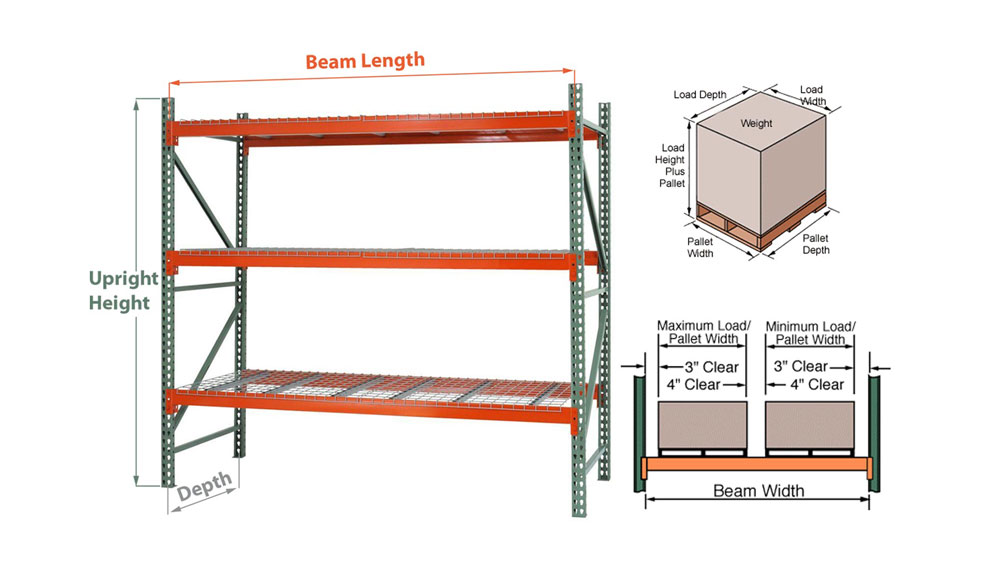
Pallet sizes and weights
Pallets are a very important part of pallet racking dimensions because the rest of the components are sized around your pallets and the goods on them accordingly.
So the first step we need to take is to figure out what the dimensions of your pallet are and what the average weight of your pallet is, which will depend on the type of goods you have.

However, to introduce you to some common pallet sizes, here are some common size standards for each region of the world:
EUR-Pallet
This is a common type of pallet used in Europe, the size is 1200mm x 800mm and it has a static load capacity of 1000-1500kg.
GMA-Pallet
This is a commonly used pallet type in North America, with dimensions of 1219mm x 1016mm, and it has a static load capacity of 1000-1500 kilograms.
Australia Pallets
Pallets in the Australian region are usually 1165mm x 1165mm in size, while the load capacity is around 1000kg.
Asian Standard Pallet
Asian standard pallets are mainly used in Japan, South Korea and other countries, its size is 1100mm x 1100mm, load capacity is also in the 1000kg.
ISO Pallet
ISO pallet is the full name of the IInternational Organization for Standardization pallet, it has a variety of standard size types, but the most common is 1200mm × 1000mm.
Most of these different regions of the pallet size specification is to facilitate the use of logistics, etc., if you just use for their own warehouse, in fact, do not care about the specific regional specifications, just need to pick according to the needs of your goods can be, and the pallet can be customized!
Height and depth of frame
Frame we generally refer to is the upright frame, it is on the side of the pallet racking, responsible for the connection with beams fixed to form the overall framework of the pallet racking. Its height and depth should be chosen according to your actual situation.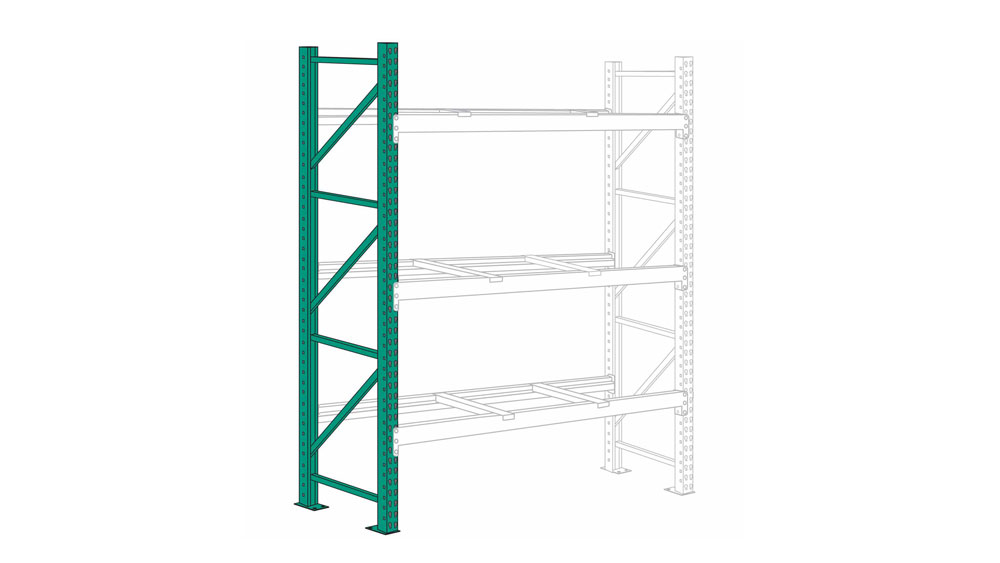
Factors affecting the height of frame
Net height inside the warehouse
The height of the frame should not exceed the effective height of the internal space of the warehouse. The effective height mentioned here is the height of the space remaining within the ceiling height after removing the equipment space (fire sprinkler system, etc.) below the ceiling.
Forklift height
The height of the frame is also the height of the pallet racking, its height is not allowed to exceed the forklift or the rest of the lifting tools of the highest lifting height. Because once higher than the lifting height of the forklift, then the top layers of the shelves can not be normal access to the goods. If you re-purchase a forklift, then this will be a small amount of expenditure.
Height of goods
The overall height of the goods and pallets is also a key factor affecting the height of the frame. Because the height of each layer of pallet racking is based on the height of the goods to determine, and in order to safely store the goods, we also need to leave a safety gap of 100mm in the design.
Factors affecting frame depth
Length of the tray
The length of the pallet determines the depth of the frame. But here we need to add a point of view, that is, usually the length of the tray is a little longer than the depth of the frame, about 50-100mm, this is what we call the industry overhang.
Single deep or double deep
Single deep and double deep belong to the pallet racking, we are common is single deep, each layer only a row of pallets. Double depth is when each layer has two rows of pallet space, and need to match the special equipment can be normal access to the goods, because it is deeper than single depth to double the depth.
Dimensions of Beams
The reason why we need you to determine your pallet size and weight initially is to help determine the size of your beams. This is because beam dimensions are based on your pallet data, such as how many pallets you need to place on one level, how big and heavy your pallets are, and so on.
Beam size has many aspects, mainly for six aspects: beam length, beam height, beam thickness, beam width and connector size.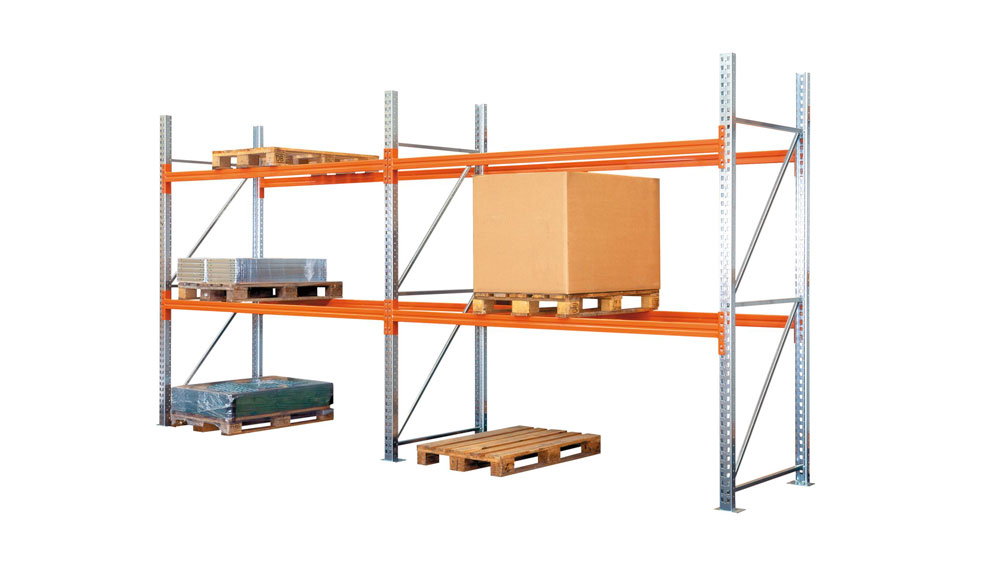
Beam Length
Here refers to the horizontal distance of the beam, also can be understood as the distance between two frames, the length of the beam is based on the number of trays to determine the length of the common length is to accommodate 2-3 trays, of course, you can also be based on the actual use of your needs to determine the length of it.
Beam Height
This refers to the height of the beam's cross-section, the higher the height, the higher the strength and rigidity of the beam. There are two main factors that determine the height, the weight of the palletized goods and the length of the beam.
Beam Thickness
Beam thickness refers to the wall thickness of the cross-section steel, the thickness of the beam determines the load carrying capacity and durability of the beam, so its size is also based on the weight of the palletized goods to determine. The common thickness is 1.5-3.0mm, of course, these are not absolute, are based on your use to decide.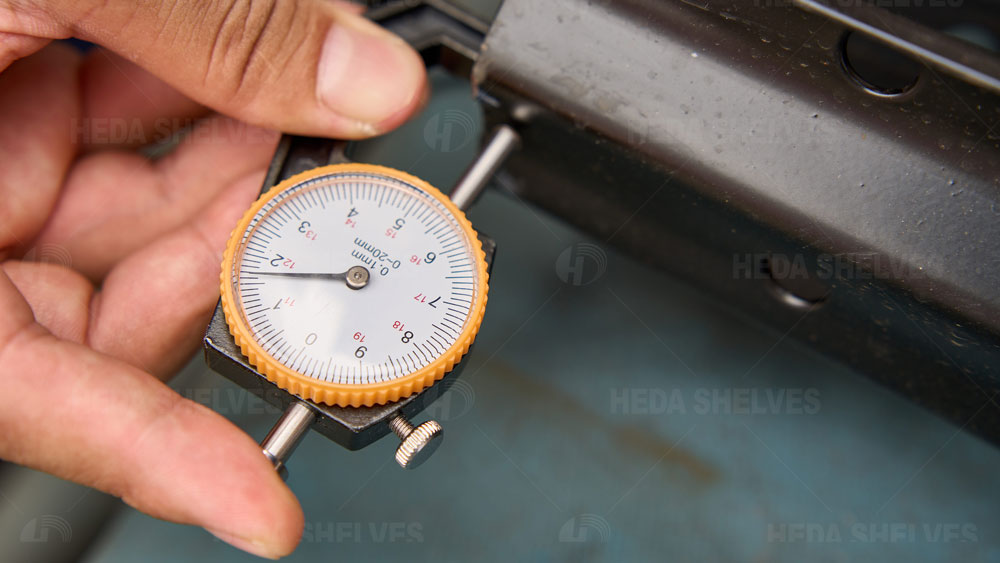
Beam Width
Beam width refers to the horizontal width of the beam's cross-section, or as some would call it, the width of the flange. However, the shape of the cross-section changes depending on the type of beam, so you need to judge it according to your actual situation.
The width affects the structural rigidity of the beam and the load distribution, for example a wider beam will distribute the weight more evenly and also reduce the degree of bending.
Connector Size
The connection between the beam and the frame requires the existence of a connector, but the part that connects the frame to the beam needs to be compatible with their respective sizes.
Therefore, the connector size can only be determined once your frame and beam data have been finalized.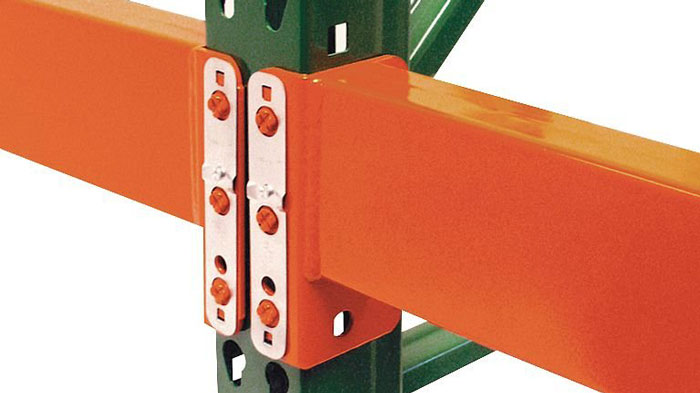
Conclusion
Choosing the right pallet racking size for yourself is not really difficult, you just need to talk to your supplier based on the above, I think it will only take a day to come up with your pallet racking size.
If you don't have a suitable supplier, maybe you can contact us! Tell us what you need and get free real data and quotations within 24 hours!