Warehouse Garment Storage Solutions: Choosing the Right Racking for Apparel Logistics
Hello! Having spent years on the engineering side of industrial rack manufacturing, I know firsthand what keeps apparel warehouse managers up at night.
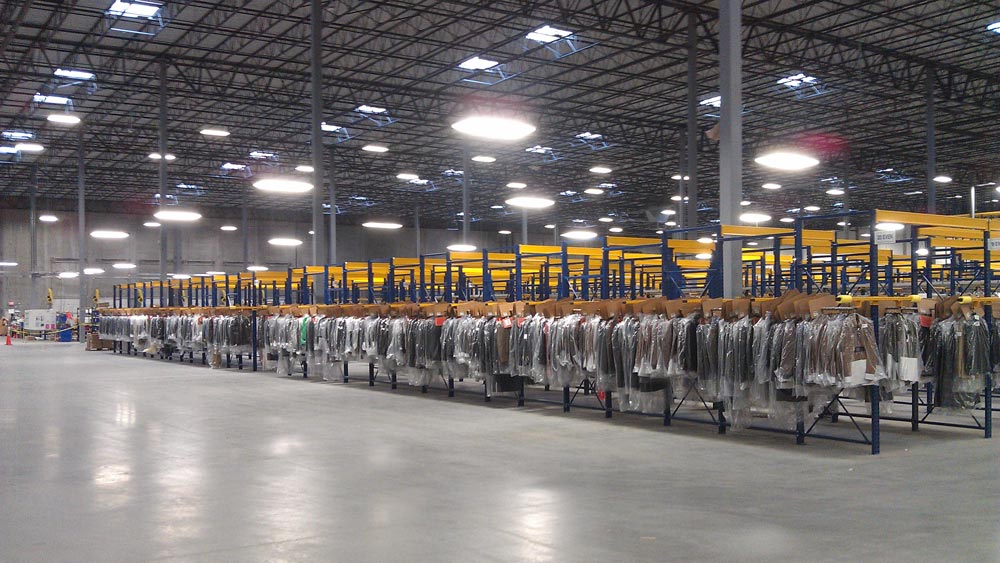
Garment logistics is a whole different beast compared to general industrial storage. Instead of uniform steel goods or standardized cartons, you are dealing with thousands of individual items across endless colors, sizes, and styles. Pick the wrong racking setup, and your facility will quickly run into wasted space, sluggish order picking, and damaged or wrinkled inventory.
In this guide, we will dive into the unique storage challenges of garment warehouses through the lens of racking design and engineering, helping you identify the ideal racking system tailored to your business operations.
Introduction: The Unique Challenges of Warehouse Garment Logistics
Apparel logistics easily ranks among the most complex sectors in retail supply chain management. Before designing an effective warehouse layout, it helps to break down the three primary pain points that make garment storage so tricky.
High SKU Density and Fast Seasonal Turnover
The defining trait of the apparel sector is massive SKU counts. A single basic T-shirt offered in 5 colors and 5 sizes instantly expands into 25 distinct stock-keeping units.
On top of that, fast fashion trends and seasonal transitions fuel rapid inventory turnover. Warehouses must pull old stock and load incoming lines within tight timeframes. This demands a racking system engineered for precise space segmentation and effortless reconfiguration.
The Conflict Between Space Optimization and Product Protection
To keep real estate costs down, warehouse managers naturally want to maximize every inch of vertical headroom. However, clothing is soft and vulnerable.
Over-stacking goods to push storage density often crushes lower items out of shape. For high-end fabrics, moisture, mildew, or dirt can destroy inventory value entirely. Striking the right balance between high-density storage and product care is essential.
GOH (Garment-on-Hanger) vs. Flat/Folded Storage Dilemma
When mapping out a facility, your first major decision comes down to this: will garments be stored hanging or folded flat?
- Garment-on-Hanger (GOH): Keeps clothes crisp and ready to ship, but demands significant vertical clearance.
- Flat Storage: Delivers exceptional spatial efficiency, but introduces extra unboxing and folding steps during handling.
Below, we will compare these two approaches side by side.
Garment Storage Methods: Hanging (GOH) vs. Flat Storage
Deciding between hanging and flat storage dictates the exact racking configurations your warehouse needs to procure.
Garment-on-Hanger (GOH) Systems: For Ready-to-Wear & High-End Apparel
Garment-on-Hanger (GOH) setups are purpose-built for ready-to-wear apparel and luxury fashion.
- Primary Benefits: Clothes hang in their natural drape, allowing immediate dispatch without ironing; workers can also perform quick visual checks of tags and styles.
- Ideal Racking Types: Dedicated hanging racks (pipe/hang bar racking), high-bay hanging mezzanines, and automated overhead trolley/conveyor systems.
- Best Suited For: Suits, coats, dresses, formalwear, and padded jackets.
Flat & Folded Storage: For High-Volume & Basic Apparel
Flat storage is the go-to method for managing large quantities of standard, everyday apparel.
- Primary Benefits: Extremely high density—a single bin or shelf compartment can hold dozens of items, sharply lowering storage costs per unit.
- Ideal Racking Types: Medium-duty shelving units paired with plastic totes, corrugated shelf bins, or modular cartons.
- Best Suited For: Basic items like T-shirts, underwear, jeans, and socks.
Hybrid Storage Solutions: The Best of Both Worlds
In practice, full-range fashion brands rarely rely on just one storage method. That is where hybrid racking systems come into play.
For instance, a single rack structure can feature folded bin storage on upper levels and hanging rails across the lower tiers. This versatile combination handles diverse SKU types while squeezing maximum output from your floor footprint.
Warehouse Garment Racking Systems: A Manufacturer's Comparison Guide
From a manufacturing perspective, garment racking falls into four main structural categories based on weight capacity, vertical height, and handling workflows:
Multi-Tier Garment Mezzanine Systems (Mezzanine Racks)
For facilities with clear heights of 5 meters or more, garment mezzanine racking offers the ultimate return on investment.
- System Characteristics: Built using structural steel frameworks to create 2- or 3-tier catwalk platforms, effectively doubling or tripling usable floor area.
- Practical Application: Mezzanines easily blend GOH sections with shelf-picking zones, connected via staircases, freight lifts, and spiral chutes. They are game-changers for e-commerce warehouses managing high-volume split-case order picking.
Heavy-Duty & Medium-Duty GOH Racking
- System Characteristics: Industrial-grade racking engineered specifically for heavy-volume hanging storage, utilizing heavy-duty beams and specialized tubular hang-bar assemblies.
- Manufacturing Detail: A single hang bar tier can support hundreds of kilograms without bowing, even under maximum capacity with heavy winter coats.
Manufacturer Tip: When configuring GOH systems, beam spans and hang-bar wall thickness require precise structural calculation to prevent long-term deflection under load.
High-Density Shelving with Bin Box Systems
- System Characteristics: Medium-duty steel shelving enhanced with adjustable metal dividers or standardized plastic picking bins.
- Practical Application: Perfect for folded garments with extensive SKU variations. Allocating specific colors and sizes to dedicated bins drastically cuts travel and search time for picking personnel.
Pallet Racks with Wire Mesh Decking for Bulk Garment Boxes
- System Characteristics: Designed for palletized bulk stock and master-carton storage. Heavy-duty pallet racks are fitted with wire mesh decking across beam levels.
- Key Function: Wire mesh decks prevent small cartons from slipping through, allow light and air circulation, and fully meet fire sprinkler safety compliance standards.
Garment Warehouse Layout and Operational Workflow Optimization
Top-tier racking provides the framework, but a thoughtful layout unlocks true operational speed.
[ Receiving & QC Zone ]
↓
[ ABC Inventory Zoning ] → Class A High-Movers (Lower Tiers / Main Aisle) / Class B/C Long-Tail (Upper Tiers / Mezzanine Rear)
↓
[ Efficient Picking & Packing ] → Garment Trolleys / Put-Walls / RF Scanning
Inbound Receiving & Quality Control (QC) Area
Garments should not go directly to storage upon arrival. Facilities need a dedicated Inbound Receiving & Quality Control (QC) area.
Unboxing, spot checks, tagging, and hanger attachment happen in this staging area. Sorting and verifying items prior to putaway keeps defective goods out of primary picking zones.
ABC Inventory Zoning for Apparel Logistics
Segment inventory into three velocity tiers to streamline fulfillment routes:
- Class A (Best-Sellers): Positioned on lower-to-mid rack tiers right off main aisles and close to packing stations ("golden picking zones").
- Class B (Moderate Velocity): Stored on mid-to-upper shelf levels or central mezzanine areas.
- Class C (Slow-Movers & Off-Season): Stowed on top levels, far ends of mezzanine tiers, or upper pallet rack positions.
Order Picking & Fulfillment: Single-Piece vs. Batch Picking
To tackle piece-picking demands in apparel e-fulfillment, pair smart routing with specialized equipment:
- Garment Trolleys: Paired with GOH racking to move hundreds of hanging items easily in a single batch trip.
- RF & PDA Scanners: Drive paperless workflows, reducing picking errors to near zero.
Environmental Controls & Product Protection in Apparel Warehouses
When purchasing racking, storage capacity is only half the equation—protecting your goods from damage is just as critical. Below are key anti-damage details incorporated into high-quality rack manufacturing:
Humidity & Dust Prevention for Fabrics
Fabrics absorb moisture easily, creating a risk for mold and mildew.
- Ventilation Gaps: Racks must maintain sufficient clearance from perimeter walls and between shelf tiers to promote airflow.
- Dust Protection: Equipping GOH racks with top panels or dust covers prevents falling debris and ceiling dust from ruining garments.
Ergonomic & Anti-Snagging Design in Garment Racking
This is a defining measure of manufacturing craftsmanship.
Delicate textiles like silk, cashmere, and lace snag easily on sharp metal edges or burrs. Commercial garment racks undergo rigorous deburring and smooth-edge rounding during fabrication, finished with a smooth electrostatic powder coating.
Weight Distribution & Prevent Garment Sagging
If hanging items sit too close to the floor, swinging hems quickly pick up dirt and dust.
During custom GOH rack engineering, design team calculations set tier clearance based on garment lengths—ensuring long coats (requiring 1.5m+ vertical clearance) and short tops clear the floor completely.
How to Choose and Customize the Right Garment Racking System
With so many racking configurations on the market, how do you make the right choice? Follow these three essential steps:
Evaluating Warehouse Ceiling Height and Floor Load Capacity
Before reaching out to a racking manufacturer, assess two vital physical parameters:
- Clear Height: Dictates whether a mezzanine is feasible and determines maximum vertical hanging levels.
- Floor Load Capacity: Mezzanines and high-bay racks place heavy demands on slab capacity (typically requiring $2.5 \sim 3.0 \text{ tons/m}^2$ or more).
Scalability for Peak Season Surges (e.g., Black Friday, Double 11)
Inventory volumes can double during major sales events.
Opting for modular racking systems with adjustable upright pitch allows quick addition or removal of hang bars and shelf levels. This gives you the flexibility to expand capacity during peak demand and reconfigure during off-peak periods.
Working with a Direct Garment Racking Manufacturer
Rather than purchasing off-the-shelf equipment through distributors, partnering directly with an OEM racking manufacturer offers distinct advantages:
- Complimentary CAD & 3D Layout Design: Factory engineers tailor space-saving floor plans based on your building schematics.
- Structural Load Testing: Validates safety margins to prevent overload hazards.
- Export & Installation Expertise: Experienced exporters ensure international-grade anti-corrosion packaging and offer clear assembly guidance on-site.
Conclusion: Transforming Your Apparel Supply Chain with Smart Racking
An effective garment racking system is far more than mere steel framing. It serves as a strategic asset that accelerates fulfillment velocity, reduces product loss, and maximizes costly floor space.
By assessing product characteristics (GOH vs. flat storage), mapping out smooth picking workflows, and partnering with a specialized manufacturer, you can build a competitive, highly efficient garment supply chain.
Ready to Upgrade Your Garment Warehouse?
Our engineering team brings over 15 years of global experience in designing and manufacturing specialized garment storage racking systems.
Contact us today with your facility dimensions and operational requirements to request a complimentary 3D layout design and detailed quote!