Electronic Commerce Logistics: A Deep Dive into Warehouse Optimization
Since the start of the 21st century, global e-commerce has grown at an incredible rate, bringing both huge opportunities and significant challenges.
For many businesses, a lot of time and money is spent on continuously optimizing and managing front-end marketing, website/software user experience, and delivery logistics. However, a crucial element that's often overlooked is the warehouse.
From the moment a product is manufactured until it's shipped out, the warehouse serves as a temporary storage hub. A poorly designed warehouse can slow down your shipping speeds and drive up operational costs.
This article will show you how to optimize the internal structure of your warehouse to boost the performance of your e-commerce business.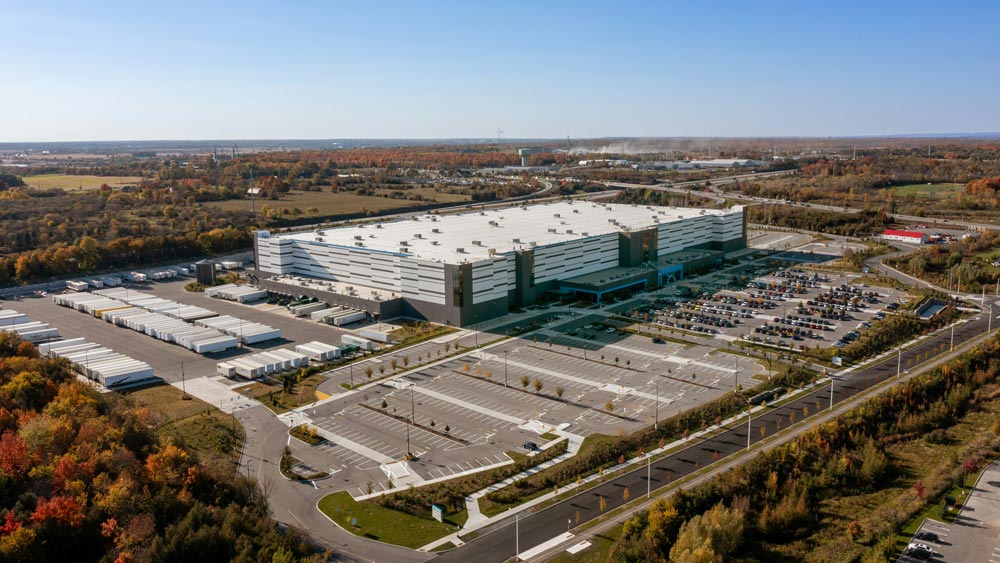
What is E-commerce Logistics?
Simply put, e-commerce logistics is a complete system designed to get a customer’s online order to them safely, quickly, and accurately.
Think of it like a relay race. The starting gun (the customer placing an order) goes off, and the product begins its journey, passing through several "relay runners" (logistics steps) before finally reaching the finish line (the customer's hands).
Core Stages:
Order Processing: This is the first leg of the race. As soon as a customer clicks "buy now," the order information is instantly sent to the warehouse system. The system's first job is to confirm if the item is in stock and tell a picker, "Someone just bought a T-shirt—go find it!"
Inventory Management: This is the logistics team behind the race. How much stock do you have? Which products sell quickly? Which ones are nearing their expiration date? Inventory management ensures you never run out of stock and disappoint customers, and also prevents you from having too much stock taking up space. It's like constantly checking your supplies to know exactly what you have and how much is left.
Warehousing: This is the "main stadium" of the relay race. Once products are delivered to the warehouse, how should they be arranged for easy access? What's the best location for different products? Good warehousing management helps pickers find items in the shortest possible time. For example, best-selling items are placed closest to the packing area, just like keeping your most-used tools right at your fingertips on a workbench.
Packaging: This is the second leg. After an item is found, it needs to be put in its "protective suit." Packaging is not just about preventing damage; it also considers environmental impact, aesthetics, and saving space. Good packaging ensures the product can withstand a bumpy ride during transit.
Shipping & Delivery: This is the final and most important sprint. Once an item is packed, it’s handed over to a courier company to be delivered to the customer’s home. This part has several sub-steps:
- Line-haul Transport: Moving goods from the warehouse to a city distribution center.
- Last-Mile Delivery: Getting the goods from the city distribution center to the customer’s doorstep. This step is the most expensive and complex, and it’s where logistics service is truly tested.
Reverse Logistics: This is the "return journey" after the race is over. If a customer is unhappy and needs to return or exchange an item, the product must make its way back to the warehouse. Reverse logistics handles these returns, ensuring the item can get back on the shelf quickly or be repaired or disposed of. While this isn’t a forward process, managing it well can significantly boost customer satisfaction.
What Makes E-commerce Logistics Different?
Why is e-commerce logistics so much harder than traditional logistics?
Traditional logistics, such as supplying a supermarket, is typically high-volume and low-frequency. For example, a truck might deliver a whole shipment of bottled water to a supermarket only once a week.
E-commerce logistics is the complete opposite. It's characterized by:
- Small Volumes: Customers usually only buy one or two items at a time.
- High Frequency: Thousands of orders need to be processed and shipped every single day.
- Massive Number of SKUs: An SKU (Stock Keeping Unit) is the smallest unit of inventory—you can think of it as a product type. E-commerce platforms have countless product types, which requires a warehouse to efficiently manage a huge volume of different items.
Warehouse Shelving: The Underestimated Engine of Logistics Efficiency
How can warehouse shelving become an engine of efficiency?
It does much more than simply "holding" products. Through smart planning and design, it solves several core problems:
1. Maximizing Vertical Space
The cost of a warehouse isn’t just about its floor area; it’s also about its height. If all your products are piled on the floor, the valuable vertical space of the warehouse is wasted. Shelving turns horizontal storage into vertical storage. By stacking items upwards, a warehouse's storage capacity can increase many times over, dramatically improving space utilization and lowering the storage cost per item.
2. Boosting Retrieval Efficiency
A shelving layout with a clear numbering system is like a city's street grid with addresses. A well-designed shelving system gives every single item a unique "address," allowing pickers to find products quickly and accurately using system commands. This is like finding a book in an organized library rather than in a messy pile.
- Shorter Picking Times: Pathfinding software can use the shelf layout to plan the most efficient route for pickers, avoiding backtracking and significantly reducing picking time.
- Lower Error Rates: Every shelf location corresponds to a single SKU. Pickers can simply scan the location's barcode to confirm they’ve picked the right item, effectively preventing human error.
3. Serving as a Platform for Advanced Technology
Modern warehouse shelving is no longer just a simple metal rack. It's a platform for various automated and smart technologies.
- Integration with Automation: Shelving can provide tracks and structural support for automated equipment like shuttles and stacker cranes, enabling automatic retrieval and storage of goods at speeds several times faster than manual picking.
- Support for Smart Warehousing: Some shelving systems can integrate sensors and electronic labels, allowing for real-time inventory monitoring. They can even use lights to guide pickers to the correct item location (also known as a "Pick-to-Light" system), further improving accuracy and efficiency.
How Shelving Optimization Boosts Logistics Efficiency
1. Boosting Picking Efficiency: From a "Treasure Hunt" to "Point-and-Shoot"
Optimizing storage locations and integrating with picking technology is a very effective strategy.
- Location Optimization: Beyond the ABC classification method, you can optimize based on order characteristics. For example, if your e-commerce business has a lot of "multi-item" orders (an order with many different products), you can store these items in a single area or even along a path a picker can complete in a single trip. This is called "order picking path optimization."
- Integration with Picking Technology:
- Pick-to-Light: This is the most straightforward example. It turns a static storage tool into a "smart assistant" that interacts with the system in real time. Pickers don't need to look at paper lists or handheld devices; they just follow the lights, which dramatically increases picking speed.
- Voice Picking: The system uses a headset to give voice instructions to the picker, telling them "Go to aisle A, shelf 2, location 5, and pick 3 items." This frees up the picker's hands and eyes, allowing them to focus on the picking process itself, which is especially useful in tasks that require two hands.
2. Reducing Operational Costs: Shelving Doesn't Just Save Money, It Makes You Money
Maximizing space utilization and reducing labor costs are direct financial benefits of optimizing your shelving.
- Maximizing Space Utilization: Shelving can increase warehouse storage density many times over. This doesn't just save you on rent; more importantly, it lets you handle a larger volume of business with a smaller warehouse, which can postpone the need for expansion or allow you to scale faster. This is a kind of "economy of scale."
- Reducing Labor Costs:
- Direct Costs: An optimized shelving layout and picking technology allow a single picker to process more orders in the same amount of time, reducing the number of pickers you need to hire.
- Indirect Costs: By lowering the picking error rate, you reduce the costs of returns, re-shipping, and other reverse logistics, which are often hidden costs.
3. Improving Order Accuracy: Precision is The Core Element of Logistics
Detailed management is crucial, and shelving is the infrastructure that makes it possible.
- Location Coding: Every shelf, level, and location should have a unique code. This is like a product's "ID address." For example, A1-02-05 might represent "aisle A, shelf 1, level 2, location 5." With this address, the WMS (Warehouse Management System) can precisely tell a picker where to find the product.
- Double-Checking: Before shipping, you can use the shelving system and WMS for a second check. For example, when packing, scanning an item's barcode automatically verifies if it matches the order. If the shelving system can integrate a weighing function, it can automatically weigh the item to confirm the correct quantity, eliminating errors before the item is even shipped.
Integration of Shelving and Smart Technology
Integration with WMS/WCS Systems
This is the foundation of all smart technology. The Warehouse Management System (WMS) handles inventory and orders, while the Warehouse Control System (WCS) manages and controls automated equipment. Shelving connects seamlessly with these two systems through precise coding and location information.
- Smart Inventory Management: The WMS knows in real time what items are on each shelf and how much stock is available. When a new order comes in, the system instantly locks in the item's location and sends instructions to the picker or automated equipment.
- Dynamic Replenishment Suggestions: If a certain shelf is running low on a product, the system automatically sends a replenishment alert, telling staff which items need to be moved from the bulk storage area.
Integration with Automated Picking Systems
- Goods-to-Person System: This is a classic example of integration. When an order is generated, the system instructs an AGV (Automated Guided Vehicle) or a shuttle to bring the shelf or bin containing the ordered items directly to the picker. The picker simply stands in one place and picks items according to the on-screen prompts, drastically reducing travel time and boosting efficiency many times over compared to the traditional person-to-goods model.
- Picking Robots: Some more advanced systems can even use picking robots to grab items from the shelf and place them in the order bin.
Integration with Electronic Labels/Sensors
- Pick-to-Light: This is the most common form of integration. An electronic label on each shelf location is connected to the system. When the system receives a picking command, the corresponding label lights up, guiding the picker to the correct location. The picker simply presses a button to confirm, the light goes off, and the task is complete. This greatly improves picking speed and accuracy.
- Weight Sensors: For high-value or small items, weight sensors can be installed on the shelves. If a picker takes an item and the weight change doesn't match the system's records (e.g., they took too many or too few), the system will immediately issue an alert, stopping errors at the source.
Integration with Data Analytics
- Real-time Data Collection: Every picking, storage, and inventory action is relayed back to the system in real time through devices on the shelves or handheld terminals used by pickers. This data is collected and can be used to analyze which shelves are the most efficient, which times of day are the slowest for picking, and more.
- Smart Layout Optimization: By analyzing historical data, the system can intelligently adjust the shelf layout—for example, automatically moving popular items to more accessible locations—to continuously optimize the entire warehouse's operational efficiency.
Conclusion
An efficient e-commerce logistics operation is a key competitive advantage for any business. As a professional shelving manufacturer, we are dedicated to providing you with expert warehousing solutions that can transform your warehouse from a simple storage space into an active engine for creating efficiency.
If you have any further questions or needs regarding your warehouse, we welcome you to reach out to us!