What is a Hoist?
As a manufacturer of warehouse racking systems, we understand the critical importance of efficiently and safely moving heavy materials in today's modern storage and production environments. This is where the hoist comes in—it's the key to achieving efficient and safe material handling in any warehouse.
A hoist acts like the "muscle" of a warehouse or factory. It not only tackles the most demanding lifting tasks but also makes the entire workflow more efficient and secure.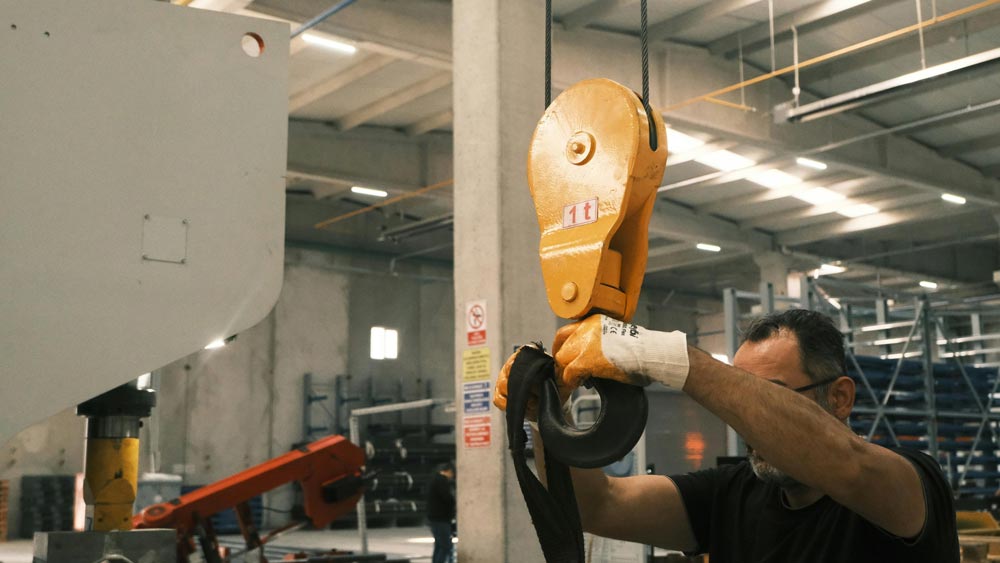
Now, let's take a closer look at what a hoist really is.
What is a Hoist?
In simple terms, a hoist is a mechanical device used for vertically lifting and moving heavy loads. You can think of it as a "strongman" designed specifically for industrial settings like factories, warehouses, or construction sites to lift heavy objects that are impossible for people to move.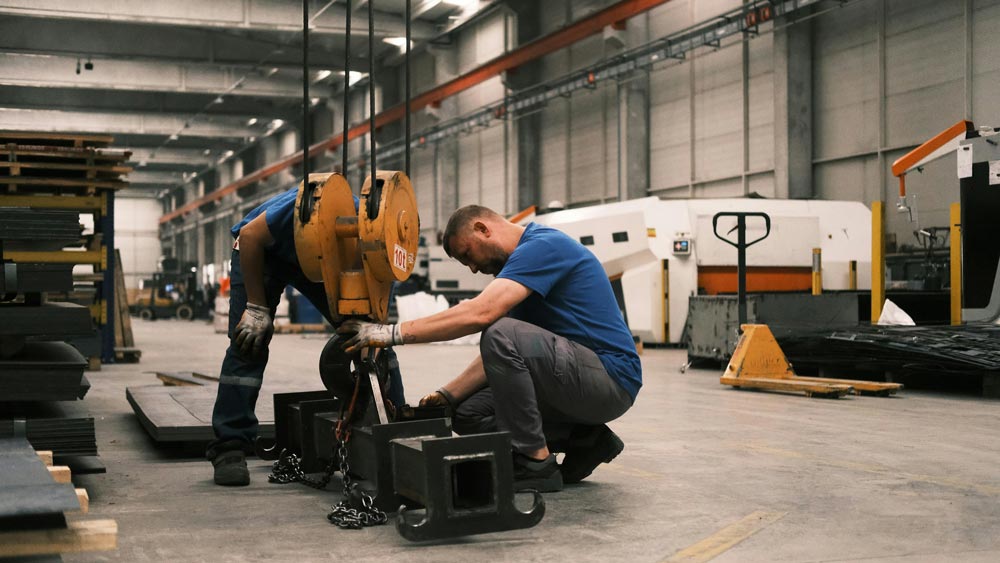
Core Definition
From a more technical standpoint, a hoist's core definition is a lifting machine composed of a motor, a reducer, a hook, a control system, safety devices, and a drum or sheave with a wire rope or chain. Its primary function is to lift loads up or lower them down.
Key Characteristics
Hoists have three main characteristics:
- Dedicated Function: A hoist's main job is to lift and lower heavy loads vertically. While it is often installed on a crane that can move horizontally, its primary function remains vertical movement. This distinguishes it from other material handling equipment like forklifts.
- Compact Powerhouse: A hoist is typically not very large, but its internal motor and transmission system can generate tremendous power. This combination of a small footprint and immense strength allows it to work efficiently in confined warehouse spaces.
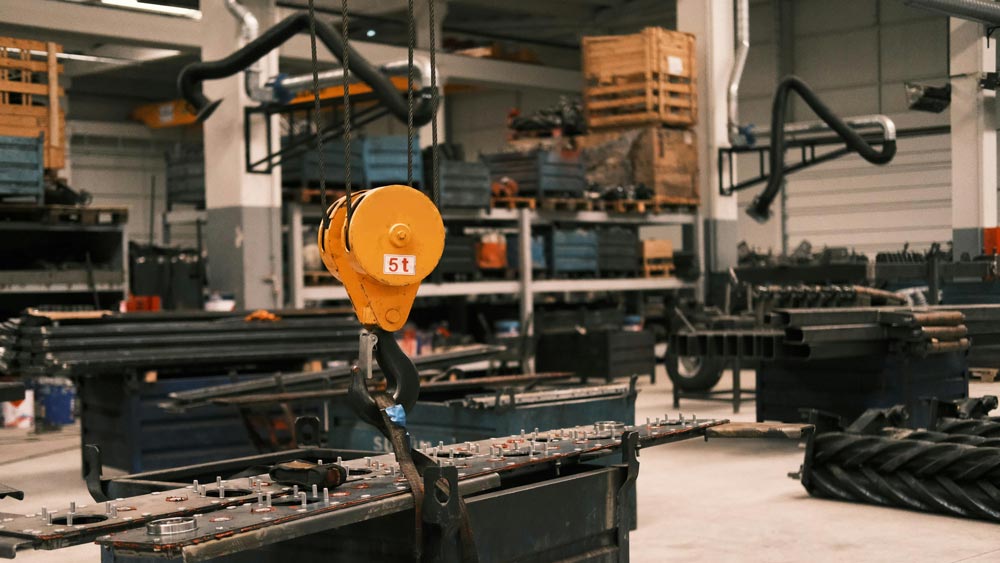
- Safe and Reliable: Hoists available from reputable suppliers today are equipped with numerous control systems and safety features.
For example:- Limit switches to prevent the hook from rising too high or lowering too far.
- Overload protectors to stop the hoist from lifting more than its rated capacity.
- Emergency stop buttons.
Hoist's Operating Principle and Core Components
Deconstructing the Hoist's Operation
We can break down the hoist's operation into a few simple steps:
- Preparation Phase: The operator sends a command to the hoist using a control pendant or remote control.
- Power Transmission: The motor receives the command and begins to rotate. This rotation is transferred through the reducer, which turns the drum (or sheave).
- Vertical Movement:
- Lifting (UP): If the command is "lift," the drum winds the wire rope (or chain), causing the rope to pull the hook and the attached load upward.
- Lowering (DOWN): If the command is "lower," the drum unwinds the wire rope, allowing the hook to descend smoothly under the force of gravity to the designated location.
- Safety Stop: When the hook reaches a preset high or low position, the limit switch automatically activates, cutting off power to prevent further movement and ensure safety. If the load exceeds the hoist's rated capacity, the overload protector will also engage, stopping the hoist from operating.
Introduction to Key Components
While a hoist may seem simple, it's made of several precisely coordinated key components, each essential to its function:
- Motor: This is the "heart" of the hoist, providing all the power needed for lifting. Its performance directly determines the hoist's lifting capacity and speed.
- Reducer: Located between the motor and the drum, its function is to decrease the motor's rotational speed while amplifying its torque (power). Think of it like the gears on a bicycle, allowing you to move a large gear with less effort.
- Drum / Sheave: This is the "arm" of the hoist. The drum is typically used for wire rope hoists, as the rope wraps around it. A sheave is used for chain hoists, where the chain passes through it.
- Wire Rope / Chain: This is the "sinew" of the hoist, directly bearing the tension of the load. They must be extremely strong and checked regularly to ensure safety.
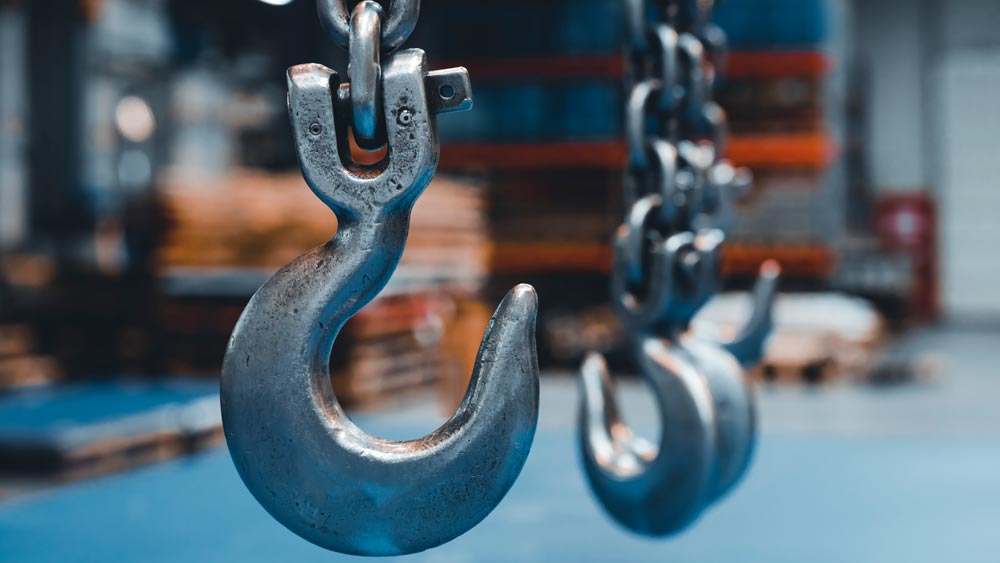
- Hook: This is the "hand" of the hoist, used to directly grip the load. It is typically made of high-strength alloy steel and features a safety latch to prevent the load from accidentally slipping off.
- Control System: This includes the control pendant, remote control, and control cabinet. The operator uses it to control the hoist's lifting, moving, and stopping functions.
- Safety Devices: These are the "safety guards" of the hoist. The most important ones are:
- Limit Switch: Ensures the hook doesn't rise too high or lower too low.
- Overload Protector: Automatically stops the hoist when the load exceeds its safe limit.
- Emergency Stop Button: Allows the operator to quickly cut all power in an emergency.
Types of Hoists
Classification by Power Source
This is the most common classification, determining the hoist's efficiency and suitable application environment.
- Manual Hoist:
- Characteristics: Relies on human effort to pull a chain to lift loads. It has no motor, is small, has a simple structure, and is low-cost.
- Pros: Doesn't require electricity, can be used in locations without power, is inexpensive, and is easy to maintain.
- Cons: Very slow lifting speed, can only be used for lighter loads, and is physically demanding.
- Applications: Suitable for occasional use, light loads, or locations without power, such as small repair shops or outdoor construction sites.
- Electric Hoist:
- Characteristics: Uses an electric motor as its power source, controlled by buttons or a remote. This is the most popular type.
- Pros: Fast lifting speed, high efficiency, easy to operate, and can easily lift heavy tonnage loads.
- Cons: Requires a power source and is relatively more expensive.
- Applications: Widely used in various industrial and warehouse settings and is the workhorse of modern lifting equipment.
- Pneumatic Hoist:
- Characteristics: Uses compressed air as its power source.
- Pros: Operates smoothly, has a wide speed range, and is especially suitable for use in flammable and explosive environments because it doesn't produce sparks.
- Cons: Requires a compressed air supply system and can be noisy.
- Applications: Ideal for special environments with high safety requirements, such as paint shops, chemical plants, and mining operations.
Classification by Lifting Medium
This is based on the "rope" or "chain" the hoist uses to lift loads.
- Wire Rope Hoist:
- Characteristics: Uses a high-strength wire rope that winds around a drum.
- Pros: Fast lifting speed, high lifting height, and smooth operation. Suitable for situations requiring quick, efficient handling of heavy loads.
- Cons: Wire rope requires regular inspection and replacement, which can be costly.
- Applications: Widely used in large factories, steel warehouses, shipyards, and other heavy industries.
- Chain Hoist:
- Characteristics: Uses an endless chain as the lifting medium, which passes through a sheave.
- Pros: Sturdy and durable, the chain can be bent, making it smaller and usable in confined spaces.
- Cons: Lifting speed is generally slower than wire rope hoists, and lifting height is limited.
- Applications: Suitable for smaller loads, limited workspace, or situations requiring high-precision positioning, such as in small workshops or die-casting plants.
Hoist vs. Winch: Don't Get Confused
In the workplace, many people tend to confuse hoists and winches. While they may look similar and both are used to pull or lift heavy objects, they have fundamental differences.
Let's start with their definitions, then explore why they are often confused, and finally, compare them in detail.
What is a Winch?
A winch is a device primarily used for pulling, hauling, and dragging heavy objects on a horizontal or inclined plane. You can think of it as a "puller" or a "tow truck," specifically designed to move things from one place to another. It generates pulling force by winding a rope or cable onto a drum.
Why Are They Easily Confused?
There are two main reasons:
- Similar Appearance and Principle: Both use a motor to drive a drum, and both move objects by winding a rope or chain. From a distance, a hoist and a winch can look quite similar.
- Overlapping Functions: In certain situations, a winch can be used for short-distance vertical lifts, and a hoist can sometimes perform small-scale horizontal movements. This functional overlap makes it difficult for non-specialists to quickly tell them apart.
The Differences Between a Hoist and a Winch
This is the most critical part. We can distinguish them based on a few key points:
- Primary Use and Direction:
- Hoist: The core purpose is vertical lifting. It is designed to work against gravity, lifting loads upward and lowering them smoothly. Its main direction of movement is "up" and "down."
- Winch: The core purpose is horizontal pulling. It is designed to pull or drag loads across the ground or on a slope. Its main direction of movement is "forward" and "backward."
- Braking System:
- Hoist: Has a very powerful braking system. Its brake is automatic and locks immediately once the motor stops, ensuring the load won't accidentally slip and fall due to gravity. This safety feature is the lifeline of a hoist, as it manages the significant risk of a load suspended in mid-air.
- Winch: The braking system is typically not as complex or safe as a hoist's. Some winches may lack an automatic brake and require manual operation or an additional safety pin. Because its main function is pulling, if the power is cut, the load usually won't fall, but rather stop in place.
- Rated Load and Safety Factor:
- Hoist: Designed with a higher safety factor because any failure can lead to catastrophic consequences. Its rated load (e.g., 1 ton, 5 tons) refers to the maximum weight it can safely and stably lift.
- Winch: Designed primarily for pulling force. Its safety factor is usually lower than a hoist's. Using a winch to lift a heavy load can pose a serious safety risk.
- Structure and Design:
- Hoist: Has a compact structure, with a design focused on vertical lifting. Its rope or chain is arranged very neatly on the drum to ensure smooth lifting and lowering.
- Winch: The structure is more geared toward pulling and is often more rugged and durable. The rope on the drum may not be as neatly wound as on a hoist.
How to Choose the Right Hoist for Your Warehouse
Clarify Your Lifting Needs
This is the most crucial step. You must first ask yourself a few questions:
- How heavy is the load? Determine the maximum weight you will be lifting. This is the basis for choosing the hoist's rated load (e.g., 1 ton, 3 tons, 5 tons). Never select a hoist with a maximum capacity less than your actual needs, but also avoid overbuying, as higher tonnage means higher costs.
- How high do you need to lift? Measure the clear height of your warehouse, which is the height from the floor to the ceiling. This determines the length of wire rope or chain you need and which type of hoist to choose.
- How far do you need to move the load? Consider if the load needs to be moved horizontally. If only vertical lifting is required, a simple stationary hoist will suffice. If you need to move the load to any location in the warehouse, you may need a hoist installed on a crane (such as a single-girder or double-girder bridge crane).
Consider the Working Environment and Frequency of Use
- What is the working environment like? Is your warehouse a dry, clean, standard environment, or is it dusty, humid, or even corrosive? For special environments, you need to choose a hoist with dust-proof, moisture-proof, or explosion-proof ratings.
- How often will it be used? Will you use the hoist for high-intensity work every day, or only occasionally? If the usage frequency is high, you need to choose an industrial-grade electric hoist, as they are durable and highly reliable. If the usage is infrequent, you can consider a more economical type, or even a manual hoist.
Select the Right Type of Hoist
Based on your needs analysis, you can now refer back to the hoist types we discussed earlier:
- Power Source:
- For frequent, fast handling of heavy loads, an electric hoist is the top choice.
- If the load is light and there's no power source or you have a limited budget, a manual hoist can be an option.
- If the working environment has a risk of fire or explosion, a pneumatic hoist is the only safe choice.
- Lifting Medium:
- For fast, smooth lifting of heavy loads with a high lifting height, choose a wire rope hoist.
- If the workspace is narrow and lifting speed is not a priority, a chain hoist will be a better fit.
Pay Attention to Safety and Suppliers
- Safety Features: Ensure the hoist you choose has essential safety features like an overload protector, limit switches, and an emergency stop button. This is non-negotiable.
- Brand and Service: Choose a reputable brand and supplier. They typically provide high-quality products, professional installation services, and reliable after-sales support. A good supplier can give you long-term peace of mind, ensuring your equipment operates safely and efficiently.
Conclusion
With the evolution of the warehousing industry, a hoist has become an indispensable lifting tool in modern industrial settings, making its correct selection and use critically important.
As a manufacturer of warehouse racking systems, we've handled numerous warehouse projects over the years and are very familiar with hoists.
So, if you are planning or upgrading your warehouse and need a complete lifting solution, please feel free to contact us. We not only provide high-quality warehouse racking but can also offer expert advice on selecting the right lifting equipment for your needs.