Keg Storage Solutions: A Practical Guide to Choosing the Right Keg Racking System for Breweries and
If you manage a beer warehouse, a distribution center, or a brewery cold room, you already know one thing: keg storage is never as simple as “putting kegs on the floor.” A full half-barrel keg weighs about 160 pounds. A single pallet position can carry well over a thousand pounds. And every square foot of your cooler is costing you money. Add to that the awkward shape of a keg—round, prone to rolling, and easy to tip—and the challenges multiply.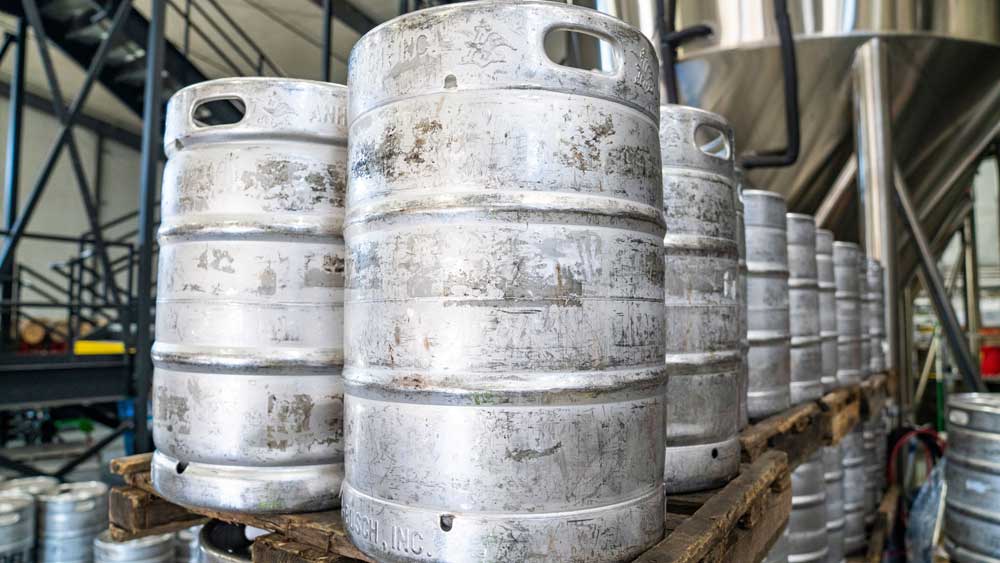
So what actually gets in the way of efficient commercial keg storage? Low space utilization, slow access, inventory confusion, and the risk of employee injury all tend to trace back to the same root cause: the wrong keg racking system. This guide walks you through keg sizes and weights, then breaks down floor stacking, single-deep, double-deep, gravity flow, and palletized storage. From there, we cover selection criteria, layout planning, safety, and temperature management. Whether you are designing a new cooler or retrofitting an existing storage area, you can use what follows as a practical checklist for your own operation.
What Is Keg Storage and Why Does It Matter for Breweries?
At its simplest, keg storage refers to how beer kegs are warehoused between packaging and transportation—from a brewery’s finished-goods area to a distributor’s warehouse and, eventually, a cold room at the point of sale. It involves three layers: the physical way kegs are held, the rack structure that carries and provides access, and the inventory flow logic that governs how kegs move in and out.
You will often see keg storage, keg shelving, and keg racking used interchangeably. They are related but not identical. Keg storage is the broad term. Keg shelving usually describes shelf-based or layer-based units, often used for smaller volumes or back-of-bar storage. Keg racking points to heavier, systemized structures built for commercial cold rooms and distribution warehouses. In a commercial setting, a proper keg storage system does more than hold kegs. It makes every keg locatable, retrievable, and countable—and it takes the physical wear and tear of constant keg handling off your employees.
Common Applications of Commercial Keg Storage
Different operations put keg storage to different uses. Breweries need a balance between dense finished-goods storage and a fast-moving shipping buffer; during peak season, keg throughput can multiply. Beer distribution centers deal with many SKUs, high volumes, and rapid turnover, where FIFO discipline and picking efficiency are central. Beverage warehouses may store beer kegs alongside syrup drums and other cylindrical containers, so rack versatility and load margin matter more than specialization. Bars and restaurants often work with extremely tight cooler footprints, where single-deep, adjustable keg shelving makes the most of limited square footage.
Understanding Keg Sizes, Dimensions, and Storage Requirements
Before you choose any rack, get the kegs straight. Common commercial kegs differ significantly in diameter, height, and full weight. Those numbers directly determine your rack’s shelf height, shelf width, and load rating.
Common Beer Keg Sizes and Their Capacities
The most common commercial kegs in the U.S. market are the 1/2 barrel (full keg), 1/4 barrel (pony keg), slim 1/4 barrel, and 1/6 barrel (sixtel). Euro kegs, typically 50 liters, also appear in import-heavy inventories. The table below consolidates commonly referenced dimensions and full weights as a baseline for rack selection.
Note that the heights above refer to the keg body. If your rack needs clearance above the keg to connect a coupler or perform other operations, add another 3–5 inches.
Why Keg Dimensions and Full Weight Matter for Storage
Full weight is the first hard constraint in rack selection. A half-barrel keg weighs about 160 pounds when full. If you plan to place four on one shelf level, that level must support roughly 640 pounds of concentrated load. Rack capacities vary widely by product and manufacturer—common keg shelving carries anywhere from 500 to 1,500 pounds per shelf, and heavy-duty systems can go higher. You need to work backward from full weight × kegs per level × a safety margin to determine the minimum capacity your rack must provide. Do not choose a rack first and then see how many kegs you can squeeze onto it.
Diameter and height determine shelf spacing and shelf width. A half barrel and a slim quarter are similar in height but very different in diameter. A 1/6 barrel is only about 9.25 inches across, so placing sixtels on shelves designed around half-barrel dimensions wastes a significant amount of horizontal space. That is why adjustable-height keg shelving is more practical than fixed-position shelves in multi-SKU warehouses.
How to Calculate Your Keg Storage Capacity
Start with a simple estimate: list every keg type you store, your average and peak inventory counts, and your expected growth over the next 12–18 months. Group by keg type, then use kegs per shelf level × usable levels to back into the number of rack sections you need. Vertical space is the most commonly wasted resource in a cooler. If clear height allows, three, four, or more levels can shift pressure off your floor footprint and into the air. If you prefer not to calculate by hand, some rack suppliers offer an online keg shelf calculator where you enter cooler dimensions and keg types to get a preliminary layout suggestion.
What Are the Different Types of Keg Storage Systems?
This is the part where you should read each option against your own warehouse reality. None of the five systems below is universally “best.” The right choice depends on your space, SKU mix, and turnover rhythm.
Floor Stacking for Keg Storage
Floor stacking is the original approach: kegs sit directly on the floor, either in a single layer or stacked two or three high. Its appeal is low initial cost—no rack purchase is required—and it can work for temporary or very small-volume storage. The trade-offs are substantial. Space utilization is capped by stack height. Retrieving a keg from a lower layer often means moving upper layers first. The more SKUs you handle, the more chaotic the floor becomes. And if kegs are laid on their sides without chocks, rolling is a constant risk. For a commercial warehouse shipping more than a few dozen kegs a day, floor stacking quickly becomes an efficiency bottleneck.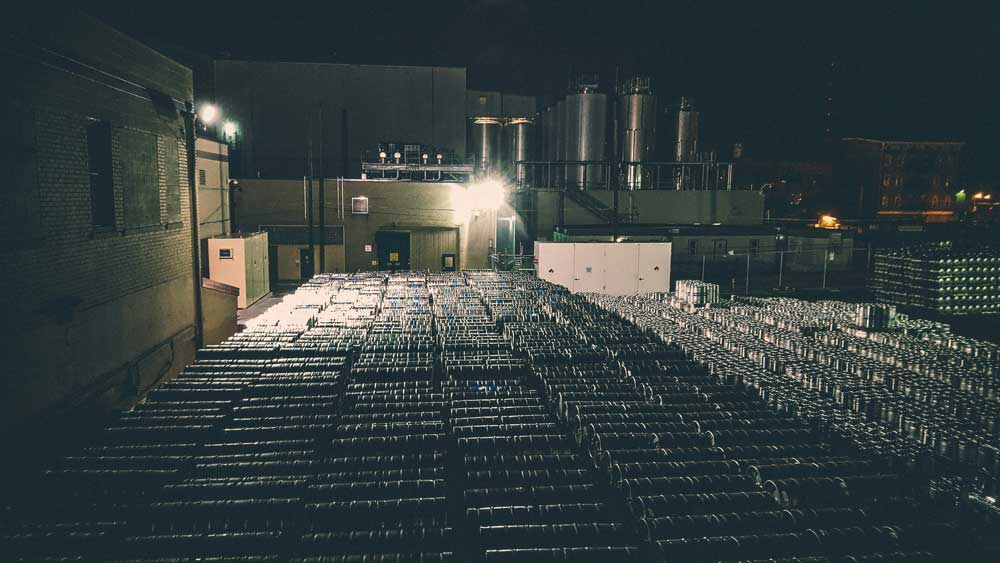
Single-Deep Keg Storage Racks
Single-deep racks hold one keg deep (or one row of kegs) facing the aisle. The defining advantage is that any individual keg can be retrieved without moving another keg in front of it. This suits warehouses with many SKUs and moderate inventory per SKU, and it works well on the picking face of a cooler. A single-deep keg rack for half barrels is typically around 17 inches deep—enough for one keg front to back—so a picker can reach the target keg directly.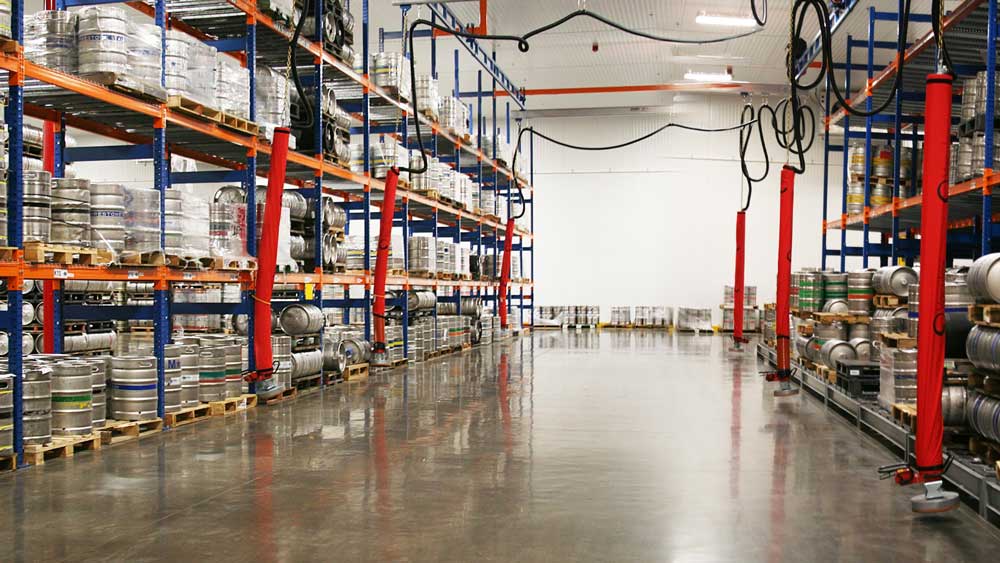
Double-Deep Keg Storage Racks
Double-deep extends storage depth to two kegs front to back, commonly around 33 inches deep. Density improves noticeably compared with single-deep, but the trade-off is access: to reach the rear keg, the front keg must be handled first. Double-deep therefore fits reserve stock, slower-moving SKUs, or items with very large inventory per SKU. A practical configuration is to place fast movers on the aisle face of single-deep racks and keep replenishment stock in a double-deep reserve zone—a “picking face plus reserve” split.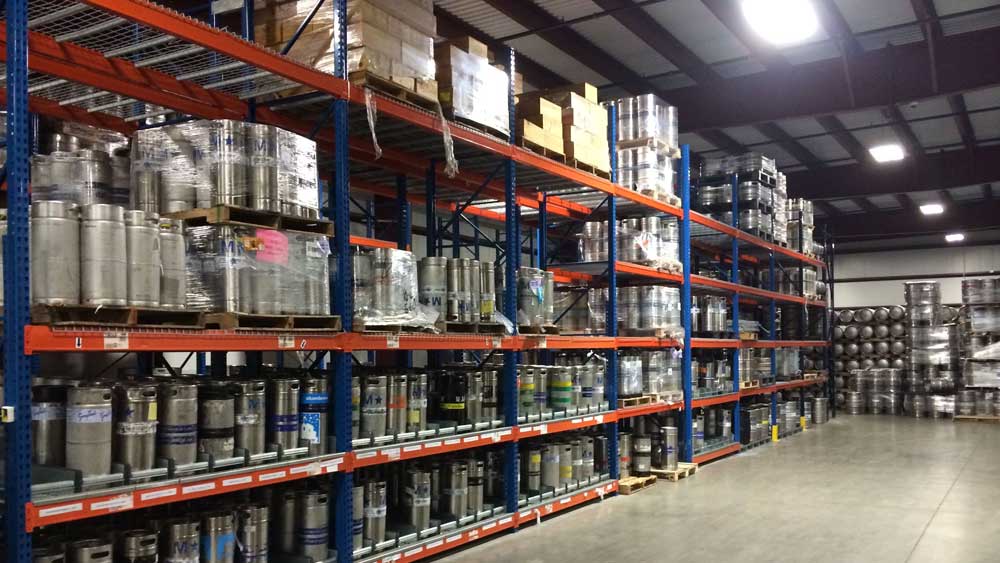
Gravity Flow Keg Storage Systems
Gravity flow racking uses rollers or guide tracks to let kegs slide forward along inclined lanes. Loading happens at the rear, picking at the front, which naturally supports FIFO (first in, first out). Lanes can be built deep—common systems hold eight or more kegs per lane—making them suitable for high-volume, high-turnover distribution warehouses. These systems typically include end stops or high-position roller stops to keep kegs from sliding out of the lane or tipping. Lane pitch must be calibrated; otherwise the last keg may stall before reaching the picking end. Gravity flow requires a higher upfront investment, but in the right application, its gains in density and inventory rotation are difficult to replicate.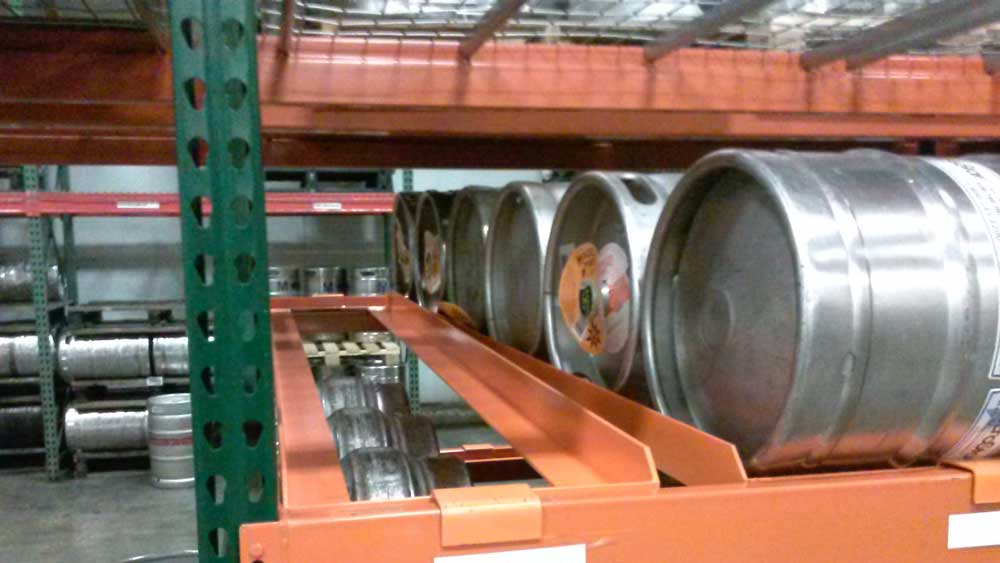
Palletized Keg Storage and Warehouse Racking
Placing kegs on pallets and storing them in pallet racking is common in large distribution centers. The advantage is batch handling efficiency: a forklift can move an entire pallet in and out, which suits concentrated SKUs and large single-batch volumes. But standard pallet rack beams and decking are not necessarily optimized for the bottom contact profile of cylindrical kegs. Without dedicated support structures or anti-slip decking, kegs can shift on the pallet, and localized loads can exceed what the beam or deck is rated to carry. When using palletized storage, confirm that the rack’s rated capacity applies to the combined weight of pallet plus kegs, not just the pallet rack’s nominal load figure.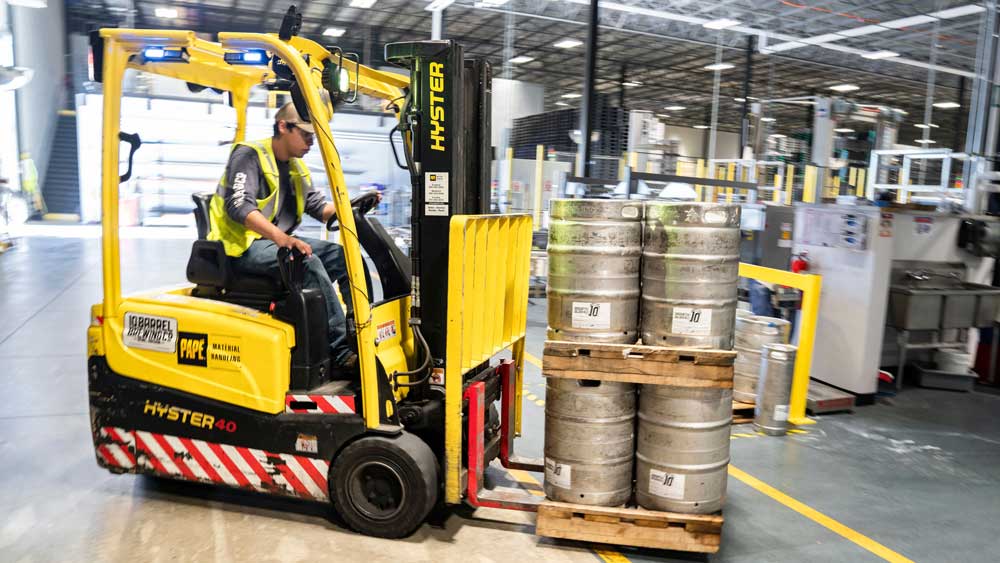
The table below summarizes the five systems side by side.
How to Choose the Right Keg Storage Rack for Your Warehouse
The previous section covered the available options. This section addresses a narrower question: which one should your warehouse choose? Work through the five dimensions below before you contact a supplier.
Consider Your Keg Sizes and Storage Capacity
If half barrels dominate your inventory, shelf height and load rating must be designed around a 160-pound full weight. If sixtels make up a large share, avoid dedicating half-barrel-sized positions to them; otherwise you will waste horizontal space. Equally important: do not size the rack only for your current inventory. If you expect keg throughput to grow by 30% over the next two years, a configuration that fills every position today will force you to add racks later or fall back on floor stacking. Expandable levels or modular rack sections are usually a better investment than a once-and-done “fully packed” layout.
Evaluate Your Available Warehouse Space
Measure three numbers together: usable floor area, clear height (after subtracting lights, sprinklers, and evaporator units), and aisle width. In a cooler, aisles must accommodate not just people but also hand trucks, pallet jacks, and potentially forklifts, including their turning and operating clearances. A common mistake is to calculate rack footprint without calculating the space required to perform the storage and retrieval action. The result is a tightly packed rack layout that leaves no room to maneuver a keg out.
Choose the Right Storage Configuration
Single-deep or double-deep? FIFO or LIFO? These are not abstract questions. They follow from your SKU structure and turnover speed. Fast movers and many SKUs favor single-deep and picking-face accessibility. Large volumes, fewer SKUs, and full-pallet in/out movements favor double-deep or gravity flow. If beer freshness is a core concern—especially for unpasteurized draft beer—gravity flow’s FIFO mechanism reduces reliance on human judgment. “First in, first out” becomes a result of the rack structure itself, not a rule employees have to remember.
Consider Material, Durability, and Corrosion Resistance
Cold rooms and high-humidity environments test rack materials far more aggressively than ambient warehouses. Aluminum keg racks—especially anodized aluminum or high-tensile aluminum extrusions—are a mainstream choice in coolers because aluminum does not rust the way steel does when a coating is scratched or breached. Steel keg racking offers high load capacity, but you need to confirm that the surface finish suits damp, frequently washed environments. Stainless steel provides the best corrosion resistance, but at the highest cost; it is usually reserved for areas with strict sanitation requirements or frequent exposure to aggressive cleaning chemicals. If your cooler floor is regularly washed down, or if racks are exposed to meltwater and cleaning solutions, material choice is not just a durability question—it is a question of whether the rack structure will still be safe five years from now.
Consider Accessibility and Material Handling Equipment
Finally, think about the people who use the rack every day. NIOSH’s recommended weight limit for repetitive manual lifting is commonly cited at around 51 pounds under ideal conditions. A full half-barrel keg weighs about 160 pounds, far beyond that threshold. That means full kegs should not be lifted manually. Your rack configuration must match your handling equipment. If you use keg trucks or pallet jacks, aisle width and rack entry height need to accommodate them. If forklifts operate in the space, confirm clearances at the rack face and above the rack. A good keg racking system should let employees pull, push, roll, or mechanically lift kegs—not carry 160 pounds in their hands.
How to Design an Efficient Keg Storage Layout
Buying the right rack is only half the job. Layout determines how kegs move through the building. An efficient keg storage layout keeps inbound and outbound routes as separate as possible, puts the fastest-moving kegs closest to the shipping door, and keeps the slowest movers in the depths of the storage area.
Organize Kegs by Size, Type, and Inventory Turnover
Separating keg types by zone is basic discipline. If half barrels, sixtels, and Euro kegs share the same rack section, shelf heights and widths will either waste space or fall short. Go one step further: full kegs and empty kegs must be managed separately. When empty returns and full-keg outbound share the same aisle without physical separation, they block each other during peak hours. Within the full-keg zone, assign positions by turnover: put the highest-volume SKUs at waist-to-chest height, and place slow movers on the top or bottom levels.
Optimize Storage Density Without Sacrificing Accessibility
Vertical space is the largest source of density, but “stacking higher” is not the same as “storing effectively.” If the top-level kegs require an employee to stand on an unstable makeshift step, or if a forklift needs repeated adjustments because the aisle is too narrow, density turns into inefficiency. A practical test: can an employee complete every put-away and retrieval safely, without improvised tools or unsafe movements? If not, that portion of vertical space is worth less than it appears. The same logic applies to aisles. Fewer aisles increase density, but an aisle too narrow for smooth equipment movement will eat the saved square footage in extra handling time.
Plan Loading, Picking, and Replenishment Routes
Sketch three routes on paper: inbound (from receiving to storage position), picking (from storage to shipping staging), and replenishment (from reserve stock to the picking face). Ideally, inbound and picking should not share the same narrow aisle at the same time. In gravity flow systems, loading and picking occur at opposite ends of the lane—a built-in advantage for FIFO—but only if the floor plan allows a separate rear replenishment aisle.
Account for Cold Room Layout and Air Circulation
A cold room is not just a warehouse with a refrigeration unit attached. Rack layout must leave a path for cold air circulation. Do not block evaporator fan discharge or return paths with racks or walls of kegs. Leave adequate clearance between rack rows and between racks and walls so cold air can reach every keg position. If kegs are packed too densely and airflow is cut off, a temperature gradient develops between kegs near the door and kegs deep in the room—a problem for unpasteurized beer quality. Treat “airflow reachability” as a constraint on par with “access convenience” when planning density.
Keg Storage Safety and Maintenance Best Practices
Kegs are heavy, round, and mobile. Safety is not an add-on; it is part of the keg storage design itself.
Prevent Kegs from Rolling, Falling, or Tipping
In floor stacking, any keg laid on its side needs chocks at the base to prevent rolling. When stacking two or more layers, the bottom layer should be secured on both sides to prevent the whole stack from shifting. On racks, side guides and front stops are critical—kegs should not have a free rolling path on the shelf. Gravity flow lanes must have high-position roller stops or retaining guards at the picking end to prevent a keg from tipping as it reaches the end of its travel. Anywhere a keg could move on its own, a physical stop should be in place.
Follow Proper Keg Handling Procedures
The NIOSH lifting guidance, with its roughly 51-pound load constant, is far below the full weight of most commercial beer kegs. This means full kegs should be moved and stacked with mechanical assistance: keg trucks, pallet jacks, lift tables, or dedicated keg lifters. Manual handling should be limited to short-distance rolling, positioning, and empty-keg movement. Training employees to lift with their legs and core and to avoid twisting is valuable, but more important is designing the layout and rack system so that manual lifting of full kegs is not required in the first place.
Check Rack Load Capacity and Structural Stability
Rack load labels are not decorative. You should know the rated capacity of every shelf level and every rack section, and ensure actual loading never exceeds those ratings. Inspect beams, uprights, connectors, and safety pins regularly for deformation, loosening, corrosion, or impact damage. Condensation and high humidity in coolers accelerate metal fatigue and corrosion. Aluminum resists rust, but fasteners at connections still need periodic verification. If a rack has been struck by a forklift or keg truck, inspect the structure before returning it to service—even if no obvious deformation is visible.
Keep Keg Storage Areas Clean and Organized
Ice buildup, spilled beer residue, and packaging debris on a cooler floor increase the risk of slips and loss of control over keg trucks. Keep aisles clear. Do not temporarily store empty kegs or packaging in picking aisles. Clean up standing water and debris under racks on a regular schedule. A clean keg storage area is not just about appearance—it helps employees read labels and locate target SKUs quickly, and it makes hazards visible before they become accidents.
Keg Storage Conditions: Temperature, Ventilation, and Inventory Rotation
Racks govern how kegs are stored. Temperature governs how long they can be stored. Neither substitutes for the other.
What Is the Ideal Temperature for Keg Storage?
For unpasteurized draft beer—the majority of draft beer in the U.S. market—the GCCA Commodity Storage Manual gives a reference storage temperature of 38°F (3.3°C) and a recommended storage life of about 6 weeks from packaging. Many industry sources place the suitable range for unpasteurized keg beer at 36–38°F and note that sustained exposure above 50–55°F significantly accelerates quality decline. Pasteurized beer has a somewhat wider temperature window, but long-term exposure to high heat is still not recommended. In every case, the brewer’s stated storage requirements take precedence over any generic recommendation.
Prevent Temperature Fluctuations and Freezing
Temperature fluctuation damages beer more than a stable slightly elevated temperature. Repeated warm-cool cycles accelerate flavor deterioration and colloidal instability. The bigger danger is freezing: most beer begins to freeze around 28–30°F, and freeze expansion can damage the keg body, seals, and valve. Quality does not recover after thawing. Cooler temperature monitoring should include alarm thresholds to catch refrigeration faults or defrost cycles that cause localized temperature drops. Pay particular attention to rack positions directly in the path of evaporator discharge—do not let kegs sit in an extremely cold airstream.
Implement FIFO Inventory Management
FIFO (first in, first out) is not merely a “best practice” for keg beer. It is a basic requirement of quality management. Unpasteurized beer has a limited storage window. If an older keg sits deep in the rack for weeks before being pulled, it may be at or beyond its recommended storage life by the time it ships. Rack structure itself can support FIFO: gravity flow racks load from the rear and pick from the front, physically enforcing first-in, first-out. Single-deep racks rely on labeling and disciplined picking sequence at the aisle face to maintain FIFO. With double-deep or palletized storage, reserve-stock rotation needs explicit rules and regular checks so that “front kegs always ship and rear kegs never move” does not become the default pattern.
What Should You Check Before Buying a Keg Storage Racking System?
Before you contact any manufacturer or supplier, the checklist below can help you organize your requirements. Walking into the conversation with specific numbers is far more productive than saying “I need to store beer kegs.”
Keg Dimensions and Weight Capacity
- What is your keg mix—1/2 barrel, 1/4 barrel, slim 1/4, 1/6 barrel, Euro—and what share does each represent?
- What is the full weight and body diameter/height of each type?
- How many kegs do you plan to place per shelf level, and what concentrated load per level does that produce?
- Does the rack’s rated shelf capacity and overall capacity leave a reasonable safety margin?
Required Storage Capacity and Future Expansion
- What is your current peak inventory, broken down by keg type?
- What growth rate do you expect over the next 12–24 months?
- Does the rack system need to support adding levels or splicing on additional sections later?
Rack Material and Environmental Compatibility
- Is the storage environment a cooler, an ambient warehouse, or a wet/washdown area?
- How do aluminum, steel, and stainless steel perform in that specific environment?
- Are connectors and fasteners compatible with cooler humidity?
Storage Density and Picking Efficiency
- Does single-deep, double-deep, or gravity flow better match your SKU count and turnover speed?
- Does the picking face cover your highest-frequency SKUs, and are the golden-zone levels being used effectively?
- Does aisle width accommodate the handling equipment you actually use?
Customization, Installation, and Supplier Support
- Do standard rack dimensions fit your keg types and space, or do you need custom sizing?
- Does the supplier provide layout recommendations, load calculations, and installation guidance?
- Does after-sales support include replacement parts and structural inspections?
Filling out this checklist already puts you ahead of most buyers who lead with “what’s your price?”
Frequently Asked Questions About Keg Storage
What is the best way to store beer kegs?
For a commercial warehouse, the best method depends on keg mix and turnover. Multi-SKU, fast-turnover operations usually do well with single-deep racks and FIFO management. Large-volume, high-density operations may benefit from double-deep or gravity flow. In every case, kegs should sit on racks with side guides and stops—not on the floor on their sides, where they can roll.
Can beer kegs be stored at room temperature?
Pasteurized beer can generally tolerate short periods at room temperature, but unpasteurized keg beer should remain refrigerated throughout storage. Most U.S. draft beer is unpasteurized, and 36–38°F is the commonly recommended range. Room temperature significantly shortens its quality window.
How many kegs can fit on a storage rack?
That depends on rack width, number of levels, and keg type. A typical multi-level keg racking section may hold 4–10 kegs; heavy-duty or custom systems can hold more. The real constraint is not “how many will physically fit” but whether the full weight per level stays within the rack’s rated capacity.
Can you stack beer kegs on top of each other?
Yes, with conditions. When stacking two or more layers, the bottom layer must be chocked to prevent rolling or shifting, the stack should remain symmetrical, and total height must not compromise stability or safe retrieval. For full kegs, stacking beyond two layers is better handled with a dedicated keg stacker or rack system rather than bare kegs on bare kegs.
What is the best racking system for a walk-in cooler?
In a space-constrained walk-in cooler, single-deep aluminum keg shelving with adjustable shelf heights is often the most practical starting point. Aluminum handles cooler humidity well, single-deep design allows each keg to be retrieved independently, and adjustable shelves accommodate different keg types. If cooler depth allows and SKUs are concentrated, gravity flow racking can further improve density and FIFO efficiency.
Should beer kegs be stored using FIFO?
Yes. Unpasteurized keg beer has a limited storage life, and FIFO reduces the risk of kegs exceeding that life in the warehouse. Gravity flow racks support FIFO structurally. Other rack types require labeling, location management, and picking rules to maintain first-in, first-out discipline.
Can standard warehouse pallet racks be used for keg storage?
Yes, but not by default. Keg stability and localized load distribution on a pallet differ from standard case goods. You need to confirm that decking or support structures prevent keg movement and that the rack’s rated capacity covers the actual combined weight of pallet plus kegs. Without cylindrical-load support features, a dedicated keg racking system or anti-slip/support accessories is the safer choice.
How much weight can a keg storage rack hold?
Capacity varies widely by product and manufacturer. Common keg shelving carries roughly 500–1,500 pounds per shelf; heavy-duty systems can go higher. Calculate your actual requirement from the full weight of your heaviest keg type multiplied by kegs per level, then add a safety margin. Do not rely on a nominal product figure alone.
Final Thoughts: Choosing the Right Keg Storage Solution for Your Business
Choosing a keg racking system is ultimately a process of replacing guesswork with data. First, establish what you store: keg types, full weights, and peak counts. Then measure the warehouse: length, width, clear height, usable aisle width, and the location of evaporator units. Then match the rack type—single-deep, double-deep, gravity flow, or palletized—to your SKU structure and turnover speed. Storage density, retrieval efficiency, FIFO discipline, and employee safety all need to enter the decision together. They are not afterthoughts to be solved after the rack is installed.
If you are planning keg storage for a brewery, distribution warehouse, or cooler, HEDA SHELVES can help translate the calculations above into a specific rack structure, level configuration, and material plan based on your warehouse dimensions, keg mix, and expected storage volume. Send us your floor plan, keg list, and approximate inventory counts, and we can discuss whether a standard system is sufficient or whether your cooler conditions call for a customized design.