How to Inspect Pallet Racking?
In the OSHA accident database in the US, there were multiple fatal accidents related to pallet racking recorded in 2024 alone. The descriptions of these incidents point to a similar pattern.
For example:An employee was crushed to death by a pallet rack.
An employee fell to their death from a rack.
An employee died from a head injury caused by a collision between an industrial vehicle and a rack.
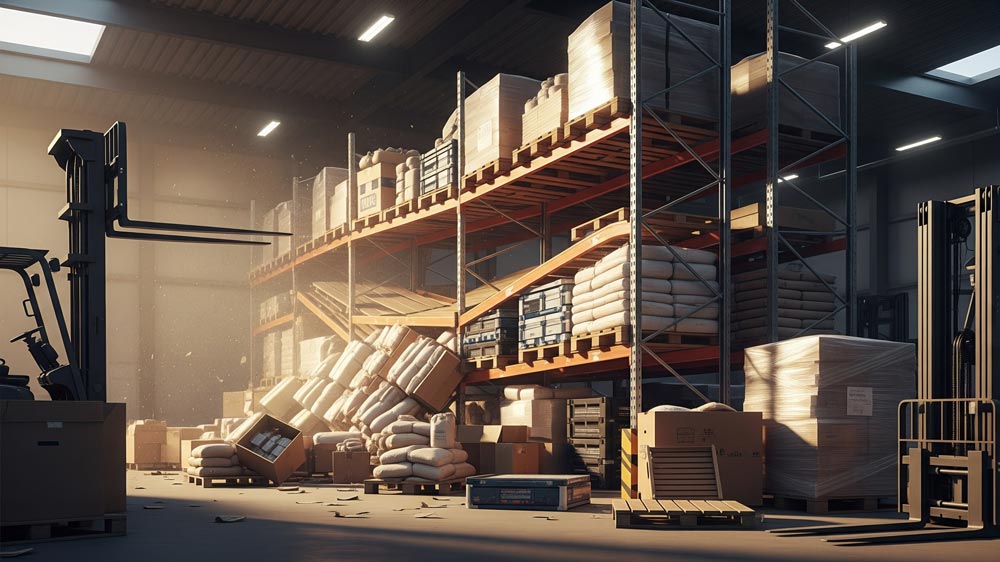
Safety incidents in a warehouse are terrifying. While we can never guarantee that accidents will never happen, I believe that through proactive prevention, we can significantly reduce the probability of them occurring.
This is the original purpose of my article, and it is also the core message.
So before we start, I want to ask you, the reader, a question: Does your warehouse have a schedule for regular rack inspections? And do you know how to inspect them?
Daily Inspections: What to Check?
Daily inspections of warehouse racks are like a routine check-up for your car. By the time the rack is broken, it's often too late. For safety reasons, routine inspections are highly necessary and non-negotiable!
I recommend choosing the person responsible for inspections based on the following two scenarios.
- Scenario 1: If your warehouse is small with a limited number of racks, you can choose either a forklift operator or a warehouse administrator to be responsible for the inspections.
- Scenario 2: If your warehouse is large with many racks, I suggest appointing a dedicated safety officer to handle this task.
What are the Key Areas of a Daily Inspection?
Now that we know who should do the inspections, what are the key areas to focus on? This is an important piece of knowledge.
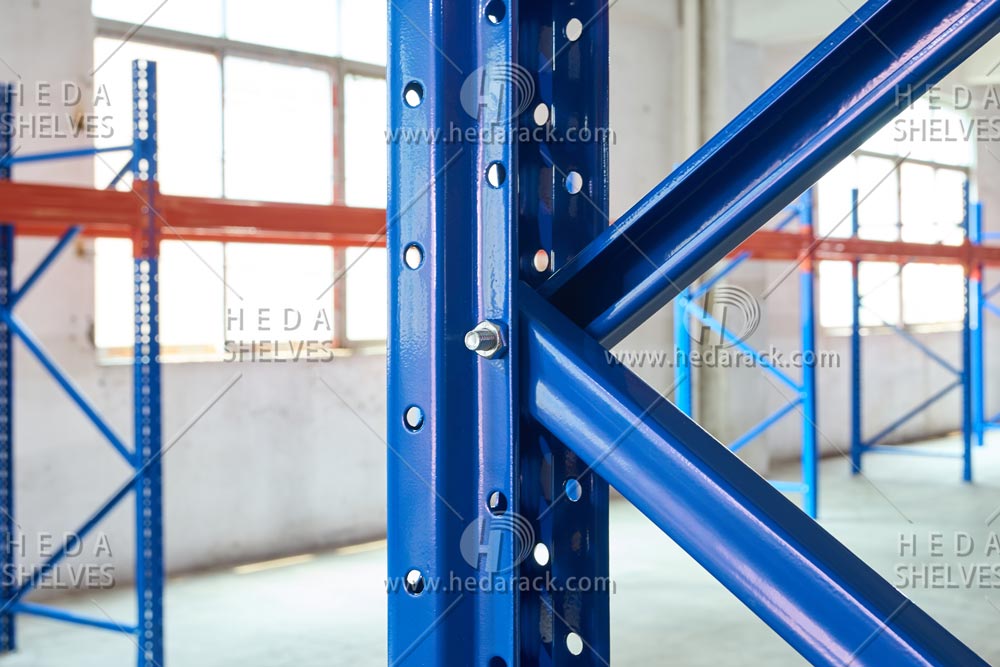
Check the Uprights
The uprights are the "legs" of the rack, supporting the entire system's weight. They are the most vulnerable to forklift impacts. You should walk along the rack aisles and focus on these areas:
- Are there any bends or dents at the base? Even a slight bend can significantly reduce the upright's load-bearing capacity. Pay close attention to the bottom of the upright, as that's where most impacts occur.
- Are the uprights vertical? If you can visually see that an upright is leaning, it's a serious problem, indicating an issue with the foundation or structure.
- Are the column guards damaged? These protective devices are the first line of defense. If they are bent or loose, they cannot provide effective protection.
Check the Beams
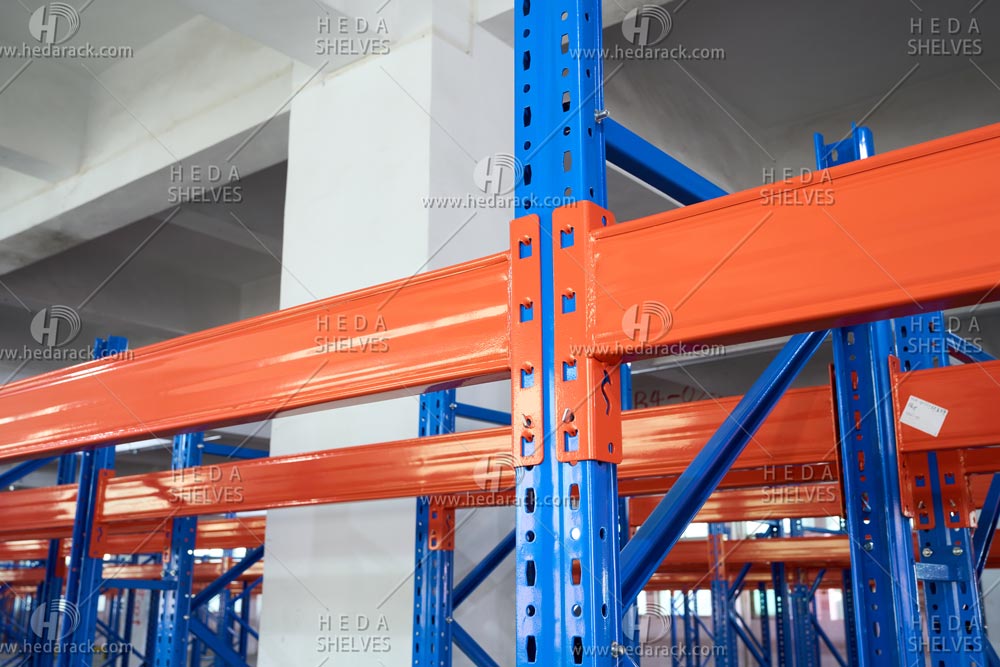
The beams are the "arms" of the rack, directly holding the goods. Damage to them can cause goods to fall. When inspecting, you need to pay attention to the following points:
- Are there any obvious bends or deformities in the beams? This is usually a sign of overloading. If you see a beam sagging, report it immediately.
- Is the connection between the beam and the upright secure?
- Are the safety pins/clips in place? These small pins are crucial for preventing beams from accidentally dislodging. They are often knocked out and not replaced.
- Are there any cracks or looseness in the connectors?
- Are the goods placed stably on the beams? Goods should be evenly placed on the beams and should not be too long, wide, or high.
Check the Anchors
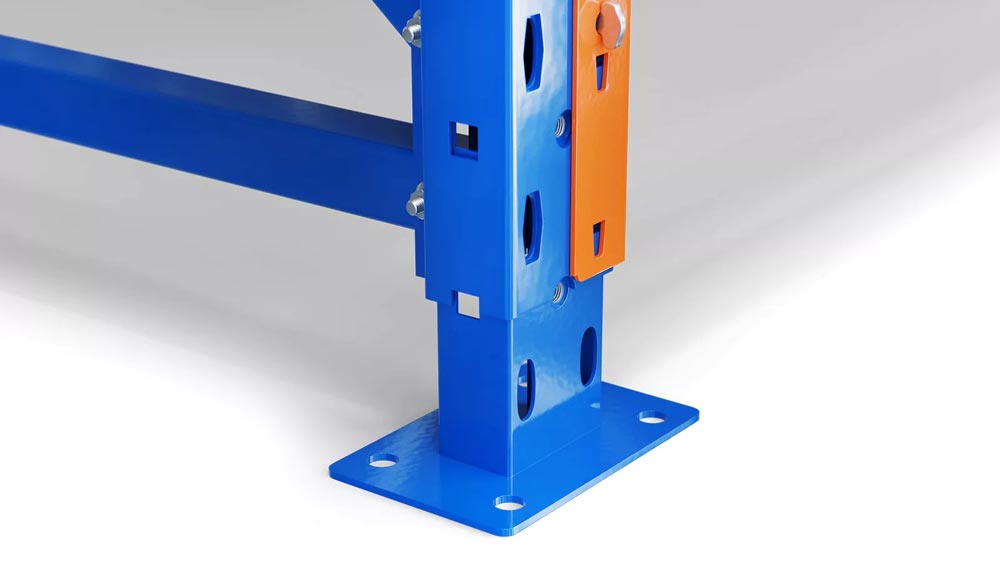
The anchors are the "roots" of the rack, securing it firmly to the floor. You need to check:
- Are any bolts loose or missing? Try to shake the upright by hand. If it feels loose or you see a missing bolt, it's a major problem.
- Are there any cracks in the floor? If cracks appear around the anchors, it may indicate that the rack is moving or that there's a problem with the foundation.
How to Handle Issues You Find?
If you find any issues during your daily inspection, whether it's a slightly bent upright or a missing safety pin, don't hesitate—take immediate action.
- Tag the damaged area: Use a high-visibility tag or tape to mark the damaged area and inform forklift operators and other relevant personnel. Prohibit any operation in this area.
- Report the problem: Immediately report the issue to your supervisor or a professional rack inspector.
- Prohibit use: The damaged rack must not be used until the problem is fixed. If necessary, remove all goods from the affected rack. Remember, the core of a daily inspection is "timely detection, immediate reporting." Your job is not to solve the problem, but to find it, so that a professional inspector or maintenance team can handle it.
Pallet Rack Damage Classification
After learning what to check, the next thing we need to understand is the different levels of rack damage. The actions we take will vary depending on the severity of the damage. Let me continue to explain!
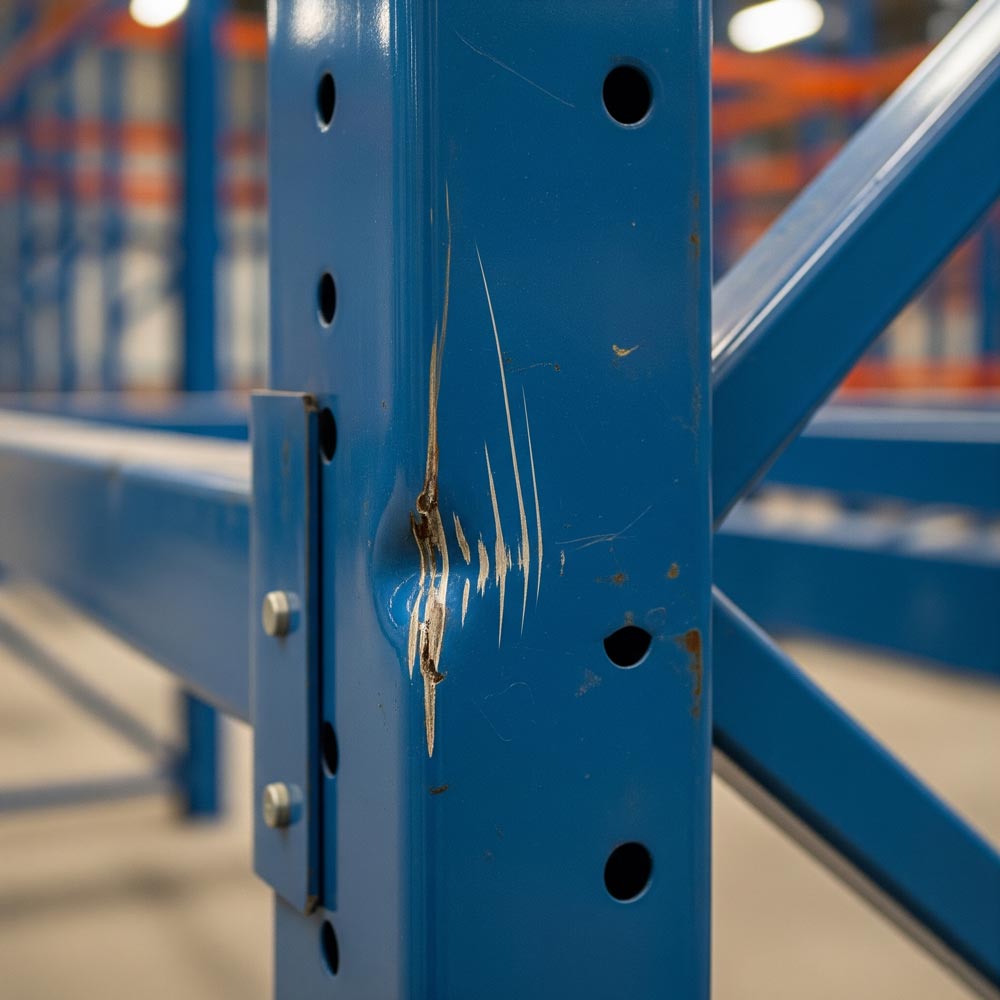
Minor Damage
Characteristics:
- Minor scratches or scuffs on the uprights or beams.
- No visible dents or bends.
- Beam deflection is within the acceptable range (manufacturers usually provide this data).
- Anchors are not loose.
- Action:
- Tag and document. Record these minor damages in the inspection report and continue to monitor them.
- No immediate action is needed. The rack can continue to be used, but you need to re-check the damage during the next inspection.
- Cause:
- Typically a minor scrape from a forklift, leaving only a shallow scratch on the paint.
Moderate Damage
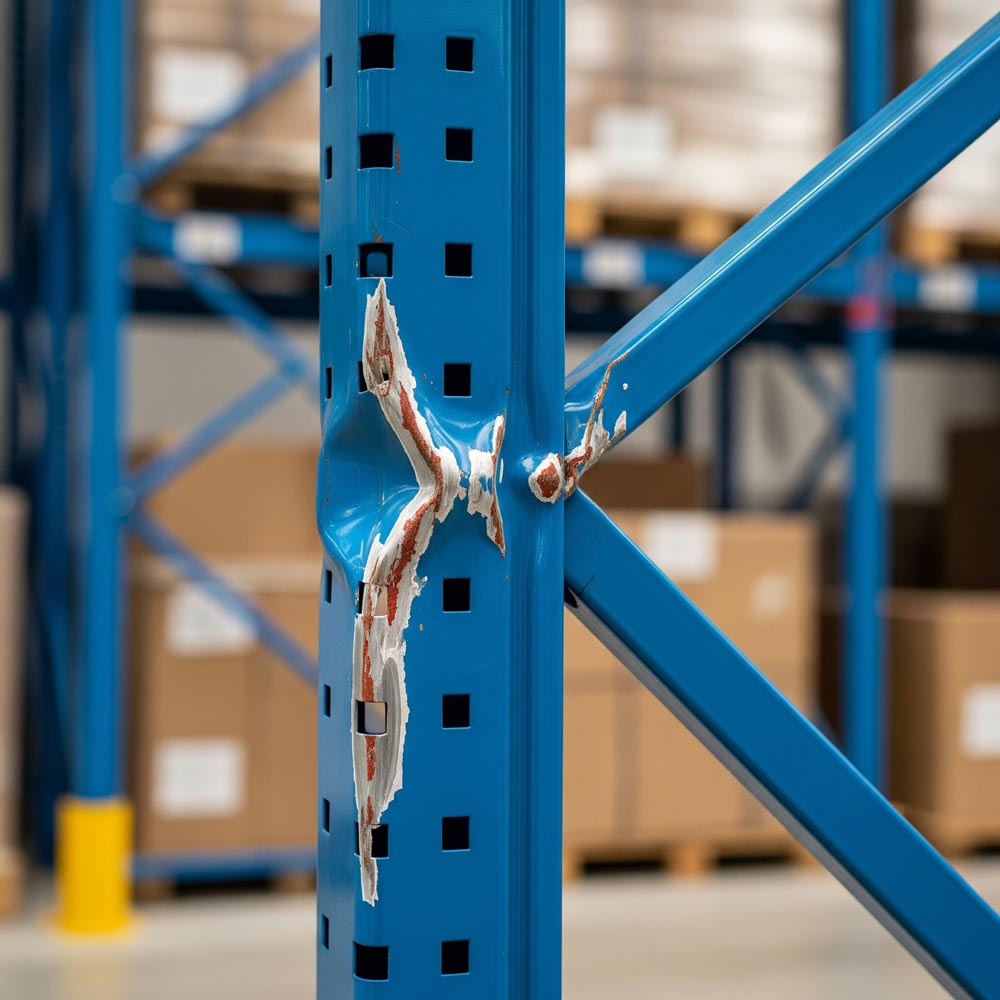
Characteristics:
- Obvious dents or slight bends on the uprights or beams.
- A missing safety pin on the beam-to-upright connection.
- Slightly loose anchors.
- Action:
- Immediately unload the damaged position and use a highly visible tag to isolate it.
- Immediately notify a professional for repair or replacement.
- Do not continue to use the rack until the problem is completely fixed.
Severe Damage
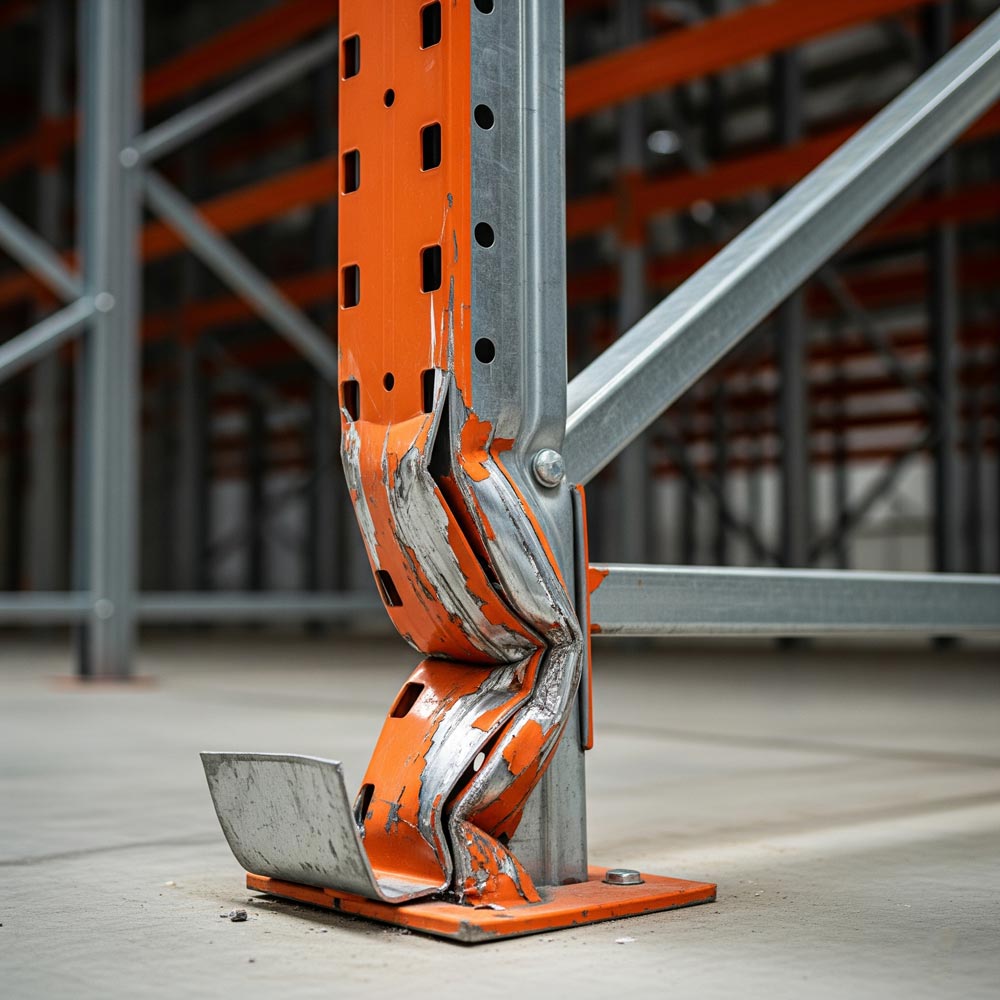
Characteristics:
- Uprights or beams are significantly twisted, bent, or folded.
- Uprights are visibly leaning.
- Beams are severely deformed or partially dislodged.
- Anchors are completely detached, or the surrounding floor has severe cracking.
- Action:
- Immediately stop all activity in the area and evacuate all personnel.
- Immediately unload all goods from the damaged rack and adjacent racks.
- Immediately notify a professional inspector and maintenance team.
- Absolutely no personnel are allowed to enter the area until the problem is completely resolved.
This classification system is the core of rack inspection. It turns subjective judgment into an objective action guide, ensuring we can react as quickly and correctly as possible when we find a problem, thereby maximizing the safety of personnel and goods.
How to Conduct an Inspection: Steps and Techniques
Next is a very crucial issue. A systematic inspection process and the right tools ensure that the inspection is comprehensive and effective. Without a good process and tools, inspections can become disorganized and prone to missing important details.
Let's go into detail about the steps and techniques for a daily inspection.
Systematic Inspection Process
You can think of the inspection process as a fixed "roadmap" to ensure you don't miss anything.
1. Preparation:
- Notify relevant personnel: Inform the warehouse manager, forklift operators, and other staff that you will be conducting a rack inspection. This ensures they are aware of your presence and can cooperate, for example, by avoiding the inspection area.
- Prepare your tools:
- Flashlight: To inspect the inside of the rack or areas with insufficient light.
- Level: To check the verticality of the uprights.
- Tape measure: To measure the degree of beam deflection (optional, used in more professional inspections).
- Camera or phone: To take photos of any damage as evidence for records and reports.
- Log sheet and pen: Prepare a standard rack inspection log sheet to fill in the results.
- Plan your route: Map out which rack aisle you will start and end with to ensure you don't repeat or miss any areas.
2. Inspection Steps (Step-by-step check):
- Inspect from the bottom up: Start from the base of the rack, checking the uprights and anchors first, as these are the most common areas for damage.
- Check aisle by aisle: Follow your planned route, inspecting each rack aisle one by one.
- Comprehensive left, middle, and right check: At each bay, first check the upright on the left, then the beams in the middle, and finally the upright on the right. This ensures you don't miss any parts.
- Pay attention to the floor: While inspecting the racks, also pay attention to the floor in front of them. Are there any scattered debris, liquid spills, or floor cracks? These can affect forklift operation and rack stability.
3. Documentation and Reporting:
- Document immediately: As soon as you find any issues, whether minor or severe, you must mark them on your log sheet.
- Describe in detail: In your notes, write down the specific location of the problem (e.g., "Area A, Row 3, Bay 2, bottom of the left upright"), the type of damage (dent, bend, etc.), and the level (using the red, yellow, and green tags we discussed earlier).
- Take photos for evidence: Take clear photos to attach to your report. The photos should include the rack number and details of the damage so that maintenance personnel can quickly locate the problem.
Common Causes of Damage
Forklift Collision
This is the number one cause of rack damage, the "root of all evil."
- Causes: Insufficient operator training, reckless driving, limited visibility, narrow warehouse aisles, speeding, etc.
- Common damage:
- Base of the upright: This is the most frequently hit area. Even a minor collision can cause the steel at the base of the upright to bend or dent, severely weakening its load-bearing capacity.
- Beams: Forklifts may accidentally hit a beam while storing or retrieving goods, causing it to deform, bend, or knock off the safety pin.
Overloading
Every rack has a specific design load capacity, just like a car's weight limit.
- Causes: Failure to follow the manufacturer's load capacity guidelines, inaccurate goods weight information, lack of operator knowledge.
- Common damage:
- Beam deflection/sagging: This is the most obvious sign of overloading. The beam will gradually bend downward from bearing too much weight.
- Upright bending: When the entire rack system is overloaded, the uprights may start to bend outwards from the middle or develop an "S" shape.
Improper Installation
If a rack has issues from the very beginning of its installation, it's like a skyscraper built on sand—it's unsafe from the start.
- Causes:
- Missing or loose anchors: This is the most severe installation problem. The rack is not secured to the floor and loses its ability to resist side impacts.
- Uprights not vertical: If the uprights are not properly aligned, they cannot distribute weight evenly, causing certain parts to bear excessive pressure.
- Common damage:
- Leaning rack: The entire racking system may lean to one side, which is a clear sign of an unstable foundation or non-vertical uprights.
Improper Use or Modification
Sometimes, for convenience, people make "common sense" modifications to racks, which can also have fatal consequences.
- Causes:
- Randomly removing or moving beams: Removing a level of beams can alter the rack's structural design, making it unable to support its original load.
- Mixing components from different manufacturers: Rack components from different brands may not fit together perfectly, leading to loose connections.
- Placing pallets directly on ground-level horizontal supports: Goods should be placed on the beams, not on the horizontal support bars at ground level.
- Common damage:
- Component dislodgment: Mismatched parts may loosen or fall out during use.
What to Do After Discovering an Issue?
Handling Minor Damage
- Characteristics: Only surface scratches, paint damage, or minor beam deflection within an acceptable range.
- Steps:
- Tag and document: Record the location, type, and extent of the damage in your inspection log. Use a green tag or tape to mark the area.
- Monitor: Remind relevant personnel to be aware, and focus on this area during the next daily inspection to see if the damage has worsened.
- No immediate action: There's no need to stop using the rack or contact maintenance immediately, but make sure all records are archived for tracking.
Handling Moderate Damage
- Characteristics: Obvious dents, slight bends, or missing safety pins.
- Steps:
- Immediately unload the damaged bay: Ensure all goods on the affected beams are safely removed.
- Isolate the area: Use yellow warning tape, rope, or a movable fence to cordon off the damaged bay or rack aisle to prevent anyone or any forklift from entering.
- Take photos and document in detail: Take clear photos and record the damage in detail in your inspection report, including the specific location and photo numbers.
- Notify professionals: Immediately submit the report to the warehouse manager or designated safety officer and ask them to contact a professional rack repair company or internal maintenance team for an assessment.
- Prohibit use: Absolutely no reloading of goods is allowed until the professional inspection and repair are complete.
Handling Severe Damage
- Characteristics: Uprights are severely twisted, bent, leaning, or a beam is about to fall.
- Steps:
- Emergency evacuation: This is the most crucial first step. Immediately give a verbal warning and ensure all personnel in and around the area are quickly evacuated.
- Immediate isolation: Use red caution tape or a fence to completely seal off the area around the damaged rack.
- Notify highest-level management: Immediately report to your supervisor, safety manager, and even company executives.
- Contact professional teams: Immediately contact a professional rack safety company or a structural engineer. They need to assess the stability of the entire racking system, as a problem in one bay can cause a chain reaction.
- Wait for a professional assessment: Do not take any repair or unloading action until a professional arrives and gives clear instructions, as improper handling could lead to further collapse.
Conclusion
We have been in the rack manufacturing and global sales business for twenty years. Over these years, we have seen far too many safety accidents of this kind. So we urge you, the reader, that there is no such thing as a minor safety issue in a warehouse. We must do every single thing right when it comes to safety.
I hope my content has been helpful to you. If you are looking for a suitable rack supplier, you are also welcome to contact us!