Storeroom Bulk Material Handling Solutions: A Rack-Centric Guide to Efficiency & Safety
When we walk into a storeroom, we often find bagged materials piled on the floor, aisles blocked, and workers struggling to find and move inventory. This isn't just "messy"—it's a massive cost sink and a serious safety hazard. So, when inefficiency and safety concerns plague your storeroom, where should you start looking for a solution?
My view is that while conveyors and forklifts are important, a well-designed racking system is truly the foundation of efficient bulk material handling.
In the following sections, I will guide you on how to completely transform your storeroom operations through the correct racking planning and integration.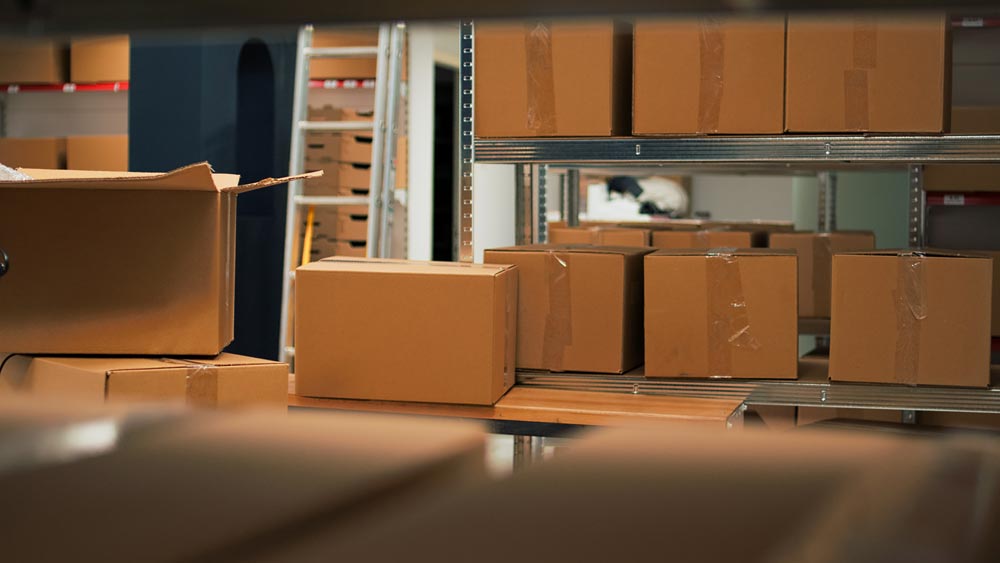
Unique Challenges in Storeroom Bulk Material Handling
Common Physical Forms of Bulk Materials
In a practical storeroom, we primarily deal with materials in these forms:
- Bagged: Such as rice, flour, fertilizer, plastic pellets, cement, etc. This is the most common form; the challenge lies in stacking stability, moisture protection, and preventing packaging damage.
- Boxed/Cartoned: Such as spare parts, food, beverages, and daily consumer goods. The focus is on stacking strength and label identification.
- Rolled: Such as steel coils, cables, carpets, fabrics, and plastic films. They are irregularly shaped and heavy, which places special demands on the load-bearing capacity and structure of the racks, with a high risk of rolling.
- Bulk in Small Containers: This is a very broad and important category, including:
- Drummed/Canned: Containing liquids, powders, or small particles, such as chemical raw materials or cooking oil.
- Palletized/Containerized: Holding scattered parts that are difficult to stack directly.
- Bundled: Such as metal rods, pipes, or timber.
- Bottled/Jarred: Common in the beverage and chemical industries, these are usually placed in cartons or on pallets before being stored on racks.
Tip: Understanding the physical form and attributes (weight, size, fragility, shelf life) of your materials is the first and most crucial step in choosing a solution.
Four Core Pain Points of Bulk Material Handling
I've summarized four points that are essentially "industry common ailments." Let's dive into each one so you understand why they are so critical.
Pain Point 1: Space Waste
The most expensive cost in a storeroom is the footprint and the space itself. Floor stacking is like living in a bungalow when you could build a skyscraper. This not only limits inventory capacity but also means you're paying more rent for the same amount of goods. The core of an efficient solution is to "claim space from the sky" by maximizing the vertical space utilization of the storeroom with the right racking system.
Pain Point 2: Inefficient Storage and Retrieval (S&R)
- FIFO/LIFO Issues: For materials with a limited shelf life (like food, medicine) or time-sensitive raw materials, "First-In, First-Out" (FIFO) must be followed. Floor stacking or the wrong rack type means goods inside are "buried" and cannot be accessed first, leading to significant waste. Conversely, goods without a time constraint may use "Last-In, First-Out" (LIFO).
- Long Picking Paths: If materials are stored haphazardly, the storeroom manager, to fulfill a single order, might have to trek back and forth across a massive storeroom, like navigating a maze. This drastically wastes time and labor.
- Core Impact: S&R efficiency directly determines order fulfillment speed and labor costs; it is the "heartbeat" of storeroom operations.
Pain Point 3: Safety Hazards
- Collapse Risk: Stacking too high directly on the floor, or using improper rack structures and load-bearing designs, can trigger a catastrophic "rack collapse," one of the most serious safety accidents.
- Dust Explosions: When handling materials like grain, plastic pellets, or metal powders, airborne dust encountering an ignition source can cause a violent explosion.
- Aisle Blockage: Cluttered storage invades safety aisles, not only impacting forklift operation but also obstructing emergency exit routes during a crisis (like a fire).
- Root Cause: A well-designed handling system should be intrinsically safe.
Pain Point 4: Loss of Inventory Control
- Counting Difficulty: When materials are piled together, they are hard to see and count accurately. Every inventory count requires massive labor and time, and accuracy remains low.
- Chain Reaction:
- Inaccurate Inventory → Distorted financial data and an inability to make correct purchasing decisions.
- Expired Materials → Direct financial loss due to the failure to implement FIFO.
- Production Stoppage → The most critical consequence. The production line shuts down because materials cannot be found or are missing, incurring huge losses every minute.
Racking Systems: The Underestimated Core Solution
How Racking Systems Directly Solve the Four Core Pain Points
Combating Space Waste: From 'Bungalow' to 'Skyscraper'
Without Racks (The Bungalow Era): Materials are stacked directly on the floor, allowing only limited and unstable upward stacking, wasting valuable vertical space.
With Racks (The Skyscraper Era):
- Vertical Space Utilization: A rack is essentially a high-strength, highly stable steel framework that allows us to safely stack goods near the storeroom ceiling, drastically boosting storage density. This means that on the same footprint, your storage capacity could increase by 3x, 5x, or even more.
- Solution Examples: VNA (Very Narrow Aisle) racking, double-deep racking, and automated storage and retrieval systems (AS/RS) are prime examples of this extreme focus on optimizing vertical space.
Boosting S&R Efficiency: From 'Hunting in a Maze' to 'Precision Retrieval'
Without Racks (Hunting in a Maze): Materials are stored randomly, forcing workers to run all over the storeroom to find a single item, relying entirely on the memory of experienced workers. Implementing FIFO is nearly impossible because inner goods are "buried" by outer ones.
With Racks (Precision Retrieval):
- Systematic Location: Racks assign a unique "address" to every storage location, such as "Area A - Row 03 - Column 05 - Level 02." A storeroom management system can instantly pinpoint any item.
- Optimized Picking Paths: The system can calculate the shortest picking route, eliminating unnecessary walking.
- Enabling FIFO/LIFO:
- Flow (Gravity) Racking: Uses gravity; goods are loaded from one side and retrieved from the other, naturally achieving FIFO, perfect for shelf-life management.
- Push-Back Racking: Allows multiple pallets to be stored in one lane; pushing in new goods pushes old goods forward, also generally leaning toward FIFO.
- Drive-In Racking: Offers a high-density storage solution primarily for LIFO materials.
- Solution Examples: Flow racking, shuttle racking, and picking racks combined with a WMS (Warehouse Management System).
Eliminating Safety Hazards: From 'Acrobatic Act' to 'Safe Driving'
Without Racks (Acrobatic Act): Unstable floor stacking carries a constant risk of collapse; blocked aisles mean forklift operations resemble a bumper car ride.
With Racks (Safe Driving):
- Structural Stability: Professional racks are designed with rigorous mechanical calculations to safely bear the rated load, fundamentally preventing cargo collapse.
- Standardized Aisles: Racking systems naturally delineate clear, wide, and straight operational aisles, ensuring safe passage for forklifts and personnel, and guaranteeing clear emergency and fire lanes.
- Product Protection: Goods stored on racks avoid direct contact with the ground, providing moisture and dust protection.
- Solution Examples: All heavy-duty racks meeting safety standards offer this functionality, especially Narrow Aisle Racking combined with guided forklifts to further reduce collision risk.
Achieving Inventory Control: From 'A Confused Mess' to 'Perfect Inventory Knowledge'
Without Racks (A Confused Mess): Goods are mixed together, making it difficult to see clearly or count accurately. Inventory counting involves moving and shifting items, which is time-consuming, labor-intensive, and inaccurate.
With Racks (Perfect Inventory Knowledge):
- Visibility and Countability: Goods are neatly and systematically stored in their designated locations, making them easy to see at a glance. Counting can be done rack-by-rack, row-by-row, or column-by-column—fast and accurate.
- Physical Basis for WMS: The "location" concept provided by racking is the foundation for a WMS. Every inventory data point in the system corresponds to a physical location in the real world, synchronizing the records with the actual stock.
- Preventing Expiry: By implementing FIFO, you naturally prevent materials from silently expiring in a corner.
- Solution Examples: Any form of racking combined with a WMS (Storeroom Management System).
Choosing the Right Racking System for Bulk Materials
Analyze Your Materials
This is the basis of all decisions. You need to ask yourself the following questions:
- What is its form?
- Is it bagged, boxed, rolled, drummed, or something else? This determines the load-bearing method and structure of the rack.
- How heavy and how large is it?
- What is the weight of a single pallet? (This is the core basis for selecting the rack's load capacity.)
- What are the pallet dimensions (length, width, height)? (This determines the size and clear height of each rack level.)
- Does it have special attributes?
- Does it have a shelf life? (This determines whether you need FIFO or LIFO.)
- Is it fragile, pressure-sensitive, or light-sensitive? (This determines whether shelf decks or special protection are needed.)
- Is it hazardous material? (This requires special fire and structural considerations.)
Summary: After this step, you should be able to clearly describe your material profile, for example: "I store bagged plastic pellets, 800 kg per pallet, dimensions 1.2m x 1.0m x 1.5m, with no shelf life requirement."
Analyze Your Operating Model
Knowing what your materials look like isn't enough; we also need to know how you use them.
- What is the retrieval frequency?
- Is it high-frequency picking (multiple small quantities picked from various locations daily)?
- Or low-frequency full-pallet retrieval (each S&R operation involves a full pallet)?
- What is the S&R principle?
- Must it be FIFO? (e.g., food, chemical raw materials)
- Can LIFO be used? (e.g., non-time-sensitive hardware parts)
- What is your SKU count?
- Few SKUs, but high inventory volume per SKU? (Suitable for high-density storage.)
- Many SKUs, but low inventory volume per SKU? (Suitable for storage that prioritizes high picking efficiency.)
Summary: After this step, you should have a clear operational profile, for example: "My storeroom mainly supplies raw materials to the production line, with high daily S&R frequency, requiring fast picking, and must adhere to FIFO."
Matching Needs to Racking Types
Now, let's match the "profiles" from the first two steps with the "racking family" below. Here is a quick selection guide I've compiled for you:
Assessing Your Storeroom and Budget
This is the final step to ensure the solution is feasible.
- Storeroom Physical Conditions:
- What is the clear height of the storeroom? (This determines how high you can build the racks.)
- What is the floor load-bearing capacity? (Heavy-duty racking has floor requirements.)
- What are the fire and lighting regulations?
- Equipment Matching:
- What is the type and lift height of your existing forklifts? (e.g., Narrow Aisle Racking requires a turret truck/three-way stacker.)
- Budget:
- What is your budget? The price difference is vast, from heavy-duty selective racking (low cost) to automated storage and retrieval systems (high investment).
Case Study & Reference
The content in the previous section might be hard to grasp quickly, so to speed up your understanding, I'll provide a reference using a customer case study.
The Scenario:
"I store bagged flour, 1 ton per pallet. Strict FIFO is required due to short shelf life. My storeroom has a clear height of 8 meters. I need to pick orders for 20 trucks daily, and I have a medium budget."
My Recommended Analysis and Advice:
- Core Priority: FIFO and High Picking Efficiency are your primary needs.
- Preferred Solution: Flow (Gravity) Racking. It perfectly meets your FIFO and fast-picking requirements. It should be deployed in the picking area.
- Alternative or Combination Solution: Since your storeroom has an 8-meter clear height, consider a combination of "Flow Racking + Selective Pallet Racking."
- Selective Pallet Racking: Used in the reserve area to store full pallets, maximizing height utilization.
- Flow Racking: Used in the picking area, restocked from the reserve area to enable efficient FIFO picking.
- Key Considerations: You need to calculate your pallet throughput, design reasonable rack depths (e e.g., five pallets deep in a lane), and ensure the storeroom's ventilation and moisture-proofing meet the requirements for flour storage.
Finally, and most importantly:
Before making a final decision, always consult a professional racking supplier or consultant. They can provide you with precise load-bearing calculations, detailed layout designs, and compliance checks. This is a specialized field, and safety must always be the number one priority.
Integrating Racking into the Material Handling Ecosystem
Collaboration with Handling Equipment: Ensuring the Flow is Fluid
Forklifts: The Enduring Partner
Forklifts and racks are a "spear and shield" relationship that must be precisely matched.
- Aisle Width vs. Racking Type: This is a core trade-off.
- Traditional Counterbalance Forklift: Requires an aisle width of approximately 3.5 meters → Best used with Heavy-Duty Selective Racking.
- Narrow Aisle Forklift: Requires an aisle width of approximately 1.6-2.0 meters → Best used with Narrow Aisle Racking. This is the classic co-design for maximizing space utilization.
- Reach Truck: Performance is between the two, with aisles typically 2.5-3.0 meters wide.
- Clear Height vs. Forklift Lift Capacity:
- The forklift's maximum lift height must be greater than the height of the highest rack beam, with a safety margin.
- The forklift's lift capacity determines which levels it can effectively service. If your rack's top beam is 10 meters high, but the forklift can only lift 8 meters, the top two levels are unusable.
- Load Capacity vs. Forklift Carrying Capacity:
- The forklift's rated carrying capacity must be greater than the weight of your heaviest pallet.
- The load design of each rack level must also be based on this data.
Conveyors: The Accelerator of Efficiency
When picking frequency reaches a certain level, having people physically carry goods around becomes a bottleneck. At this point, the principle should be "Goods Move, People Stay Put."
- Picking Point Interface: Directly install roller or belt conveyors at the outfeed side of flow racking or picking racks.
- Achieving "Goods-to-Person": Pickers simply work at a fixed station, taking items from the flow rack and placing them onto the adjacent conveyor line. The goods are automatically transported to the packing, checking, or sorting area. This drastically cuts down on the picker's walking distance, boosting efficiency and reducing labor intensity.
AGV/AMR: The Core of the Future
This is key to automation transformation. Rack design must proactively accommodate these robots.
- Interface Standardization: AGVs/AMRs require precise physical interaction with the racks. The rack's base frame structure must have sufficient ground clearance and strength to allow the AGV's lifting mechanism to engage.
- Precision Requirements: The installation perpendicularity and positional accuracy of the racks are extremely high. AGVs cannot make active minor adjustments like the human eye; they will only retrieve or store items according to the programmed position. Even a slight tilt or displacement of the rack can lead to mission failure.
- Adaptability Design:
- AGV-Suitable "Goods-to-Person" Stations: The racks themselves are mobile units (like mobile racking or specific-sized modules) transported by the AGV, which brings the entire rack to the picking station.
- AGV as a Driverless Forklift: In a heavy-duty selective racking environment, AGVs can replace traditional forklifts for automatic putaway and replenishment. In this case, the rack structure requires little change, but the storeroom floor flatness and network signal coverage requirements are very high.
Ancillary Systems and Safety Considerations: Building a Robust and Smart System
Safety Protection: Protecting Your Investment and Employees
Safety is the "1"; without it, all the "zeros" that follow are meaningless.
- Rack Upright Protection: Install column guards or protectors for rack uprights in areas with frequent forklift traffic, such as aisle corners and entrances/exits. This is the lowest-cost, highest-return investment, preventing structural damage from forklift collisions and avoiding potential collapse risks.
- Safety Netting/Wire Decking: Install safety netting on each rack level to prevent small items, loose parts, or contents from damaged packaging from falling from height, protecting personnel and goods below.
- Systematic Marking: Use floor markings and reflective tape to clearly delineate aisles, work areas, and storage zones, guiding the separation of people and vehicles.
Access Equipment: Designed for "People"
As long as there is manual operation, human factors and safety must be considered.
- Integrated Stairs and Platforms: For mezzanine racking or mid-to-high-level bays requiring manual access, sturdy stairs, platforms, and guardrails must be integrated. This ensures employees can safely and easily reach the picking location, eliminating the highly dangerous act of climbing the racks.
- Picking Carts/Baskets: Serve as "mobile locations" that complement the rack picking process, enhancing the efficiency of batch picking.
Labeling and Identification: The System's 'Nerve Endings'
This is the cornerstone for achieving precise inventory control and digital transformation.
- Barcodes/RFID: Every rack beam should have a unique, clear barcode or RFID tag. This is the rack's "ID card" and "house number."
- Integration with WMS:
- Putaway: The employee uses an RF handheld terminal to scan the goods' barcode, then scans the target location barcode. The WMS immediately links "what goods" and "where they are."
- Picking: The WMS sends instructions to the handheld terminal, telling the employee directly to retrieve goods from "A-01-02," eliminating the need to search by memory.
- Counting: The employee scans the location number, counts the physical items, and the data is instantly compared to the book quantity in the WMS.
- Achieving Precise Inventory Control: Through this "WMS + Location Labeling" system, you achieve:
- Visibility: Real-time knowledge of where every item is.
- Traceability: The ability to track the inbound, storage, and outbound history of the goods.
- Accuracy: Inventory accuracy can be improved to over 99%.
A Five-Step Professional Action Plan for Building an Excellent Storeroom
Step 1: In-Depth Diagnosis and Requirements Modeling
- Material Master Data Profiling:
- Static Attributes: Not only record type, size, and weight, but also include physical state (solid/liquid/bulk), packaging type (pallet/container/carton), storage requirements (ambient/climate-controlled/moisture-proof), and safety attributes (hazardous, flammable/explosive).
- Dynamic Attributes: Perform ABC analysis, classifying materials based on value and turnover rate. Class A (high value/high frequency) should be planned for prime picking locations; Class C (low value/low frequency) can be stored in high-density areas.
- Business Process Insight:
- Analyze the main inbound/outbound processes: Is it full-pallet-in, full-pallet-out, or full-pallet-in, case-picking-out? Calculate the daily and peak number of order lines.
- Define S&R principles: Which materials must be FIFO, and which can be LIFO?
- Quantifying Pain Points:
- Translate current pain points (e.g., low picking efficiency, insufficient space, high error rate) into quantifiable metrics (e.g., "average pick time is 10 minutes per order," "space utilization is only 65%," "monthly inventory variance is 5%"). This provides a comparison benchmark for the subsequent "optimization results."
Step 2: Precise Surveying and Spatial Modeling
- Architectural Data Collection:
- Key Dimensions: Storeroom floor plan, accurate clear height, column locations/dimensions, door locations/width/height/type, ramp access, fire suppression systems (sprinkler head positions, fire hydrants), and power locations.
- Potential Restrictions: Floor flatness and load-bearing capacity, lighting system, and network coverage strength. These directly impact the deployment of automation equipment (like AGVs).
- Flow Line Simulation and Planning:
- Based on the business processes from Step 1, simulate the primary logistics flow on the drawing: Receiving Area → Putaway Storage Area → Picking Area → Checking Area → Shipping Area. Ensure the flow is smooth, without crossovers, and without backtracking.
- Functional Area Zoning:
- Clearly delineate: Receiving Staging Area, Bulk Storage Area, Case/Piece Picking Area, Packing/Checking Area, Waste/Recycling Area, etc. Rational area zoning is the foundation for efficient operations.
Step 3: Solution Design and Simulation Verification
- Hybrid System Selection:
- Do not select just one rack type. Adopt a "combination punch" (multi-pronged) strategy. For example: Narrow Aisle Racking for Class A full-pallet storage + Flow Racking for Class B/C fast picking + Mezzanine Racking for storing Class C or light miscellaneous items.
- Design different "goods-to-person" solutions for various scenarios: Should you use conveyors interfaced with flow racking, or AGVs transporting mobile racks?
- 3D Visualization and Simulation:
- Use professional software for 3D layout design to visually display the rack layout, aisles, and equipment operating space.
- Perform logistics simulation for complex systems to model peak operational flow, proactively identify bottlenecks (e.g., congestion on a conveyor segment, queueing at a picking station), and optimize the plan before implementation.
- Issuing Authoritative Drawings:
- The final plan should include detailed racking layout drawings, load-bearing calculation reports, and installation schematics, ensuring the design complies with all local safety regulations.
Step 4: Lean Implementation and Change Management
- Develop a Phased, Minimal-Interference Implementation Plan:
- Phase 1: Build the new system in a new area and run parallel operations.
- Phase 2: Gradually migrate inventory from the old storeroom to the new system.
- Phase 3: Dismantle old racks and complete the installation of the remaining system in the original area.
- This approach ensures business continuity or minimizes disruption.
- Equipment and System Integration Testing:
- Ensure the new racking is fully integrated and tested with existing/newly purchased forklifts, conveyors, and the WMS system. For example, test if the WMS tasks accurately guide the forklift driver and if the scanner successfully identifies every new location label.
- Change Management and Training:
- This is the most easily overlooked but critically important step. Provide systematic training for operators, helping them understand the superiority of the new process rather than just forcing compliance. Employee acceptance directly determines the final effectiveness of the new system.
Step 5: Data-Driven and Continuous Optimization
- Establish a KPI Monitoring System:
- Monitor key performance indicators such as: Inventory Turnover Rate, Space Utilization Rate, Order Fulfillment Accuracy, Picking Efficiency per Person, and Order Fulfillment Cycle Time.
- WMS Deep Empowerment:
- The WMS is not just a recording system; it's an optimization engine. Use its data for analysis: Which locations are used most frequently? Which picking paths can be further optimized? Implement dynamic location management, allowing the system to automatically recommend the best putaway spot.
- Regular Review and Iteration:
- Establish a quarterly or semi-annual review mechanism. Based on business changes (e.g., introducing new products, doubling sales volume), re-execute Step 1's "diagnosis" process to fine-tune or upgrade the storage solution. An excellent storeroom is a living, constantly evolving organism.
Conclusion
A strategically chosen racking system is not an expense but an investment that delivers rapid returns. It directly lowers costs by enhancing space utilization, labor productivity, and safety.
So, are you ready to transform your storeroom from a cost center into an efficiency engine? Contact our professional warehousing consultants for a complimentary, tailored storeroom layout plan and quote for your specific needs.