Why Uniformly Distributed Load (UDL) Matters A Manufacturer’s Guide to Selecting Heavy-Duty Racking
When managing a warehouse facility, what is the absolute worst-case scenario that keeps you up at night? For a large majority of managers, it is the catastrophic failure of a rack system.
In reality, the root cause of most racking collapses is rarely an issue of simply exceeding the weight limit. Rather, it is typically a problem of incorrect weight placement.
Working directly as a shelving manufacturer, we frequently observe clients fixating on a single metric: "How many tons can this specific unit hold?" Unfortunately, they often bypass a far more essential principle of structural mechanics—how that weight is actually spread out. This brings us to the core concept we are unpacking today: the Uniformly Distributed Load (UDL).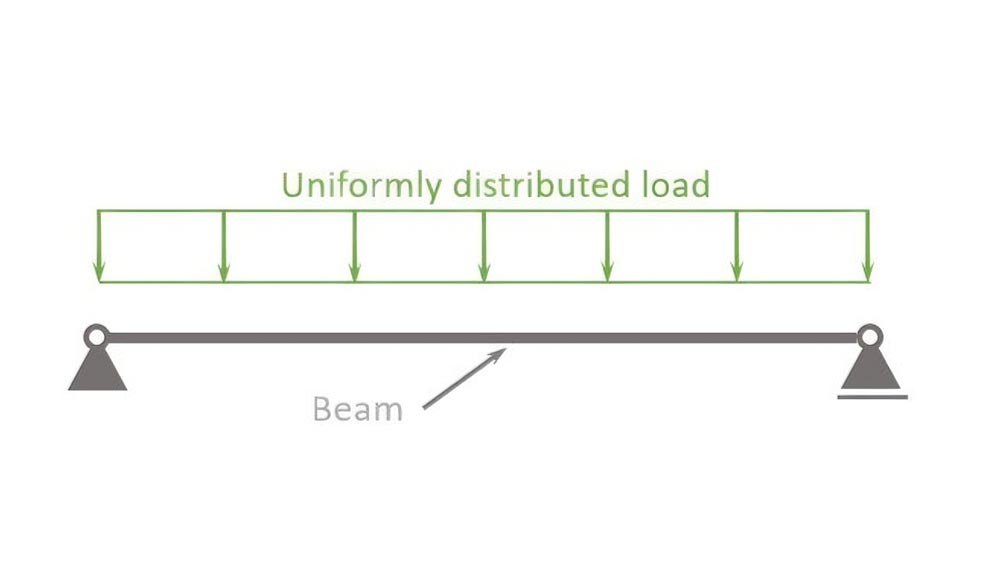
Grasping the mechanics of UDL does more than just shield your workforce from harm; it significantly extends the lifespan of your storage systems and can even slash your equipment procurement budgets. In the following sections, we will completely demystify the science behind evenly distributed weight, offering insider insights straight from the production floor.
What is Uniformly Distributed Load (UDL) in Warehouse Racking?
The Structural Engineering Definition
At its most basic level, a Uniformly Distributed Load implies that the total mass of your stored goods is dispersed perfectly evenly across the entire span of a pair of shelf beams.
To put it another way, if you have a standard pallet loaded with meticulously stacked cartons resting squarely across two horizontal beams, the downward force applied at every single point of contact is exactly equal. When structural engineers draft blueprints for industrial racking, their foundational mathematical models assume this baseline UDL condition.
Why Racking Manufacturers Use UDL as the Industry Gold Standard
You might wonder why fabrication plants do not calculate baseline capacities based on the most severe, worst-case scenarios. The answer lies simply in the physical properties of steel.
When steel components experience an even distribution of stress, their resistance to bending and overall structural integrity are maximized. Utilizing UDL as the universal benchmark for rated capacities allows for the most efficient and scientifically sound ratio of steel materials during the design phase. This approach is not merely a widely accepted global standard; it is also the most cost-effective manufacturing strategy that does not compromise on workplace safety.
UDL vs. Point Load vs. Concentrated Load: The Critical Differences
Within actual daily logistics operations, inventory comes in a myriad of irregular shapes and sizes. It is absolutely vital to draw a clear line between an even distribution and two significantly more hazardous types of weight allocation.
What is a Point Load and Why It Is Dangerous for Standard Beams
A Point Load occurs when a massive amount of weight is intensely focused onto a minuscule, solitary area of contact.
Consider the scenario where you place a heavy piece of machinery, equipped with four sharp steel legs, directly onto a set of regular rack beams. The entirety of that machine's weight pushes down solely on those four tiny locations. This intense localized pressure will immediately cause the metal to dent, warp, or potentially tear wide open. Standard horizontal members are categorically incapable of supporting direct point loads.
Concentrated Load: When Forklifts or Special Pallets Change the Game
Falling somewhere in the middle is the Concentrated Load. This term generally describes a situation where the mass is grouped into a specific, restricted segment of the beam. Classic examples include using custom pallets with non-standard spans, or storing specialized equipment where the focal point of the pressure lands dead center on the span.
Whenever the bending moment is tightly localized around the midpoint, the internal stress forced upon the structural framework multiplies exponentially.
Structural Impact: How Different Loads Affect Beam Deflection
Whenever a beam takes on weight, it naturally bows downward. In the realm of structural engineering, this physical bowing is referred to as deflection.
Following the guidelines set by the Rack Manufacturers Institute (RMI) alongside other recognized industry parameters, the maximum allowable bowing under a standard evenly distributed state is calculated using the formula: Max Deflection = L/180.
To illustrate, if you have a span measuring 2.7 meters (2700 millimeters) holding its maximum rated UDL capacity, the downward sag at its center point must strictly stay under 15 millimeters.
Conversely, if you take that exact same total weight but apply it as a concentrated force right in the middle, the bending moment at the center skyrockets. The resulting sag will aggressively breach the safety threshold, forcing the metal into an irreversible state of permanent plastic deformation.
A Manufacturer's Guide: How to Select Heavy-Duty Racking Based on Your UDL Needs
As a procurement manager or facility owner, how can you leverage this understanding of load distribution to source the perfect heavy-duty shelving systems? Simply follow these three actionable steps.
Step 1: Analyze Your Pallet Profile and Load Distribution
The very first action is to conduct an audit of your everyday inventory.
- Are you primarily storing uniformly stacked cardboard boxes? (This acts as a natural UDL).
- Are you handling asymmetrical machinery, cylindrical steel coils, or non-standard skids equipped with bottom runners? (These fall firmly into the non-UDL category).
Achieving an accurate assessment of your cargo's physical characteristics is the crucial starting point for any warehouse layout planning.
Step 2: Choose the Right Beam Profile and Steel Gauge Thickness
As a primary manufacturer, our production lines fabricate structural spans featuring various cross-sectional profiles (such as Step Beams versus Box Beams) and a range of steel gauges.
- Box Beams: These components deliver vastly superior torsional resistance, making them the most cost-effective choice for bearing massive UDL tonnages.
- Steel Gauge Thickness: The gauge of the metal serves as the absolute deciding factor for the maximum weight capacity curve. If your specific products cannot achieve a flawless even distribution, we must artificially elevate the safety margins during the blueprint phase by utilizing substantially thicker steel.
Step 3: Utilize Accessories to Turn Non-UDL into Safe UDL
Do not panic if your inventory simply cannot be arranged evenly. You do not necessarily have to spend a fortune customizing excessively thick and heavy structural spans. Instead, you can resolve these issues through the strategic application of safety accessories:
- Pallet Supports (Crossbars): These brackets run perpendicularly across the dual horizontal framework, actively absorbing and redistributing the intense pressure concentrated in the middle section.
- Wire Decking: This represents our most highly recommended add-on. Beyond merely preventing loose items from falling, a wire mesh deck effectively disperses irregular point pressures, actively transforming an unsafe condition into a highly secure, near-UDL environment.
Real-World Risks: The Cost of Mistaking Point Loads for UDL
Choosing to ignore proper load distribution principles and blindly stacking materials based solely on the sticker capacity label will eventually force a business to pay a severe price.
Permanent Deflection and Material Fatigue
Suppose your total load weighs precisely 2 tons, which technically falls beneath the system's rated 2.5-ton limit. However, if that entire 2-ton mass is shoved to one extreme side, the metal in that specific zone will surpass its designated yield strength. Over time, the structural member will develop an unrecoverable sag. This relentless material fatigue serves as the ultimate warning sign right before a complete catastrophic fracture occurs.
The Domino Effect: Progressive Warehouse Collapse
Structural engineers refer to this terrifying scenario as progressive failure. When a single beam bends violently due to a massive, concentrated force, it begins pulling inward on the vertical upright frames. The instant those vertical columns lose their stability and tilt, the adjacent bays will successively collapse exactly like a chain of dominos. This magnitude of disaster typically unfolds in a matter of seconds, leading to catastrophic financial losses and unquantifiable risks to human life.
Maintenance and Compliance: Keeping Your Warehouse UDL-Compliant
Regular Rack Inspections (OSHA & RMI Standards)
In strict accordance with the compliance protocols established by the Occupational Safety and Health Administration (OSHA) and the Rack Manufacturers Institute (RMI), facility directors are obligated to schedule routine safety audits.
- Measuring Deflection Rates: Safety inspectors should utilize precision laser tools or straightedges to rigorously verify whether the loaded sag has breached the accepted L/180 threshold.
- Visualizing Permanent Deformation: Once all pallets are removed from a level, if there is still a clearly visible bend in the metal, that specific component must be dismantled and replaced immediately.
Clear Load Capacity Labeling for Operators
Forklift operators act as the ultimate frontline defense for operational safety. Nevertheless, they are rarely trained to calculate complex physics formulas on the fly.
Because of this, it is mandatory to permanently mount highly visible capacity plaques on every single aisle. These load labels must not only broadcast the maximum tonnage but must explicitly state: "Rated Capacity is Strictly Based on a Uniformly Distributed Load (UDL)." Furthermore, management must initiate recurring training sessions to standardize and correct the drivers' daily loading behaviors.
Conclusion
In closing, evenly distributed weight is far more than just a dry, academic physics theory found in a textbook. It acts as the absolute bedrock for achieving sophisticated facility management, safeguarding human lives, and maximizing your capital investments in a modern logistics center.
As veteran racking manufacturers, our mission goes far beyond merely supplying premium-grade steel. We are deeply committed to engineering holistic, tailor-made storage systems that rigidly adhere to the highest international safety protocols, including RMI and OSHA.
If your fulfillment center is currently wrestling with highly unusual pallet configurations, or if you simply need verification that your existing structural setup meets proper safety distribution standards, do not hesitate to reach out to our team of senior structural engineers. We stand ready to provide comprehensive, precise capacity calculations and specialized facility evaluations.