The Expert Warehouse Relocation Checklist: Maximize Efficiency and Safety in Your New Facility
In the complex landscape of modern industrial logistics, a warehouse relocation is not a mere shift in physical coordinates; it is a strategic upgrade involving asset protection, operational continuity, and life safety.
For enterprises managing medium-to-large scale facilities, understanding the depth of this process goes beyond moving boxes. It is about maximizing facility efficiency and ensuring absolute regulatory compliance through precision planning.
Given the volatility of global supply chains, the risks involved range from five-figure legal fines to months of operational paralysis. Therefore, an expert-level roadmap is an essential tool for ensuring a seamless transition.
Pre-Relocation Strategic Planning and Macro Layout
Successful warehouse moves are built upon long-term, rigorous preparation. A typical relocation cycle should be initiated at least 6 to 12 months in advance. This timeframe is necessary not just for logistics coordination, but to provide a sufficient buffer for regulatory filings and structural engineering assessments.
Project Team Formation and Functional Allocation
The relocation process requires synchronized efforts across multiple core departments. A Project Manager should be appointed with chief decision-making authority to coordinate IT, operations, inventory management, customer service, and external logistics providers.
Reverse Timeline Construction
The project team should work backward from the scheduled "Go-Live" date. Critical milestones must include selecting movers, notifying vendors, completing inventory audits, installing racking at the new facility, and performing final safety inspections. It is advisable to build in a 15% time buffer to account for extreme weather, permit delays, or equipment malfunctions.
Financial Budgeting and In-Depth Analysis of Hidden Costs
Budget overruns are one of the most common failure points in warehouse moves. Beyond obvious transportation fees, many companies overlook the "invisible" costs associated with infrastructure compliance.
Explicit vs. Implicit Cost Structures
Effective financial planning requires a deep dive into the following areas:
- Logistics and Rigging Services: This includes specialized forklift rentals, heavy machinery hoisting, and potential temporary off-site storage fees.
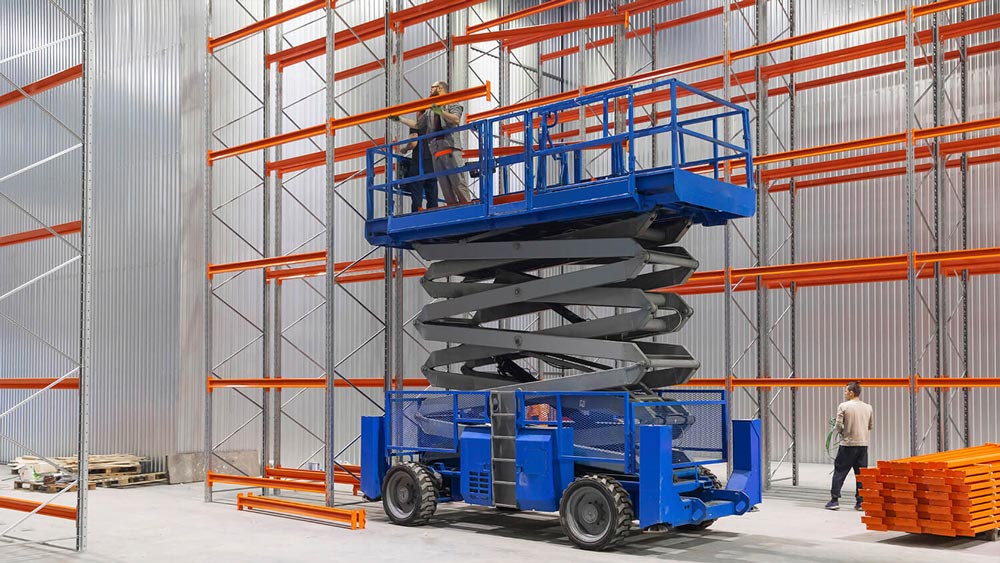
- Infrastructure Upgrades: Even when moving existing racks, costs often arise from purchasing new floor anchors, replacing damaged components, and installing signage that meets the new facility's requirements.
- Compliance and Engineering: In many jurisdictions, racking systems exceeding certain heights must be stamped by a Professional Engineer (PE) and undergo seismic load calculations.
- Operational Attrition: Decreased productivity during the move and potential order processing delays should be factored into the budget as opportunity costs.
Inventory Audit: Leveraging Relocation for Asset Optimization
Relocation serves as a strategic window to purge obsolete assets and optimize inventory structures. Rather than viewing the move as a simple "carry-over," companies should treat it as a comprehensive inventory health assessment.
ABC Analysis and Dead Stock Remediation
Before packing, a detailed inventory audit must be performed to categorize all SKUs by sales velocity and value. By identifying and liquidating "Dead Stock," enterprises can significantly reduce the volume of goods to be moved, directly lowering logistics and labor costs.
Labeling Systems and WMS Synchronization
The key to a "zero-delay" launch at the new facility lies in data accuracy. All pallets and parcels must be labeled with multi-sided, waterproof tags featuring scannable barcodes and detailed packing lists.
- Unique Identifiers: Each package should list the SKU number, description, quantity, and its precise predetermined location in the new facility.
- System Rehearsal: Before the physical move, simulate the new slotting logic within the Warehouse Management System (WMS) to ensure the system logic aligns perfectly with the physical layout.
Safety Standards and Engineering for Racking Systems
For businesses, safety is the core issue during relocation. Relocating a rack system is never a simple "teardown and setup"; it involves strict structural engineering standards and legal compliance.
Compliance with ANSI MH16.1 and OSHA
The Occupational Safety and Health Administration (OSHA) views racking safety as a top priority. While OSHA does not have a specific "rack law," it enforces the ANSI MH16.1 standard via the "General Duty Clause."
- Load Application and Rack Configuration (LARC): Every rack row must display clear load plaques indicating the maximum capacity per beam level, per pallet position, and the total vertical capacity of the frame.
- Floor Anchoring: All rack columns must be secured to the concrete slab using engineered anchors. In seismic zones, this typically requires at least two anchors per baseplate with specific embedment depths.
- Structural Integrity Checks: Before reinstalling used racks, all columns and beams must be physically inspected. Any column with a deflection exceeding 0.5% of its height or any beam showing cracks must be decommissioned immediately.
Cost-Benefit Analysis: New vs. Used Racking
During a move, many firms consider purchasing used racks or relocating their old systems. However, from an engineering standpoint, this often hides massive compliance risks.
For companies storing high-value goods or operating in strictly regulated regions, purchasing a new system typically offers a better risk-adjusted return.
Seismic Engineering and Floor Load Capacity Calculations
A warehouse floor is not just a flat surface; it is a complex load-bearing system. The strength and thickness of the concrete slab in the new facility determine the ceiling for storage density.
Concrete Slab Specification Evaluation
Before any racks are installed, the yield strength (PSI) and thickness of the concrete must be verified. Most modern heavy-duty racking requires a minimum of 3,000 to 4,000 PSI and a thickness of at least 6 inches.
- Concentrated Loads: High-bay racks exert pressure on small baseplate areas, which differs from Uniformly Distributed Loads (UDL). Engineers must calculate the maximum vertical pressure transmitted to the floor by each column.
- Dynamic Impact Factors: Kinetic energy from forklift operations adds to the floor stress. Calculations usually multiply static loads by an impact factor of 1.25 to ensure safety.
Impact of Seismic Design Categories (SDC)
In seismically active areas (such as parts of California or Arizona), the law requires rack systems to withstand lateral seismic forces.
- Hardware Variance: Seismic-rated racks often require larger, thicker baseplates (e.g., 5x7 inches or larger) equipped with heavy-duty cross-bracing and specialized beam-to-column connectors.
- Soil Class: Soil stability directly affects seismic wave transmission. If the new site is on soft soil (Site Class E or F), the structural requirements for the racks will increase exponentially.
Layout Optimization and Slotting Strategy
Relocation is a rare opportunity to rectify existing warehouse inefficiencies. Through scientific layout design, companies can drastically reduce order fulfillment time and costs.
The Core Logic of Slotting Optimization
Effective slotting management aims to answer one central question: Which SKUs should be positioned closest to the shipping area?
Pick Path and Aisle Width Design
When planning the new layout, the material handling equipment must be considered. Very Narrow Aisle (VNA) racking can increase storage density by 20% to 30%, but it requires expensive specialized forklifts and precise floor flatness. For general warehouses, aisles must be wide enough to accommodate the forklift's turning radius to prevent accidental impacts on the rack structure.
Execution and Logistics Coordination
Once the planning phase ends, the actual move requires high organizational discipline to ensure goods are not damaged and the sequence remains intact.
Phased Relocation Model
To maintain business continuity, experts recommend a phased move. Typically, a company will first move a portion of high-velocity SKU safety stock to the new facility to establish a temporary operational foothold.
- Phase 1: Prepare the new facility's racking, IT network, and basic office amenities.
- Phase 2: Relocate "Class A" inventory while using the old warehouse to fulfill existing orders.
- Phase 3: Gradually transfer remaining stock, material handling equipment, and non-core assets.
- Final Clearing: Ensure the old space meets the "broom-swept standard" for lease handover.
Professional Rigging and Heavy Hauling
General moving companies are often ill-equipped for heavy machinery, precision lab equipment, or automated sorting lines. These require professional "Rigging" services using gantries, Versalifts, or air skates. Ensure the contract includes clear insurance clauses covering risks from loading, transit, and offloading.
Post-Move Verification, Commissioning, and Training
The end of the physical move marks only the beginning of a new operational chapter. Before returning to full capacity, a series of rigorous tests must be conducted.
"Soft Launch" and System Debugging
Implement a "soft launch" for 3 to 5 days before going full-throttle. During this time, the project manager should focus on:
- WMS Pick Paths: Checking for logic conflicts or unnecessary path crossovers.
- Network Dead Zones: Ensuring Wireless Access Points (APs) provide full coverage even when racks are filled with stock.
- Equipment Performance: Testing the stability of automated conveyors, wrappers, and charging stations under load.
Safety Audits and Staff Training
Before the facility officially opens, a final comprehensive safety audit is mandatory.
- Rack Plumbness Check: Verifying that all rack columns are level and plumb; any lean may indicate foundation issues or installation defects.
- Fire Lanes and Egress Paths: Confirming that no goods are obstructing fire extinguishers, hydrants, or emergency exits.
- Employee Re-orientation: Aisle numbering, picking rules, speed limits, and emergency stop locations may have changed. All staff must undergo site-specific training, with records kept for OSHA review.
Conclusion: Turning Challenges into Competitive Advantages
Warehouse relocation presents an excellent opportunity for businesses to optimize their supply chain infrastructure. For us, as a racking manufacturer, the value we provide to our customers lies not only in the products themselves, but also in a comprehensive lifecycle management solution that enhances efficiency and security. By following this roadmap—from the strategic audit 6 months out to post-move validation—companies can avoid hundreds of thousands of dollars in legal risks and productivity losses.
True success in relocation is not measured by how many pallets were moved, but by how precision engineering (like seismic load assessment) and forward-thinking slotting optimization have laid the groundwork for future scalability. By strictly adhering to this expert-level checklist, management can transform a high-stress transition into a key milestone for operational resilience.