The Ultimate Guide to Storeroom Semi-Automated Material Handling Equipment Fulfillment Solutions: Ma
As we move into 2026, the global supply chain is undergoing a profound structural shift. For small and medium-sized enterprises (SMEs), this change is both a daunting survival challenge and a strategic opportunity for leapfrog development. In today's economic climate, warehouse management has evolved from simple inventory stacking into a pivotal component of a company's core competitiveness.
Currently, the most significant pressure in the warehousing sector comes from structural labor shortages. As populations age, fewer young workers are entering the logistics industry, causing recruitment and retention costs to climb annually. Simultaneously, the e-commerce boom has pushed customer expectations for fulfillment speed and accuracy to unprecedented heights. Against this backdrop, the deep integration of Artificial Intelligence (AI) and robotics is reshaping material handling workflows at an incredible pace.
However, for most businesses, full automation often entails astronomical initial investments, lengthy construction cycles, and extremely low system flexibility. While fully automated systems excel in large-scale, standardized operations, they can be too rigid when facing rapidly shifting market demands and diverse product types. In contrast, semi-automated material handling solutions—which combine advanced machine performance with the decision-making flexibility of human employees—have emerged as the most cost-effective transformation path for 2026.
This "human-machine collaboration" model not only significantly lowers technical barriers and financial risks but also achieves qualitative breakthroughs in overall throughput by optimizing specific bottlenecks. Semi-automated systems allow companies to invest in stages based on actual needs, starting with the most urgent constraints and gradually building a smart warehousing ecosystem.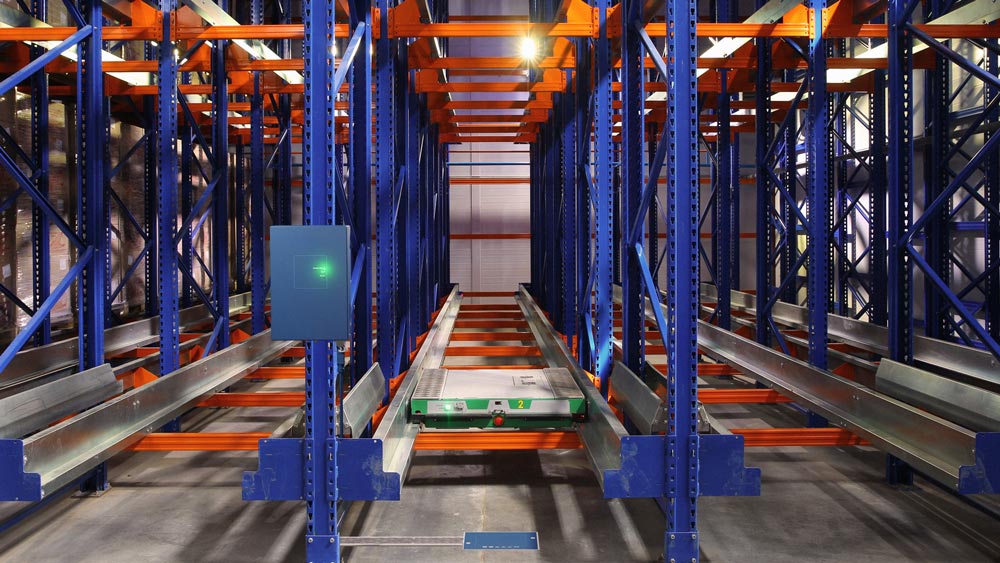
Core Technology Matrix: Building the Hardcore Foundation for Semi-Automated Fulfillment
In a semi-automated fulfillment plan, equipment selection directly determines the system's performance ceiling. The following four core technologies represent the most mature and widely used "combination punch" in today's market.
1. Pallet Shuttle Systems: Experts in Ultra-High-Density Storage
The Pallet Shuttle system is the ultimate solution to the conflict between high-density storage and rapid access. It consists of specially designed high-density racking, autonomously moving shuttle cars, and forklift operators.
The logic behind the shuttle system is quite ingenious. A forklift driver simply places a pallet on the entry rails of a specific lane. Once it receives a remote command, the shuttle car automatically carries the pallet to the deepest available spot in the lane. This mode completely eliminates the need for forklifts to enter the racking structure, expanding storage depth from the traditional 2-3 pallet positions to 40, 60, or even over 100.
The "deep-lane storage" capability of shuttle systems is particularly outstanding in food and beverage, cold chain logistics, and raw material buffer warehouses. Especially in cold storage environments, where shuttles can operate stably at temperatures as low as -25°C, they effectively reduce human exposure to extreme cold, significantly improving occupational health standards.
2. Vertical Lift Modules (VLM): Efficient Hubs for Small Parts
If shuttles are the champions of pallet storage, then VLMs are the "super stewards" for loose parts, tools, and high-value items. A VLM operates similarly to a massive, intelligent vending machine.
The VLM utilizes a "goods-to-person" design philosophy. When an operator enters a part number or scans a barcode, the internal lifting mechanism automatically retrieves the corresponding tray and delivers it to an ergonomically positioned access window. This process entirely eliminates non-productive time spent walking between shelves, climbing ladders, or searching for goods.
The core advantage of a VLM lies in its "spatial compression" capability. Traditional static shelving often leaves vast amounts of wasted overhead space. In contrast, VLM sensors automatically scan the height of goods on a tray and find the tightest possible storage gap—accurate to 1 inch—to maximize vertical space utilization.
3. AGVs and AMRs: Flexible Hubs for Horizontal Transport
In 2026 warehouses, Automated Guided Vehicles (AGV) and Autonomous Mobile Robots (AMR) are steadily replacing manual hand trucks and traditional forklifts.
- AGVs (Automated Guided Vehicles): A mature technology, AGVs operate using preset infrastructure like magnetic strips, QR codes, or laser reflectors. They are ideal for high-volume pallet transport in industrial environments with fixed layouts and long-term consistent paths.
- AMRs (Autonomous Mobile Robots): This is the latest evolution in semi-automation. AMRs use LiDAR sensors, cameras, and SLAM technology to build maps autonomously without external markers. If a stray box or person appears in its path, the AMR will reroute itself instead of stopping and waiting for manual intervention.
In semi-automated scenarios, the "Follow-me" function of AMRs is highly attractive. The robot follows a picker like a shadow. The worker is only responsible for picking items from the shelves, while the robot handles the heavy lifting and transport. This division of labor reduces walking distances by over 50%, significantly boosting order fulfillment rates per hour.
4. Intelligent WMS Software: The "Orchestration Brain" of the System
Hardware is the body, but the Warehouse Management System (WMS) is the soul. A WMS that supports semi-automation enables real-time synergy between devices.
Modern WMS platforms use cloud-based architectures to connect all sensors and mobile terminals. It not only tracks the exact coordinates of every pallet in the shuttle racks but also dynamically adjusts VLM tray positions based on order urgency and product turnover (ABC classification). For instance, the system automatically moves high-frequency items to the front of the VLM or to shuttle lanes near the warehouse exit.
Furthermore, integrating WMS with Real-Time Location Systems (RTLS) allows management to monitor the flow of personnel, robots, and goods via visual dashboards, helping to identify and eliminate bottlenecks instantly.
Business Transformation: The Deep Dividends of Semi-Automation
Introducing semi-automated equipment isn't just about "looking cool"—it brings immediate, tangible business benefits to manufacturers.
Qualitative Change in Space Utilization: Gaining Benefits from "Volume" over "Area"
As urbanization drives up industrial land and warehouse rents, the core logic of semi-automated equipment is to "grow upward." Traditional static racking is often limited by forklift lift heights and aisle widths, leading to poor vertical space usage. With a VLM, a company can store goods in less than 150 square feet that would otherwise require over 9,000 square feet of standard shelving.
Total Warehouse Capacity = Available Area × Maximum Stacking Height
Using this formula, companies can clearly see that shifting from a horizontal layout to a semi-automated vertical one can increase storage capacity by 40% to 60% without expanding the building footprint. This efficiency gain directly lowers the storage cost per unit (Cost per Pallet/SKU).
Synergy of Accuracy and Service Levels: Creating 99.9% Fulfillment Miracles
Error rates in manual warehouses typically range from 1% to 3%, which is unacceptable in modern e-commerce. Semi-automated systems utilize "Pick-to-Light" and "Laser Pointer" technologies to virtually eliminate human error. When a VLM delivers a tray, a laser beam projects directly onto the exact compartment of the item to be picked, and the operator simply confirms the quantity on the screen.
This increased precision not only boosts customer satisfaction but also significantly reduces the additional reverse logistics costs associated with returns. In 2026, accurate fulfillment has become the "stepping stone" for winning the trust of major clients.
Occupational Health and Safety: Reshaping a "People-First" Environment
Warehousing often involves extensive bending, climbing, and heavy lifting, making it a high-risk area for workplace injuries. Semi-automated equipment delivers goods to a "waist-high window," drastically reducing the risk of musculoskeletal disorders. In a semi-automated facility, employees no longer need to push heavy carts for miles, which directly lowers turnover rates and makes the company more attractive in the labor market.
Moreover, because shuttle systems reduce forklift operations inside the racks, the probability of catastrophic safety accidents, such as rack collapses, drops to nearly zero.
Implementation Guide: How to Start Your Automation Journey Stably
Transitioning from a traditional warehouse to a semi-automated one is a systemic undertaking. As a racking manufacturer, we recommend potential users follow these steps:
1. Hardcore Assessment of Infrastructure
The foundation is key to efficient equipment operation.
- Floor Quality: Semi-automated systems (especially VLMs and shuttles) have strict requirements for floor flatness and settlement control. Typically, a reinforced concrete slab at least 6 inches thick with a compressive strength of no less than 3,000 psi is required. Uneven floors cause abnormal vibrations in shuttles, shortening the lifespan of electronic components.
- Clearance Height: You must precisely measure the location of sprinkler systems, lighting, and HVAC ducts during planning. Per OSHA regulations, there must be at least 18 inches of clearance between the top of the rack and the sprinkler heads to ensure fire safety.
- Power Supply: While semi-automated equipment consumes relatively little energy, the layout of charging stations and peak loads still requires expert assessment. We recommend lithium-battery shuttles that can utilize "fragmented fast charging" during downtime.
2. Standardization and Process Streamlining
Standardization must precede automation.
- Pallet Standardization: Shuttle systems are highly sensitive to pallet specifications (like standard GMA pallets) and damage levels. We suggest using high-quality plastic pallets or compliant export wooden pallets to reduce equipment jams.
- SKU Data Cleanup: Ensure every item in the WMS has accurate length, width, height, and weight attributes. This is the basis for the VLM to allocate storage positions automatically.
3. Phased Piloting and Expansion
Don't try to change the entire warehouse in a weekend. The most successful cases usually start with a pilot in a "high-frequency picking zone" or a "specific parts store." Use a 3-month pilot project to gather actual throughput data and employee feedback before rolling it out facility-wide. This iterative approach significantly lowers the risk of technical failure.
ROI Analysis: Providing Precise Financial Evidence for Decision-Making
The most common question from management is: "Is it worth the money?"
The ROI calculation for semi-automated systems needs to look beyond simple labor replacement.
Financial Calculation Model
Payback Period (Months) = Total System Investment ÷ (Monthly Labor Savings + Monthly Rent Savings + Reduced Wastage Costs)
Based on industry data, typical payback periods for semi-automated material handling projects are as follows:
- Vertical Lift Modules (VLM): Due to exceptional space savings in urban core warehouses, the payback period is typically 6 to 18 months.
- Pallet Shuttle Systems: Primarily benefiting from reduced forklift fleets and increased space density, the payback period is usually 18 to 24 months.
- AMR/AGV Robots: Mainly saving handling labor hours, the payback period is approximately 14 to 24 months.
Intangible Benefit Assessment
Beyond hard financial data, companies should consider these intangible values:
- Reduced Recruitment Costs: In the labor-short 2026 market, the cost to hire and train a new employee in developed regions can be as high as $5,000-$10,000. Semi-automation reduces skill dependency, thus lowering this cost.
- Lower Insurance Premiums: Due to fewer injuries and enhanced warehouse safety, companies can negotiate more favorable premiums with insurance providers.
- Handling Seasonal Fluctuations: During peaks like Black Friday or Christmas, semi-automated systems can run 24/7 without the need for expensive temporary labor overtime pay.
Conclusion: The Future is Here—Start with Semi-Automation
At the forefront of supply chain innovation, we see manual operations fading into history, while expensive fully automated solutions are not for everyone. Semi-automated material handling fulfillment solutions, with their excellent cost-benefit ratio, superior flexibility, and focus on employee welfare, are becoming the essential path for manufacturers to achieve high-quality development in 2026.
This transformation is not just a hardware upgrade; it is an evolution of management philosophy. By seamlessly integrating efficient shuttles, smart VLMs, and autonomous mobile robots into existing workflows, businesses can build a highly resilient and responsive logistics hub.
As your racking partner, we are committed to providing high-quality products that meet stringent RMI standards and are deeply adapted to automation needs. Let us step together into this intelligent, efficient, and safe new era of warehousing. The future is not far off—it is in every shuttle in motion and every precise vertical lift.