How Do I Find Out Who Manufactures Clothing Racks Directly?
In today’s rapidly shifting global retail supply chain, establishing a direct link with manufacturers is no longer a privilege reserved for massive multinationals. For clothing brands, retailers, and warehouse operators, cutting through layers of trading intermediaries to reach the heart of the factory is essential for boosting margins and ensuring product integrity. With the global clothing rack market projected to hit $8.5 billion by 2032, the drive for direct sourcing has never been more urgent.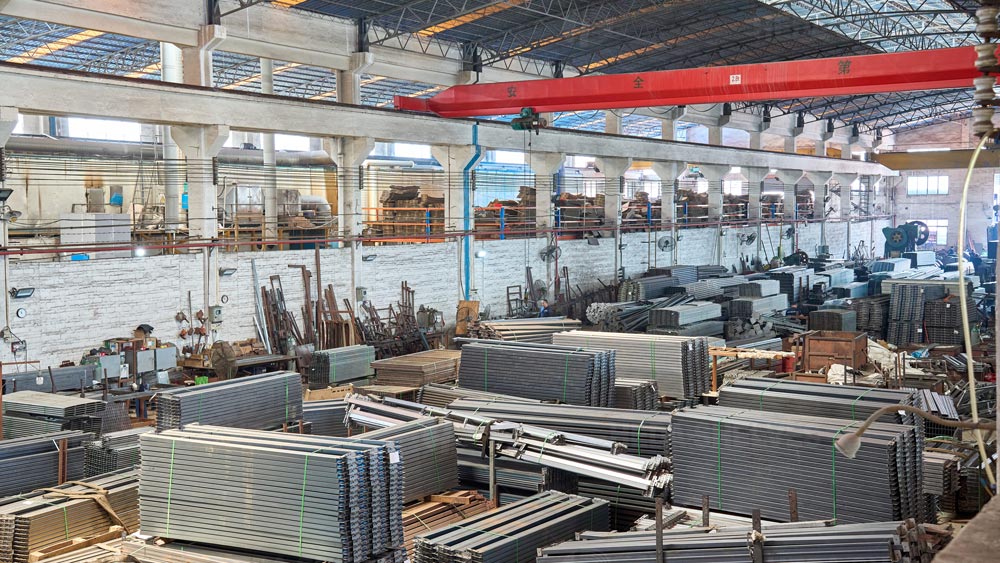
Macro Trends in the Global Clothing Rack Market and the Logic of Direct Sourcing
The retail landscape underwent a massive transformation between 2024 and 2025. Rapid urbanization and shrinking living spaces have fueled a surge in demand for space-saving, multi-functional clothing racks. This trend is particularly striking in the Asia-Pacific region, where the compound annual growth rate (CAGR) is expected to reach 7.2%. Furthermore, the continued expansion of e-commerce has redefined the clothing rack—it is no longer just a display fixture but a core component of high-efficiency warehousing and fulfillment centers.
For procurement decision-makers, sourcing directly from the manufacturer isn't just about shaving 5% to 30% off the price tag. It’s about gaining absolute control over the production chain. In a market where fast fashion and minimalism coexist, retailers require extreme flexibility in customization. Working directly with a factory allows you to be part of the engineering process, ensure materials meet the latest environmental standards, and monitor lead times firsthand. The table below outlines key growth metrics and drivers for the global clothing rack market.
The deeper logic of direct sourcing lies in eliminating "information decay." Under a trading agent model, small tweaks to product specifications often get lost in translation, leading to costly deviations in production samples. Direct factory access significantly accelerates the sampling cycle—often twice as fast as going through an agent.
Decoding the Core Differences Between Manufacturers and Trading Companies
Before diving into search methods, you must distinguish between a true Manufacturer and a Trading Company. Many suppliers label themselves as "manufacturers" on platforms like Alibaba or Made-in-China, but this is often just a marketing facade.
Cost Structures and Profit Margins
Manufacturers typically offer the lowest unit price because there is no middleman taking a cut. Trading companies, conversely, usually add a margin of 5% to 30% on top of the ex-factory price. While trading companies have value for small-scale, diverse orders by consolidating products from various plants, they become a significant financial burden for high-volume or highly customized projects.
Production Oversight and Intellectual Property Protection
Direct collaboration enables real-time monitoring of the production floor. This is vital for high-end fashion brands requiring specialized finishes, such as specific powder coating techniques or scratch-resistant layers. Trading companies often lack the same level of oversight and may even switch subcontractors mid-order, leading to inconsistency between batches. Furthermore, direct partnerships are better for protecting Intellectual Property (IP), as you maintain direct ownership of molds and confidentiality agreements.
Digital Search Strategies: How to Effectively Pinpoint Authentic Rack Factories
In the digital age, the hunt for suppliers starts on a screen. However, filtering out the noise of intermediaries requires a refined approach.
Advanced Filtering Tactics for B2B Platforms
Alibaba, Made-in-China, and Global Sources remain the primary battlegrounds. Data suggests that genuine factories have typically operated on these platforms for over five years.
- Alibaba Verification: Look specifically for the "Verified Supplier" tag, which signifies an on-site audit by third parties like SGS or TÜV. Download the audit report and check the "Business Type"—a real factory will be clearly listed as a "Manufacturer." Also, check their "Main Products." If their product line is suspiciously broad (e.g., selling both racks and garments), they are likely a trading company.
- Made-in-China’s Edge: This platform often has stricter audits for industrial categories. Pay close attention to the production equipment list in their "Audit Report." Authentic manufacturers will list specific machinery like punch presses, welding robots, and fully automated powder coating lines.
Social Engineering on LinkedIn for Supplier Discovery
LinkedIn is an underrated tool for supplier development. It allows you to bypass sales managers and reach factory engineering heads or export directors directly.
- Keyword Strategies: Use combinations like "Clothing Rack Factory Sales," "Shelving Manufacturer Manager," or "Racking Engineering."
- Engagement Strategy: Don’t just send a generic inquiry. Follow their updates. Look for raw workshop photos or shipping videos they post. This unpolished, real-time content is excellent for verifying authenticity.
- Outreach Template: Keep it concise and technical. Ask about specific capabilities, for example: "We are seeking a cantilever rack manufacturer that adheres to ANSI MH16.1 standards. Does your facility carry this certification?"
Advanced Search Engine and Map Verification Hacks
Google has limitations when searching for Chinese factories, as many powerhouse manufacturers aren't experts in English SEO.
- Baidu Search: Use Chinese keywords like "服装货架厂家" (clothing rack manufacturer) or "商用货架制造" (commercial rack manufacturing). This helps you find factories that focus on the domestic market—often high-quality but invisible on international B2B sites.
- The Map Verification Hack: Once you have an address, don't just rely on Google Maps. Due to the GCJ-02 coordinate system used in China, Google Maps imagery can be offset by hundreds of meters. Use Amap (高德地图) or Baidu Maps to view the street level. If the address shows a large factory gate in an industrial park, it’s credible. If it’s an office building in a bustling commercial district, it’s likely just a sales office.
Geographic Clusters: Mapping Out the Manufacturing Hubs
The clothing rack industry is highly clustered. Targeting these specific regions will drastically increase your chances of finding a top-tier manufacturer.
Foshan: The Heartbeat of Global Rack Manufacturing
Nanhai District in Foshan (specifically Lishui and Dali towns) is the world's largest production base for shelving and display equipment. Factories here benefit from a complete supply chain, ranging from raw cold-rolled steel processing to precision powder coating.
- Key Characteristics: Companies in this region typically operate massive facilities spanning tens of thousands of square meters. They produce everything from supermarket shelving to bespoke fashion displays. If you see "Foshan, Nanhai" in the supplier’s details, you’re likely at the source.
Guangzhou: The Hub for High-End Customization and Retail Design
The Panyu and Baiyun districts of Guangzhou host many manufacturers focused on "Retail Fixtures."
- Competitive Edge: Guangzhou manufacturers often excel at combining metal with wood and glass. They have a deeper understanding of the aesthetic demands of fashion brands and possess stronger R&D teams capable of turning designer sketches into mass-producible engineering plans.
Changshu and Kunshan: The Manufacturing Backbone of East China
These cities in Jiangsu Province are critical export bases for East China. They tend to be highly competitive in standardized production and heavy-duty large-scale warehouse racking.
Global Trade Shows: Golden Opportunities for On-Site Verification
Trade shows are the most efficient way to verify manufacturers. Real factories invest heavily in exhibiting at major international events.
Deep Engagement at the Canton Fair
The Canton Fair remains the gold standard for finding Chinese manufacturers.
- Timing: Clothing racks usually appear in Phase 2, primarily within the "Home Decorations" and "Consumer Goods" sections.
- Strategy: Don’t just look at the products. Speak with the technical engineers at the booth. Ask about the brand of their powder coating line or the grade of steel they use. Trading company reps often stumble on these deep technical questions.
EuroShop in Düsseldorf, Germany
This is the "Olympics" of the global retail design and shelving industry, held every three years.
- Trend Insights: For EuroShop 2026, the focus will be on "High Adaptability" and "Sustainable Materials." This is where you can meet top-tier global manufacturers and develop an intuitive sense of quality by comparing different manufacturing standards side-by-side.
EISENWARENMESSE - International Hardware Fair Cologne
While tool-focused, the "Industrial Supply" section is a major window for heavy-duty storage and logistics racking.
- Verification Tip: The "DIY Boulevard" at this show features many rack factories that supply global giants like Walmart or Home Depot, often showcasing products with GS safety certifications.
The "Gold Standard" for Verifying Factory Authenticity
Once you've shortlisted potential suppliers, you must execute these verification steps to ensure you aren't being misled by intermediaries.
Step 1: Deep-Dive Business License Inspection
Request a clear photo of the supplier's Chinese Business License. Focus on the "Business Scope" (经营范围).
- Green Flags: It must include terms like "Production" (生产), "Manufacturing" (制造), or "Processing" (加工).
- Red Flags: If the scope only mentions "Sales," "Trade," "Consulting," or "Import/Export," it is 100% a trading company.
- Registered Capital: While not absolute, rack manufacturing requires heavy machinery. Authentic factories usually have a registered capital of over 1 million RMB.
Step 2: Requesting 17% VAT Invoice Samples
This is one of the most effective ways to verify a factory.
- The Logic: Only entities with "General Taxpayer" status can issue Value-Added Tax (VAT) invoices and apply for export tax rebates.
- The Tactic: Tell the supplier you have a Chinese partner who needs to deduct tax and ask if they can issue a 17% VAT invoice. If they hesitate or refuse, their scale is either too small or they are merely an intermediary. If they provide a sample, verify that the company name matches their business license and bank account perfectly.
Step 3: In-Depth Video Auditing
Don't settle for a polished corporate video. Request a live video call via WeChat or WhatsApp.
- Live Directives: Ask the salesperson to walk to the punching press area. Have them show you what brand is currently being produced on the line. Ask to see labels in the finished goods warehouse.
- Observation: Look at the workers' uniforms and the signage at the factory gate. If all logos are blurred or the salesperson refuses to enter certain areas, you might be looking at a "borrowed" factory.
Step 4: Reviewing System Certifications and Audit Reports
An export-oriented manufacturer will typically possess the following:
- ISO 9001: This quality management certification is the baseline. Trading companies rarely bother with it.
- Audit Reports: Ask if they have supplied major retailers like Walmart, Target, or IKEA. If so, they will have audit reports from third parties like Intertek or Bureau Veritas. Request the originals and check the factory name listed on the report.
Safety and Technical Standards: A Must-Know for Professional Buyers
The safety compliance of your clothing racks directly impacts your legal liability. Especially in the US market, OSHA and RMI standards are non-negotiable.
RMI and ANSI Standards
Standards published by the Rack Manufacturers Institute (RMI) are the foundation of global design.
- ANSI MH16.1: Applies to industrial steel storage racks, covering upright stress calculations, base anchoring, and load labeling.
- ANSI MH16.3: Specifically for cantilever racks, which are crucial for the garment industry for storing fabric rolls or long garment rails.
- Compliance Question: Always ask: "Does your upright design comply with the latest ANSI MH16.1-2023 specifications?"
OSHA Storage Safety Guidelines
OSHA emphasizes that all racking systems must be built to prevent collapse.
- Upright Protection: If racks are located in forklift zones, column protectors must be installed. This is critical for minimizing impact damage.
- Load Placards: Every rack unit must clearly display its maximum capacity. If a factory cannot provide load specifications based on engineering calculations, it poses a severe compliance risk.
Key Metrics in Structural Engineering
A qualified manufacturer provides professional engineering advice, not just a price list.
The Red Flag Guide: Spotting Sketchy Suppliers
Stay vigilant if you encounter any of the following scenarios during negotiations.
Flag 1: Mismatched Bank Accounts
This is the most dangerous sign of a scam. If the business license says "Foshan [Name] Metal Factory" but they ask for payment to a personal account or an offshore Hong Kong trading company, stop the transaction. Under Chinese law, this discrepancy makes it nearly impossible to hold them legally accountable.
Flag 2: Refusing On-Site Inspections
If a supplier refuses a third-party inspection citing "production secrets" or "client confidentiality," they are likely outsourcing your order. Genuine factories are proud to showcase their production capabilities.
Flag 3: Quotes Far Below Steel Market Indices
The primary cost of a rack is the steel. Monitor global HRC (Hot Rolled Coil) or CRC (Cold Rolled Coil) indices. If a quote is lower than the cost of raw steel plus processing, the supplier is likely cutting corners on gauge thickness (e.g., swapping 2.0mm steel for 1.8mm).
Flag 4: Communication Gaps and Technical Evasion
If your technical questions are met with "we can do it" but the salesperson cannot provide CAD drawings or structural calculation sheets, you are dealing with a trading intermediary who does not understand the manufacturing process.
The Deep Process of Custom Rack Manufacturing: From Concept to PP Sample
One of the biggest advantages of working with a real factory is the ability to engage deeply in product development. A mature manufacturing process includes several key milestones.
Tech Packs and Prototyping
In the world of clothing racks, a complete tech pack should include:
- 3D Renderings: For visual confirmation.
- Detailed CAD Engineering Drawings: Specifying all hole positions, welding methods, and material thicknesses.
- Swatches: Confirmed RAL color codes.
The Three-Stage Sampling Protocol
To ensure mass production stays on track, follow this sampling flow:
- Initial Sample: Verifies basic structural stability.
- Fit Sample: Confirms compatibility with other retail accessories (hangers, hooks, shelves).
- PP Sample (Pre-Production): This is the most critical sample. It must be confirmed from the first batch of the mass production line. Once approved, the PP sample becomes the quality benchmark for the entire order.
Engineering Practices in Quality Control
A real factory performs Incoming Quality Control (IQC), In-Process Quality Control (IPQC), and Final Quality Control (FQC). You should ask to see these records. For example, how do they test the tensile strength of weld points? How do they test the hardness of the powder coating? Transparency in this data is the ultimate mark of a professional manufacturer.
Retail 4.0: The Future and Selection of Clothing Racks
The ultimate goal of finding a direct manufacturer is to build a "solution-oriented" partnership.
Modularity and High Adaptability
As retail layouts change more frequently, fixed racking systems are becoming obsolete. The current trend is toward tool-free assembly and modular design. Look for factories that offer flexible engineering, such as folding structures or snap-fit connections, which significantly reduce in-store labor costs.
Eco-Friendliness and Sustainability
Brand image is now tethered to its environmental footprint. More buyers are demanding FSC-certified wood bases or low-VOC powder coating lines. Only a direct manufacturer can provide source certification for these raw materials.
Digital Integration of the Supply Chain
Top-tier rack factories are introducing AI-assisted design and automated inventory management. When choosing a partner, see if they can provide digital product data packages that integrate seamlessly into your store planning software (like IWD or SketchUp).
Conclusion
Finding and verifying a direct clothing rack manufacturer is a systematic undertaking. It requires more than just proficiency with digital tools like Alibaba and LinkedIn; it demands the ability to see through the "intermediary mist" by analyzing business licenses, invoice logic, geographic clusters, and technical standards.
When you bypass the flashy websites of trading companies and step into the humming workshops of Foshan or Guangzhou, you gain more than just a lower price. You gain control over your brand, certainty in product quality, and a responsive supply chain that can keep pace with the cutthroat world of retail. Remember, a true manufacturer doesn't just sell you metal frames; they are your engineering partners in space efficiency and brand value.
By following this verification checklist, you can build a secure, efficient, and cost-effective supply system in the complex trade environment of 2025. This is the hallmark of a professional procurement expert.