The Ultimate Guide to IBC Totes: A Warehouse Perspective
Are you still struggling with large 200L drums taking up too much space and slowing down handling efficiency in your warehouse?
As racking manufacturers, we view containers and storage systems as an integrated whole. Choosing a high-efficiency container can directly enhance the value of your entire racking system.
That's why! The IBC tote is the perfect solution, designed specifically to bring scalable efficiency to the storage of medium-volume bulk liquids.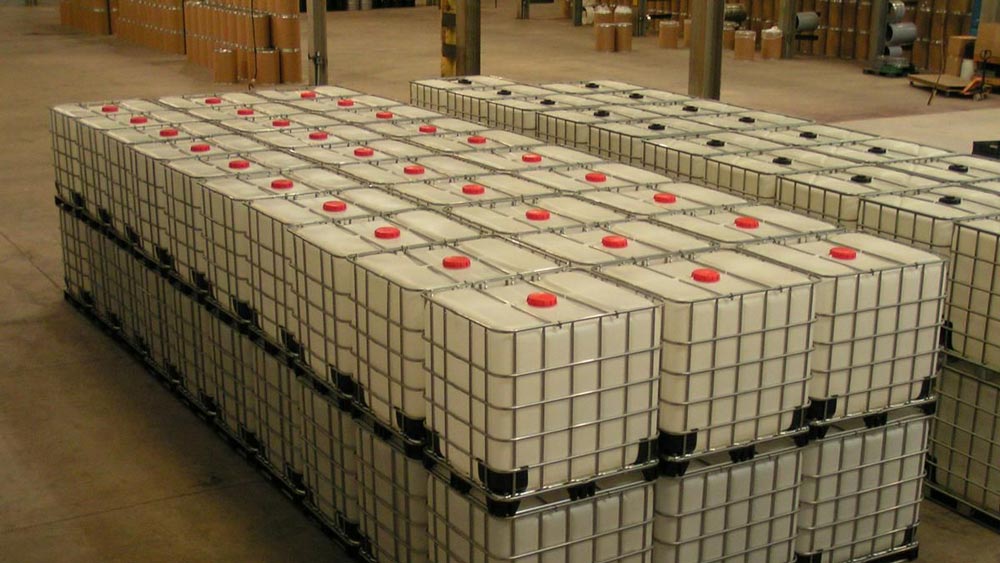
What is an IBC Tote?
An IBC tote is a medium-sized container used for storing and transporting liquids and bulk materials. Its full name is Intermediate Bulk Container. We consider it the ideal size, positioned between traditional drums and large storage tanks.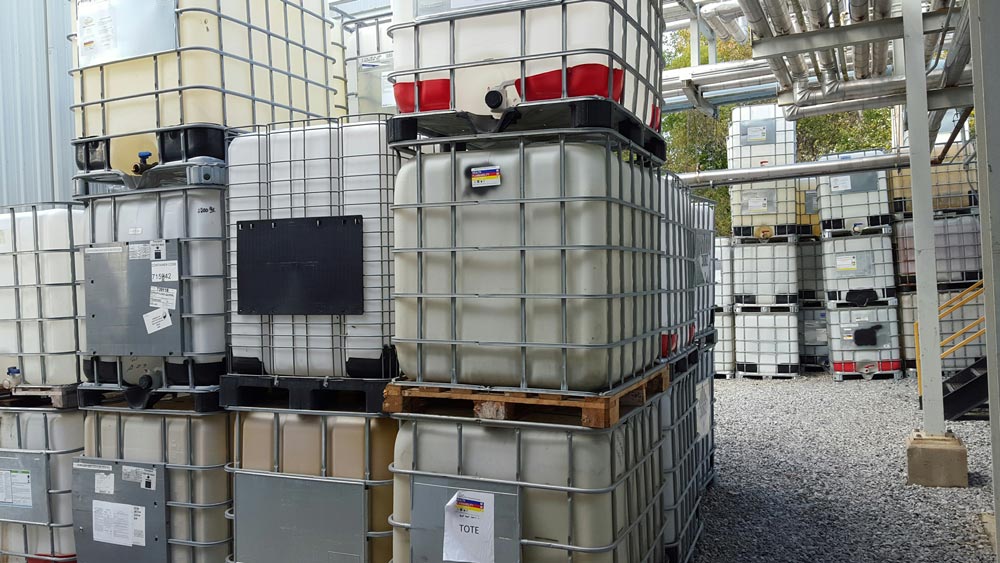
Components of an IBC Tote
An IBC tote is generally composed of three main parts: the plastic inner bottle, the metal cage, and the pallet base.
The Plastic Inner Bottle
This component is typically manufactured from food-grade HDPE. The manufacturing process is highly scrutinized, usually involving a one-time blow molding process to achieve seamless construction and easy cleaning.
Since these containers are designed for multiple uses, this seamless design helps increase efficiency and ensures the purity of the new material when switching between different liquid contents.
The Metal Cage
If an IBC tote only had a plastic inner bottle, it would be extremely vulnerable to damage from impact during handling. This is why the metal cage exists.
The metal cage is commonly made of galvanized steel or carbon steel, providing protection, structural support, and essential stacking capability for the plastic bottle.
The Pallet Base
Yes, the IBC tote also features a pallet base, which is usually constructed from steel and includes drainage channels and forklift entry holes.
Because IBC totes are closely connected to warehouse racking systems, the standardized design is compatible with both forklifts and pallet jacks, allowing for seamless integration into existing logistics workflows, which significantly boosts loading and unloading efficiency.
Why Choose IBC Totes?
Direct Procurement and Packaging Costs
Traditional 200L drums have a much shorter lifespan compared to IBC totes; many are single-use or have limited reuse cycles. In contrast, IBC totes are built robustly and can often be reused for ten years or even longer.
Therefore, from a long-term amortization perspective, the average annual packaging cost of an IBC is actually lower. This calculation doesn't even factor in the residual value of used IBCs (they can still be sold when old).
Warehousing and Space Utilization Costs
To store the same volume of liquid, you need fewer IBC totes than traditional drums. A single 200L drum takes up about 0.5m², and due to its shape, it cannot be stacked very high (usually a maximum of 2 layers, unstable without racking). An IBC tote takes up about 1m² but is a standard cube that can be safely and stably stacked 3 layers high.
Let's look at space utilization:
- Traditional Drum Solution (2 layers stacked): Requires storage for 25 "drum spots." (50 drums / 2 layers) * 0.5m²/spot ≈ 12.5m² of floor space.
- IBC Tote Solution (3 layers stacked): Requires storage for approximately 4 "IBC spots." (10 IBCs / 3 layers) * 1m²/spot ≈ 3.3m² of floor space.
For storing the same volume of goods, IBCs save approximately 73% of warehouse floor space compared to traditional drums!
Handling and Labor Efficiency
Example: Loading/unloading or moving 10,000 liters of liquid.
- Traditional Drum Solution: Requires 50 movements. Whether using a manual pallet jack or by hand, workers must repeatedly bend over, hook, move, and place 50 individual drums. This is time-consuming, leads to worker fatigue, and increases the risk of workplace injury.
- IBC Tote Solution: Requires only 10 movements. A forklift operator can easily engage, transport, and place the tote, completing an efficient move.
Time and labor are costs. Using the IBC solution reduces the number of handling movements by 80%.
Material Handling and Loss Costs
Discharge and Cleaning:
- Traditional Drums: Requires opening, pumping, or tipping. The process is cumbersome, prone to dripping and leaving residue, which results in material waste and potential contamination.
- IBC Totes: The bottom valve provides direct control and piping connections, making discharge fast, controlled, thorough, and clean. There is minimal material residue, less waste, and cleaning is much more convenient.
Inventory Management:
Assuming the same volume of liquid, traditional drums require fifty units for storage, while IBC totes only require ten units. Under these conditions:
- Traditional Drums: You need to count and manage 50 units, which is prone to error.
- IBC Totes: You only need to count and manage 10 units, resulting in clear inventory, high counting efficiency, and a low error rate.
How to Identify a Quality IBC Tote
Material and Manufacturing Process
Inner Bottle
Note here: Using virgin HDPE material is the baseline requirement.
Why is this critical? Recycled or regenerated material can cause the molecular chains of the inner bottle to break down, resulting in:
- Poor Toughness: The plastic becomes brittle like aged plastic, making it susceptible to cracking in cold temperatures or upon impact.
- Short Lifespan: The resistance to environmental stress cracking significantly decreases, possibly rendering the tote unusable after just one or two years.
- Contamination Risk: There is a risk of contaminating the stored material, particularly for food-grade or pharmaceutical products.
How to tell the difference?
- Check the Color and Luster: Inner bottles produced from virgin HDPE have a uniform, bright color (referring to transparent or translucent models) and good texture. Those made from recycled material often appear dark, greyish, or have colored speckles.
- Smell the Odor: Virgin material is virtually odorless. Recycled material may have a pungent or unusual smell.
- Test the Toughness: Press the inner bottle's sidewall with your hand (safely). Virgin material offers good toughness and resilience. Recycled material will feel stiff and brittle.
- Request Documentation: Directly ask the supplier to provide a raw material test report confirming the use of virgin material that meets food-grade or corresponding standards.
Metal Cage
- Steel Thickness: This is fundamental to the frame's strength. The wall thickness of the steel tubing on a quality tote is typically 1.2mm or more. Thinner steel (e.g., 1.0mm or less) is highly prone to deformation upon impact, compromising its protective function.
- Galvanization Process: This is the lifeblood of corrosion resistance. It is essential to confirm whether the process is "Hot-Dip Galvanization" or "Cold Galvanization" (electro-galvanization).
- Hot-Dip Galvanization: The entire frame is immersed in molten zinc. The coating is thick (typically ≥60μm), uniform, has strong adhesion, offers excellent anti-corrosion capability, and can last for over 10 years. This is the preferred choice for a quality tote.
- Cold Galvanization (Electro-Galvanization): The coating is thin (typically 10-20μm) and uneven, easily leading to "white rust," offering poor corrosion resistance, and quickly rusting in humid or corrosive environments.
How to tell the difference?
- Examine the Coating: Hot-dip galvanized surfaces have a slight texture and "zinc flower" patterns (like ice crystals), with a darker silver-grey color. Cold-galvanized surfaces are very smooth and bright.
- Check the Weight: A hot-dip galvanized tote of the same specification that uses ample material will be noticeably heavier.
Certifications and Testing
UN Certification
You might be curious: What is UN Certification? It is the certification based on the UN Recommendations on the Transport of Dangerous Goods, a mandatory international standard for the safety of packaging containers. Even if you are not storing dangerous goods, having UN Certification signifies that the product has passed the most rigorous testing.
However, we shouldn't just look for a UN sticker. You must demand a complete UN Certification test report from the supplier. The report will explicitly detail:
- Container type code (e.g., 31H1/Y)
- All tests passed (such as stacking, drop, leak-proof, etc.) and specific data
- Maximum permissible capacity, specific gravity, etc.
- Manufacturer information
Factory Quality Control Tests
- Stacking Test: Simulates stacking 3 layers (or more) in a warehouse to verify that the frame and base can withstand the load capacity. You can ask the supplier, "What is your standard for stacking tests? What is the load weight and duration?"
- Drop Test: Simulates accidental drops that may occur during transport, verifying the container's structural integrity under extreme impact. Quality factories will strictly perform corner drop and side drop tests.
- Airtight/Hydraulic Test: Ensures the inner bottle is leak-proof. You can inquire about their detection standards and sampling ratio.
Design Details
Valve
IBC tote valves also come in many types:
- Ball Valve: Offers excellent sealing, a large flow bore, low resistance, and is suitable for viscous liquids or materials containing particles. It is the current mainstream and preferred choice.
- Butterfly Valve: Simple structure and lower cost, but it is prone to leaving residue, and the sealing ring is easily worn.
We also need to pay attention to the Drainage Rate (or Emptying Rate):
This is a key metric for evaluating valve design. The valve and inner bottle base of a quality tote are designed to form a "sump," ensuring that 98% or more of the material can be drained, thereby reducing waste.
Attention must also be paid to the valve material, which includes PP plastic and stainless steel. Select the material based on the corrosiveness of the contents to ensure compatibility.
Base Structure
- Check the Design: The base of a quality tote is not simply four beams but a robust pallet-style structure with reinforcement ribs to evenly distribute the weight from the upper layer.
- Check the Welding: Examine whether the weld points connecting the base and the uprights are full, level, and free of cold welds. Rough welds indicate poor craftsmanship and are weak points in the structure.
- Check the Fork Entry Holes: The holes should be smooth and free of burrs to allow the forklift arm to enter smoothly. Some designs include protective sleeves to prevent wear on the frame.
Seamless Integration of IBC Totes and Racking Systems
Although the IBC tote is a specific container, its design allows it to remain compatible with your existing racking system for warehouse use.
However, for safety, I would like to provide two critical reminders:
Load-Bearing Capacity
Since a fully loaded IBC tote typically weighs between 1,000 and 1,300 kg, you must confirm that the load-bearing capacity of your racking system is adequate before use.
Size Matching and Space Utilization
If your racks have not previously stored IBC totes, we also recommend measuring your rack bay dimensions to ensure they can accommodate the tote.
Furthermore, you need to pay special attention to the protrusion on the valve side, as operational space must be reserved for the valve.
Conclusion
If your current goods are liquids and you are looking for a better solution for your growing storage needs, then adopting the IBC tote is indeed an excellent choice.
While we are not professional manufacturers of IBC totes, we have been manufacturing and selling warehouse racking systems for over two decades. We are extremely familiar with all aspects of warehouse operations and have extensive case studies from our partnerships.
If you have any further optimization needs for your warehouse racking, please feel free to contact us!