TQM Meaning Explained: A Manufacturer's Complete Guide to Total Quality Management in Warehouse Rack
If you've been in the racking business for any amount of time, you’ve definitely come across the term "TQM." But what does it actually mean? How is it different from the quality checks you run on the factory floor every day? And does it really help you cut down on scrap and keep your customers happy?
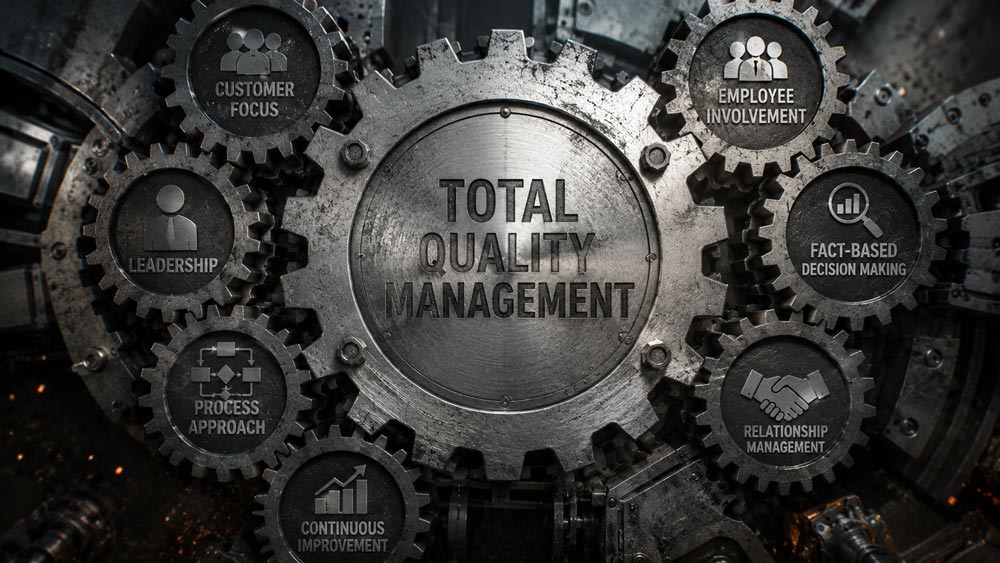
This guide is here to provide some straightforward answers.
We are going to skip the fluff and academic jargon. Instead, we will look at this through the lens of rack manufacturing—what TQM is, how to put it into practice, and the tangible value it adds to your business.
Let’s start with the basics.
What Is TQM Meaning? A Clear, Simple Definition
TQM stands for Total Quality Management.
It sounds simple enough, but to truly grasp what it means, it helps to look at the three words individually.
Breaking Down the Three Words: "Total," "Quality," and "Management"
When people first hear about TQM, they often mistake it for just "doing quality checks more thoroughly." However, each of these words carries a specific weight.
Put it all together, and the core of TQM is: a company-wide commitment, led by everyone, to systematically and continuously improve the quality of products and services to satisfy customers.
TQM Meaning vs. Quality Control: Why They Are Not the Same
Many manufacturers conflate TQM with Quality Control (QC). This is a major misunderstanding.
Let’s clear the air:
Quality Control (QC) is reactive. It’s what you do after a product is made to see if it’s good enough. It’s about catching errors.
TQM is proactive. It’s a philosophy that prevents errors across every stage—from design and sourcing to production and delivery.
Think of it this way: QC is checking if a weld has cracked before the rack leaves the factory. TQM is managing the entire chain—choosing the right steel, calibrating welding parameters, training the welders, and monitoring the process—so that the weld doesn’t crack in the first place.
One inspects products; the other improves the entire system. That is the fundamental difference.
Why TQM Is a Philosophy, Not Just a Checklist
This point is critical.
TQM is not a box-ticking exercise. Just because you have ISO certification doesn't mean you've "done" TQM.
TQM is an operating philosophy. It requires everyone—from top management to the team on the shop floor—to buy into the belief that quality is everyone’s job and that improvement never ends.
If you treat TQM as just a stack of procedures to follow, it will eventually become a pile of paperwork that no one reads. Only when it becomes part of your company culture does it truly start to work.
The History of TQM: From Post-War Japan to Modern Factories
TQM didn’t just appear out of thin air. It has a history spanning nearly 80 years, shaped by generations of trial and error.
How W. Edwards Deming Planted the TQM Seed in Japan (1950s)
The story begins just after World War II.
In 1950, American statistician W. Edwards Deming visited Japan to share his ideas on quality management. Japan was in the middle of post-war reconstruction, struggling with a weak industrial base and poor product quality.
Deming’s core message was revolutionary: over 85% of quality issues are caused by the system and processes, not by the individual worker. To improve quality, you have to fix the system.
Japanese manufacturers embraced this philosophy, blending it with local management practices to develop what eventually became the lean manufacturing systems—like the Toyota Production System—that allowed Japan to dominate manufacturing from the 1960s to the 1980s. To honor Deming, Japan created the Deming Prize, the country's top award for quality.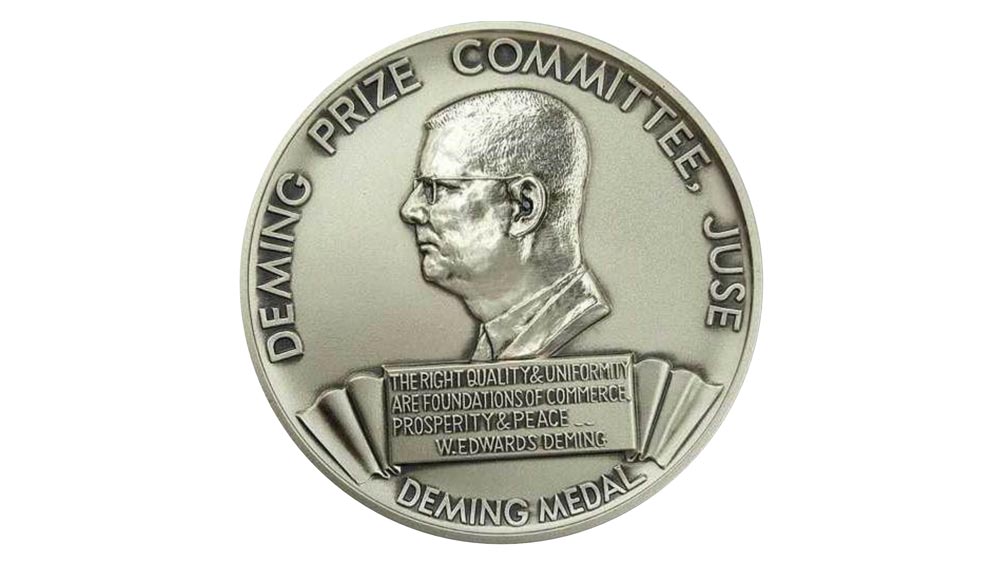
Key Milestones in TQM History (1950–Today)
How TQM Evolved into ISO 9001, Six Sigma and Lean Manufacturing
TQM hasn’t been replaced; it has evolved into the frameworks we use today.
- ISO 9001: Systematizes and standardizes TQM principles into an auditable framework.
- Six Sigma: Builds on TQM by introducing rigorous statistical methods to minimize variation and defects.
- Lean Manufacturing: Combines TQM's focus on continuous improvement with methods to eliminate waste.
These aren't mutually exclusive. Many elite manufacturers use a hybrid approach, drawing from all three.
The 8 Core Principles of TQM (With Real Manufacturing Examples)
TQM is built on eight core principles. Let's break them down through the lens of rack manufacturing.
Customer Focus – Who Defines "Quality" in Your Business?
Principle one: The customer defines quality.
It isn't your engineers or your inspectors. It's the client.
In the rack business, this means understanding their environment. Are they storing heavy-duty industrial goods or lightweight consumer items? Is safety their biggest worry, or is it speed of installation? If you don’t know the answer, you can’t build a "good" rack—even if it passes your internal tests.
Total Employee Involvement – Every Worker Is a Quality Guardian
Principle two: Everyone is involved.
Quality isn’t just for the QC department. From the steel receiving team and machine operators to the welders and packers, every person is a link in the quality chain.
Practical application: Give your floor staff the authority to stop the line when they spot a defect and encourage them to suggest improvements. When workers feel heard, their ownership of quality skyrockets.
Process Approach – Managing Workflows, Not Just Outputs
Principle three: Focus on the process, not just the result.
Most factories focus on the output: "Did the rack pass the test?" That’s results-driven.
TQM asks you to look at the process: How are we cutting the steel? How are the welding parameters set? Is the powder coating temperature consistent? If you control the process, the good results will follow naturally.
Integrated Systems – Connecting Every Department Toward One Goal
Principle four: Systems integration.
In many factories, departments work in silos. Sales promises something they didn't clear with production; procurement buys cheap steel to save money; production skips steps to hit deadlines. TQM breaks these silos, ensuring everyone is working toward one goal: satisfying the customer.
Strategic & Systematic Planning
Principle five: Strategic planning.
Quality goals shouldn't just be slogans. They need to be strategy. Set specific targets—like reducing weld failure rates from 1.2% to 0.5%—and allocate the resources, assign the responsibilities, and track the progress.
Continuous Improvement (Kaizen) – The Never-Ending Pursuit
Principle six: Kaizen (Continuous Improvement).
Kaizen means "change for the better." It doesn't always require a massive overhaul. It’s about those daily, small improvements. Adjusting a welding jig to make it easier for a worker today adds up to massive efficiency gains over the year.
Fact-Based Decision Making – Using Data, Not Gut Feeling
Principle seven: Data-driven decisions.
"I think the steel is bad" vs. "The yield strength of this steel batch is 15% below standard." Data wins every time. TQM demands you track defect rates, rework percentages, and customer complaints to drive your decisions.
Open Communication – The Glue That Holds TQM Together
Principle eight: Transparent communication.
If workers are afraid to report issues, or management denies there's a problem, TQM fails. You need a culture where "finding a problem is a contribution, not a headache."
TQM Meaning in Warehouse Rack & Shelving Manufacturing
This is the most critical part of our guide. Let’s translate theory into reality on the factory floor.
Why Quality Failures in Rack Manufacturing Have Serious Consequences
Quality issues in racking aren't just minor inconveniences; they are safety risks.
A bad weld or an undersized upright could lead to a total collapse under load. The consequences are severe:
- Injury/Fatalities: Threatening the lives of warehouse staff.
- Financial Loss: Cargo damage and operational downtime costing thousands.
- Liability: Potential lawsuits and legal trouble.
- Reputation Damage: A single disaster can sink a brand.
Because of this, for rack manufacturers, quality is not a competitive edge—it's a requirement for survival.
Applying TQM Across the Full Production Chain
TQM requires oversight at every step.
The takeaway? Rack quality is built in during the process, not inspected in at the end.
Supplier Quality Management: Controlling Raw Material Standards from Day One
Your quality starts with your steel. If the raw material is bad, no amount of skilled welding will save the final product.
Effective supplier management includes:
- Approval: Only work with vetted suppliers (ISO 9001 certified).
- IQC: Establish clear standards for yield strength, tensile strength, and tolerance.
- Performance Reviews: Score your suppliers on quality, on-time delivery, and responsiveness. Replace those who consistently fail.
How Industry Standards (RMI, EN 15512, ISO 9001) Align with TQM
Industry standards aren't just for certifications; they are TQM roadmaps:
- RMI & EN 15512: These define the design and testing specs. They provide the benchmarks for what your product must achieve.
- ISO 9001: This is the systematic framework that maps perfectly to TQM principles. Use these standards as the baseline for your TQM implementation.
Key Quality KPIs for Rack Manufacturers
You can't manage what you don't measure.
Essential TQM Tools and Techniques for Manufacturers
The PDCA Cycle (Plan-Do-Check-Act) – Your Daily Quality Engine
The PDCA cycle is your operational heartbeat:
- Plan: Spot a rise in weld failures, analyze the cause, and draft a fix (e.g., better wire, new training).
- Do: Pilot the fix on one line.
- Check: Measure the results after two weeks.
- Act: If it works, scale it. If not, go back to Plan.
Six Sigma and Lean: Reducing Waste and Variation
Lean focuses on cutting waste (waiting, overproduction, unnecessary movement), while Six Sigma focuses on reducing variation in your processes. Together, they create a highly efficient, high-quality production system.
Fishbone (Ishikawa) Diagram – Finding the Root Cause
When a defect keeps popping up, use the Fishbone diagram to get to the root of the issue across the "5 Ms":
- Man: Training gaps.
- Machine: Equipment aging.
- Material: Poor quality inputs.
- Method: Unclear procedures.
- Environment: Workspace conditions (e.g., humidity).
Statistical Process Control (SPC) in Metal Fabrication
Use SPC to monitor critical dimensions and welding parameters in real-time. If the numbers start to drift, you catch it before you produce a batch of bad parts.
The 5S System – Building Quality Into Your Workspace
Sort, Set in Order, Shine, Standardize, Sustain. A cluttered, disorganized shop floor is a breeding ground for errors. A 5S factory is clean, organized, and focused on quality.
TQM vs. QMS: How They Work Together
Many manufacturers ask: "Do I need TQM if I have a Quality Management System (QMS like ISO 9001)?"
Think of it this way: QMS is the "what" and the structure. It’s the formal documentation, the procedures, and the audit trail. TQM is the "why" and the culture. It’s the philosophy that makes the QMS live and breathe. Use ISO 9001 as your foundation, then build the TQM culture on top of it.
The Benefits of TQM for Warehouse Rack Manufacturers
Why go through the effort?
- Lower Costs: Every hour of rework or shipping a returned rack eats into your profit margins. TQM reduces these internal "hidden" losses.
- Customer Trust: In the rack industry, reliability is everything. A high-quality reputation wins long-term contracts.
- Competitive Edge: It’s hard to compete on price alone. Competing on quality and reliability gives you a major advantage.
- Employee Morale: When people know their work matters and they have the tools to do it well, turnover goes down and engagement goes up.
Common TQM Implementation Challenges (and How to Solve Them)
- Resistance: Workers might think it’s just more work. Fix: Communicate the "why," involve them in the improvements, and reward them for their ideas.
- Lack of Leadership: If management isn't bought in, TQM dies. Fix: Leadership must personally own the quality KPIs.
- Measuring the Wrong Things: Don't drown in data. Fix: Focus on a few vital KPIs that actually matter.
- Program of the Month Syndrome: Don't let it be a fad. Fix: Embed TQM into your daily routines, not as a temporary project.
How to Implement TQM in Your Manufacturing Business: Step-by-Step
Step 1 – Run a Quality Baseline Audit
Where are you now? Check your current defect rates and rework costs.
Step 2 – Define Your Quality Standards and Customer Expectations
Get clear on specs (tolerance, load limits) and match them to what the client actually needs.
Step 3 – Train Every Employee
From the boardroom to the welding station, everyone needs to understand their role in quality.
Step 4 – Redesign Processes Using TQM Principles
Standardize operations, introduce mistake-proofing (Poka-Yoke), and optimize workflow.
Step 5 – Monitor KPIs, Review Results, and Keep Improving
The PDCA cycle never stops. Keep tracking, keep reviewing, keep fixing.
The Future of TQM: Technology Trends Reshaping Quality
-
AI Visual Inspection: Using cameras and AI to catch weld flaws faster than the human eye.
-
IoT Sensors: Collecting real-time data from welding machines to prevent errors while they are happening.
-
Industry 4.0: Digital twins and predictive analytics are moving quality management from "detecting the past" to "predicting the future."
Frequently Asked Questions About TQM Meaning
What does TQM stand for?
Total Quality Management. It’s a philosophy of continuous improvement and company-wide commitment to quality.
What is the main goal of total quality management?
Long-term customer satisfaction and increased business competitiveness through consistent, system-wide quality.
Is TQM still relevant in modern manufacturing?
Absolutely. As market competition tightens and safety standards rise, TQM is more critical than ever.
What is the difference between TQM and Six Sigma?
TQM is the overall culture/philosophy; Six Sigma is a data-driven method often used to solve specific, complex problems.
Can small and medium-sized manufacturers implement TQM?
Yes. You don’t need to be a giant corporation. You can start small by standardizing workflows and tracking basic quality data.
How long does it take to implement TQM?
You’ll see KPIs improve within 6-12 months. Building a deep-rooted culture takes 3-5 years. The best time to start is now.