Maximizing Stockroom Efficiency: New Trends in Retail Storage Solutions Boltless Shelving for 2026
In 2026, the global retail landscape is defined by an intense race for fulfillment speed. Driven by the deep integration of online and offline channels through omnichannel models, decentralized dark stores, and the massive boom in quick commerce, consumer expectations for delivery timelines have shrunk to mere minutes. Market forecasts indicate that the global micro-fulfillment center (MFC) market will hit $13 billion in 2026. Concurrently, the dark store and fulfillment orchestration platform market is projected to reach $57 billion this year, expanding at a rapid 17.9% compound annual growth rate (CAGR) to reach $286 billion by 2036. In major metropolitan areas, nearly 48% of quick-commerce orders must now be fulfilled within a 30-minute window.
This extreme demand for rapid fulfillment places immense pressure on the retailer’s operational engine: the stockroom. Traditional warehouse setups simply cannot keep up with high-velocity, small-batch, multi-item micro-picking. If a stockroom becomes disorganized, aisles get blocked, or item location is delayed, front-end delivery promises fall apart immediately, leading to expensive customer complaints and canceled orders. Ultimately, stockroom efficiency has become a defining competitive advantage for modern retailers.
Against this backdrop, the physical framework of the stockroom—its shelving system—is undergoing a major technological upgrade. Boltless shelving is no longer viewed as just a basic metal rack for stacking boxes; it has evolved into a foundational asset supporting agile supply chain responses. To help retailers and supply chain leaders gain a distinct advantage in this highly competitive environment, this article explores the latest trends in retail storage solutions boltless shelving for 2026, demonstrating how smart, flexible, and sustainable storage transformations can maximize back-of-house space efficiency.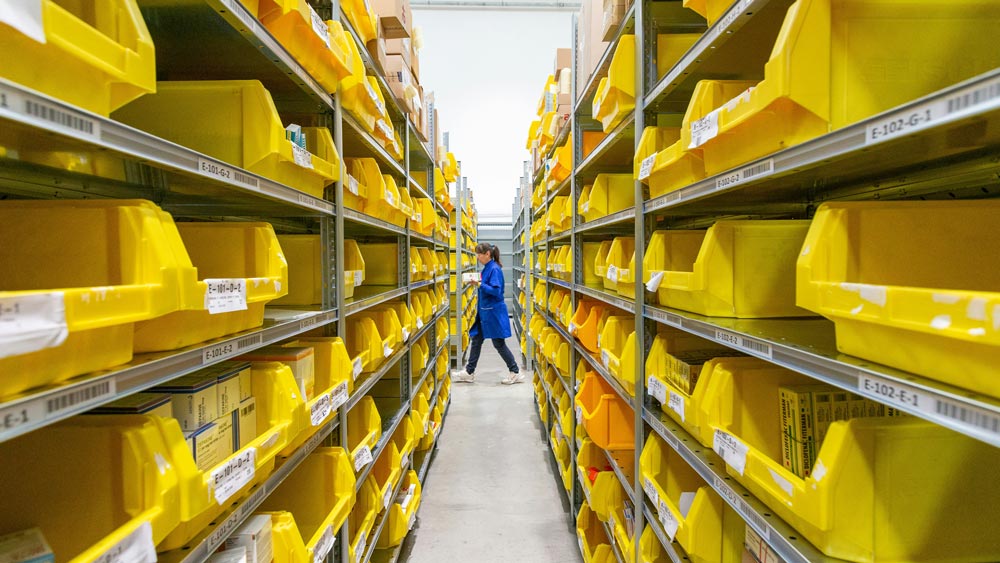
Trend 1: High-Density & Vertical Optimization for Micro-Fulfillment
Capitalizing on Every Cubic Inch of Expensive Retail Real Estate
In prime urban locations, the soaring cost of real estate for retail storefronts and micro-fulfillment centers (MFCs) forces businesses to minimize back-of-house square footage, leaving more room for front-end sales. A typical MFC is strictly limited to between 5,000 and 25,000 square feet, while neighborhood dark stores often span a mere 2,000 to 8,000 square feet. Facing such constrained footprints, the dominant storage design priority for 2026 is vertical growth—utilizing high-density vertical planning to offset expensive urban land costs.
To achieve substantial vertical height without compromising structural safety, specialized shelving manufacturers are utilizing high-yield Q235B cold-rolled strip steel. Combined with heavy-duty uprights and geometrically optimized reinforcement beams, such as Z-Beams or P-Beams, modern boltless shelving configurations can handle vertical load capacities multiple times greater than standard racks while occupying the same minimal floor space.
From an engineering perspective, tall boltless shelving must strictly adhere to safety limits regarding the height-to-depth (HTD) ratio. The formula to determine this ratio is:

(Here, H represents the total height of the shelving unit, and D represents its depth.)
According to industry safety standards, whenever a boltless shelving unit exceeds an HTD ratio of 6:1, additional rigid anchoring structures must be implemented. This includes securing the baseplates with heavy-duty floor anchor bolts or installing overhead ties to bridge multiple rows horizontally, completely removing any risk of tipping. Furthermore, the out-of-plumb tolerance during installation must be tightly managed within strict industry thresholds:

This means that for a high-bay shelving unit standing 20 feet (approximately 6.1 meters) tall, the maximum allowable deviation from a perfectly vertical line at the top is just 1 inch (around 25.4 millimeters). When paired with mobile rolling ladders or compact high-order pickers, these high-density systems smoothly handle high-frequency operational stresses.
Adapting to the BOPIS Era
As buy-online-pick-up-in-store (BOPIS) becomes a permanent consumer habit, the physical role of the stockroom has shifted from a static repository to a fast-paced picking center. Inventory on these shelves is no longer slow-moving stock; it consists of high-velocity goods with turnover cycles measured in hours.
With an entirely open framework that features no cross-bracing on any side, boltless shelving offers completely unobstructed, ergonomic access. This allows warehouse staff to perform rapid, multi-directional manual picking with ease. By implementing velocity-based placement strategies, stockroom managers can position top-tier demand items on easily accessible middle shelves, while placing slower-moving stock on the highest or lowest levels. This layout adjustment can cut individual order-picking times by more than 35%, ensuring fragmented BOPIS orders are bundled quickly and accurately for the pickup counter.
Trend 2: Modular Flexibility and Tool-Free Reconfigurability
Shifting from Rigid Racks to Agile Storage Networks
The retail sector moves fast and is highly dependent on seasonal shifts. During major peak periods like Black Friday or the winter holidays, product packaging dimensions, inventory volumes, and stack heights experience massive fluctuations. Traditional welded or bolt-secured shelving systems, with fixed shelf levels that are notoriously difficult to adjust, often result in significant wasted vertical space during these inventory transitions.
The mandate for 2026 is building agile storage networks. Without needing specialized tools, an associate using only a rubber mallet can change the shelf levels of a boltless rack within five minutes. This allows immediate adaptation to sudden shifts in packaging formats—whether transitioning from bulky winter boots to thin summer shirts, or large home appliances to small cosmetics boxes.
Additionally, when reconfiguring layouts, understanding the core difference between uniformly distributed load (UDL) and point load is vital for maintaining stockroom safety.
During level adjustments, floor supervisors must respect the system's rated UDL weight capacity (such as a 265kg UDL limit per shelf level). Concentrating heavy items at the dead center of a shelf panel is strictly prohibited to prevent structural failure caused by a point load exceeding the steel's yield point.
Interlocking Components for Rapid Retail Expansion
Interlocking designs, particularly rivet-type configurations, have advanced significantly in 2026 due to innovations in precision tooling and metal fabrication. Keyhole slots stamped into the upright posts pair perfectly with the dual steel rivets on the beam ends, creating a physical self-locking mechanism under the natural force of gravity.
This modular structure allows units to expand horizontally and connect seamlessly, much like building blocks. It provides ideal infrastructure support for retail chains opening new stores or launching seasonal pop-up shops on tight schedules. Compared to traditional nut-and-bolt options, modular boltless systems can cut on-site setup times by over 50%. Once a pop-up location closes, the shelving can be disassembled quickly, packed flat, and shipped to the next venue for complete reuse, ensuring a 100% asset recovery rate.
Trend 3: Eco-Friendly Materials and Green Supply Chain Standards
The Demise of Toxic Powders and the Rise of Sustainable Finishes
This represents a major industry blind spot that older B2B storage guides frequently overlook. In 2026, global retail corporations like Walmart and Target require strict carbon footprint tracking and environmental, social, and governance (ESG) audits for all supply chain sourcing and back-of-house procurement. For instance, Walmart’s Project Gigaton has engaged over 6,800 global suppliers, successfully eliminating or avoiding 1.19 billion metric tons of greenhouse gas emissions.
To secure contracts with these retail giants, equipment manufacturers must prove the low-carbon and environmental compliance of their storage assets. Sustainable supply chain finance programs established by major retailers (in deep partnership with institutions like HSBC and CDP) offer low-interest financing tiers or accelerated payment terms based directly on a vendor's performance in greenhouse gas reduction, Science Based Targets (SBTi), and CDP climate change disclosures. Choosing verified green storage infrastructure is now directly linked to a supplier's financing costs.
As a result, traditional finishes containing toxic curing agents like TGIC, along with high-VOC liquid solvent coatings, are rapidly disappearing. In 2026, high-quality boltless shelving is shifting toward new low-VOC, TGIC-free pure polyester powder coatings applied via advanced electrostatic processes.
Under updated environmental policies, the US EPA has set a strict compliance deadline of January 17, 2027, for non-industrial architectural coatings, limiting VOCs tightly between 100–800 g/L. Solvent-free powder coating technology inherently offers a perfect 0 g/L baseline. In China, key manufacturing provinces such as Guangdong, Jiangsu, and Zhejiang have established even more stringent regional VOC limits through clean-air action plans, prompting a complete shift from high-pollution liquid painting to eco-friendly powder coating lines. Additionally, highly durable and 100% recyclable galvanized boltless systems are gaining popularity because they eliminate wastewater emissions entirely during production, helping retailers secure green corporate certifications.
Trend 4: Hybrid Decking Material Innovations
Beyond Traditional Wire Mesh and Particle Board
When selecting shelf decking, retail warehouse managers have historically struggled with two persistent issues. First, traditional particle board (typically 1/2" or 5/8" thick), though highly budget-friendly, easily absorbs moisture in poorly ventilated stockrooms. This leads to warping, sagging, and the continuous release of formaldehyde, which risks staff health and ruins inventory. Second, traditional wire mesh decking (often utilizing a 2" x 4" pattern), while offering excellent light penetration, airflow, and compliance with fire sprinkler codes (flue space regulations), presents a rough metallic surface unsuitable for storing delicate or tiny loose items.
In 2026, breakthrough innovations in hybrid decking materials have completely rewritten these storage rules:
- Perforated PP/HDPE Plastic Decks: Polypropylene (PP) and high-density polyethylene (HDPE) panels are growing in popularity due to their lightweight nature, complete waterproof properties, and chemical resistance. In fresh grocery, cold chain, and cosmetics storage, these perforated plastic decks allow fire sprinkler water to pass through effortlessly. If a bottle of liquid soap, lotion, or cold beverage leaks, the plastic surfaces can be washed and sanitized quickly without retaining odors or hosting mold.
- 14-Gauge Eco Powder-Coated Solid Steel Panels: For high-capacity storage, heavy industrial components, or precision instruments, 14-gauge (approx. 1.9mm thick) high-strength steel decks provide a seamless, completely flat surface. This entirely prevents small parts from slipping through gaps or getting caught on wires.
- Anti-Snag Flame-Retardant Composite Wood Decks: Utilizing advanced lamination techniques, these new wood composite panels feature a high-density, wear-resistant, completely smooth fire-retardant shield. This is vital for luxury apparel, silk garments, and high-end fashion storage, ensuring that premium fabrics never snag or experience friction damage during high-frequency picking.
- Anti-Static (ESD) Composite Decks: Engineered for high-value electronics, digital accessories, and smart devices, these specialized shelf decks incorporate conductive carbon black media to prevent static buildup that could destroy sensitive microchips.
Trend 5: Visual Merchandising Aesthetics in “Dark Stores” and Front-End Retail
When the Stockroom Becomes Part of the Shopping Experience
With the global rise of warehouse-style retail setups—pioneered by brands like Decathlon, Sam’s Club, and Metro—along with the expansion of urban dark stores, the dividing line between back-of-house storage and the front showroom has vanished. In these modern hybrid stores, picking staff constantly move through the aisles. The shelving must act simultaneously as an efficient inventory fulfillment tool and a clean visual backdrop for customers or live-streaming marketing cameras. Consequently, stockroom aesthetics now play a direct role in shaping public brand perception.
This shift has driven boltless shelving systems toward an unprecedented aesthetic transformation in 2026:
- Bespoke Commercial Color Palettes: Equipment finishes have moved away from outdated industrial grays and blues to adopt the classic RAL color matching system. Modern options such as RAL 9005 (Matte Jet Black), RAL 9016 (Minimalist Traffic White), and premium hammertone finishes are now standard. This allows industrial-grade storage hardware to integrate beautifully into upscale retail interiors.
- Concealed Posts / Hidden Slots: Traditional boltless shelving uprights feature exposed, industrial-looking keyhole or butterfly slots running down the face of the steel. In 2026, leading-edge engineering uses concealed post technology, which hides all hook connections on the inner or rear side of the profile via precise cold-bending. From the front and outside, the shelving display presents clean, minimal, uninterrupted geometric lines. Balancing residential furniture aesthetics with heavy industrial load capacities, these hidden-slot racks allow spaces to function seamlessly as both active storage hubs and elegant customer-facing displays.
How to Choose the Right Boltless Shelving Manufacturer for Your Retail Business
Navigating the crowded B2B storage procurement market requires an objective, engineering-focused evaluation framework to avoid the hidden costs of subpar equipment. Retail buyers should focus deeply on three critical parameters:
1. Weight Capacity & Certifications
Low-tier manufacturers frequently cut corners by exaggerating load metrics or using non-standard, ultra-thin steel to win on price. A qualified manufacturing partner must maintain ISO 9001 quality management standards and design products that fully satisfy recognized regulatory bodies:
- ANSI MH28.2-2022 (Design, Testing, and Utilization of Industrial Boltless Steel Shelving): This framework focuses strictly on industrial-grade, medium-to-heavy boltless shelf setups. The standard places rigorous emphasis on seismic design engineering, deflection limits under continuous heavy weight, multi-level pick modules, and catwalk platform stiffness, assuming an operational environment run by trained logistics personnel.
- ANSI MH28.4-2024 (Test and Evaluation of Retail and Consumer Boltless Steel Shelving): This represents the newest national standard tailored specifically for non-professional, commercial, and consumer applications where unit heights do not exceed 96 inches (approx. 2.4 meters). Testing focuses on self-locking safety, anti-tipping mechanics, and ergonomic stability when assembled quickly without tools by regular retail workers or everyday shoppers.
Procurement teams should always demand third-party validation certificates (such as SGS, BV, or TUV reports) confirming compliance with these exact frameworks to guarantee store safety.
2. OEM/ODM Sourcing Capability
Every retail enterprise possesses distinct inventory profiles and unique warehouse layout flows. A leading manufacturer goes beyond selling mass-produced steel units; they deliver comprehensive spatial planning tailored to specific ceiling clearances and picking steps. From custom steel gauge configurations and patented proprietary clip geometries to the exact integration of hybrid decking types, custom engineering ensures every single cubic decimeter of back-of-house space is fully utilized.
3. Lead Times & Scalability
Ahead of massive shopping seasons like Black Friday, retail operations often need to expand and reconfigure their stockrooms on incredibly short notice. This requires a partner with flexible manufacturing capacity and massive production scale. Sourcing teams should look for vendors equipped with automated high-speed roll forming lines, robotic welding units, and continuous electrostatic powder-coating loops. This infrastructure ensures the rapid delivery of uniform, zero-defect storage solutions within standard 15-day turnarounds.
Conclusion: Investing in Scalable Retail Infrastructures
In the competitive omnichannel retail landscape of 2026, front-end retail performance depends heavily on back-of-house fulfillment speed and supply chain responsiveness. Upgrading stockroom infrastructure is far from a minor administrative expense; it is a calculated, long-term strategic investment that minimizes picking errors, elevates sales per square foot, and directly improves gross operating margins.
By implementing high vertical density, tool-free modular systems, non-toxic eco-coatings that align with ESG goals, and hybrid decking tailored to specific product categories, retailers can build a resilient, sustainable logistics foundation.
With a rich history in high-performance shelving fabrication, our manufacturing team delivers cutting-edge, tailored boltless storage solutions for global retail market leaders and fast-growing enterprises. Connect with our engineering design specialists today to receive a complimentary stockroom spatial analysis and custom shelving blueprint, and unlock the true potential of your logistics operations for 2026.