Warehouse Efficiency: A Data-Driven Guide to Optimizing Operations
Before I start this article, I would like to ask you who are reading this article a question, what is the function of a warehouse? I think most people's off-the-cuff answer is probably storage, but if it's just storage, then why are there so many types of storage racks being created?
So here we want to discuss another very important function of the warehouse: efficiency! But how should we improve the efficiency of the warehouse? And the answer is in this content.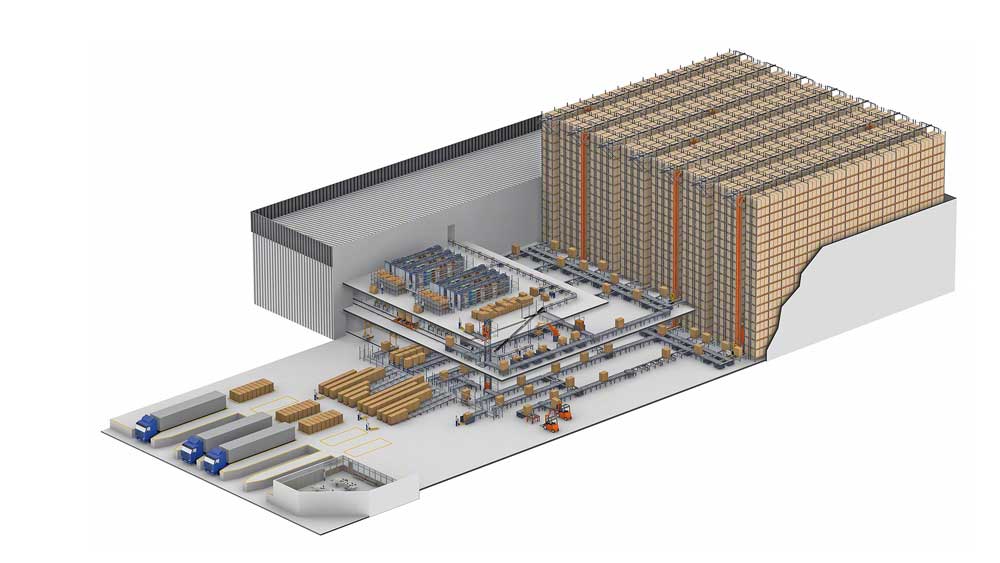
What is Warehouse Efficiency?
In layman's terms, Warehouse Efficiency is the ability to accomplish more warehousing tasks (receiving, storing, picking, shipping) with the least amount of resources (time, labor, space, cost).
Let's take a simple example:
Suppose two warehouses are sending out 1000 orders a day:
- Warehouse A: It took 50 people and 10 hours to get it done.
- Warehouse B: only 30 people, took 8 hours to complete.
Although the task is the same, Warehouse B is more efficient because it uses less manpower and time.
What are the main things to look for in warehouse efficiency?
Picking efficiency
How quickly and accurately pickers can find items
Space utilization
Whether the warehouse space is fully utilized or not
Staff utilization
Whether the staff's time is wasted on walking and searching for goods.
Operation flow
Is the moving line smooth? Is there any duplication of handling or detour?
Cost control
Is there any unnecessary cost of consumables, labor and equipment?
Top 5 Warehouse Efficiency Challenges
Poor Warehouse Layout
If the shelves are disorganized, the aisles are too narrow, and the goods are not distributed properly, it will lead to employees “looking for goods in a roundabout way”, and the handling distance will become farther, which will greatly reduce the efficiency.
Take an example:
Imagine your kitchen, pots and pans lying around, cooking a meal to walk around several times, is not very inefficient? The same applies to the warehouse!
Inefficient Picking Process
Picking is the most time-consuming process in most warehouses. Without optimized routes, zoning, and appropriate picking methods (e.g., batch picking or zone picking), employees will run around repeatedly, wasting time.
Tip:
In many warehouses, 70% of the day is spent on “picking”!
Lack of Inventory Accuracy
Lack of Inventory Accuracy can lead to inaccurate inventory data, resulting in failure to find goods, picking up the wrong goods, wrong orders, replenishment confusion, these problems not only waste time, but also affect customer satisfaction.
Consequences:
Employees may spend minutes trying to find a “non-existent” space.
Manual Processes
Relying on paper records, manual data input, and inventory tracking often results in delays, mistakes, and outdated information.
Modern warehouses are increasingly using Warehouse Management Systems (WMS) to automate these processes.
Undertrained Staff
Employees who don't know how to efficiently pick, handle, and use equipment can make missteps, pick the wrong items, and make operational errors.
The key:
True efficiency stems from skill, and skill is developed through proper training.
7 Proven Strategies to Improve Warehouse Efficiency
Optimize Your Warehouse Layout
The layout of a warehouse is like a "battle map." A well-designed layout allows staff to avoid unnecessary detours, find goods faster, and streamline the flow of operations.
Recommendations:
- Place high-frequency items near the shipping area
- Use a linear flow: Receiving → Storage → Picking → Shipping, without crossover or confusion
- Keep aisles clear and ensure forklifts can turn easily
Implement a Warehouse Management System
A WMS is the "brain" of the warehouse. It helps automatically assign storage locations, plan picking routes, and update inventory in real time.
Benefits:
- Reduces human error
- Allows quick access to inventory locations
- Centralizes the coordination of labor and resources
Use Smart Picking Methods
Different warehouses and order volumes require different picking strategies:
Maintain Accurate Inventory
In one word: accuracy!
Inaccurate inventory leads to lost items, wrong shipments, and wasted time.
Practical actions:
- Synchronize system data in real time (using WMS)
- Set up a cycle counting system (check part of the inventory regularly each month)
- Keep strict records of inbound and outbound goods
Choose the Right Storage Equipment
For example:
- Use gravity flow racks for high-frequency SKUs
- Use pallet racking for bulk items
- Use medium-duty shelving for smaller items
The right racking = more efficient use of space + faster picking
Minimize Travel Time
In a warehouse, walking is one of the biggest hidden costs!
Reducing how much employees walk is a direct way to improve efficiency.
Methods:
- Place bestsellers in the "golden zone"
- Use systems to plan the shortest picking paths
- Use rollers, conveyors, or picking carts to assist with transportation
Train and Engage Your Staff
Employees are the engine of efficiency. The better the training, the higher the performance.
Training topics can include:
- Picking techniques
- Safe handling practices
- How to use equipment
- How to operate systems (WMS, PDAs, etc.)
Future Trends in Warehouse Efficiency (2025 & Beyond)
Warehouse Automation
This includes AGVs (Automated Guided Vehicles), shuttle systems, robotic picking arms, automated conveyors, and more.
Functions:
- Replace heavy and repetitive handling tasks
- Increase speed and accuracy while reducing labor costs
- Operate continuously, 24/7
Example:
Smart warehouses at JD.com and Amazon already rely heavily on robots for handling and picking tasks.
AI-powered WMS
WMS will evolve from a simple inventory management tool into an intelligent decision-making system.
It will be able to:
- Automatically forecast popular products
- Dynamically adjust picking routes
- Proactively plan inventory replenishment
Outcome: The more the system is used, the smarter it becomes—leading to increasingly efficient warehouse operations.
Digital Twin
A digital twin is a virtual replica of the warehouse used for simulation, testing, and forecasting.
Applications:
- Simulate whether the layout of storage locations is efficient
- Predict outbound capacity during order surges
- Identify process bottlenecks
Advantage: Optimize in the digital space before making physical changes—test before you build!
Real-time Data & Analytics
Data is not just a report—it's a weapon.
Key features of future high-efficiency warehouses:
- Real-time visibility into every employee, every order, and every storage location
- Use of BI tools to analyze picking efficiency, inventory turnover, shipping times, and more
- Precise operational optimization based on data, not guesswork
Modular & Scalable Warehouses
Future warehouses must adapt to rapidly changing demands, such as sudden spikes in orders from livestream e-commerce or seasonal fluctuations.
Trends include:
- Movable racking systems
- Modular layouts for temporary storage areas
- Designs that support rapid expansion or downsizing
Sustainable Warehousing
Efficiency alone isn’t enough—warehouses must also be environmentally friendly.
Development directions:
- Use of energy-saving equipment (e.g., LED lighting, low-power conveyors)
- Reducing over-packaging and material waste
- Smart temperature control to lower carbon emissions
More companies are incorporating “green warehouses” into their brand strategy.
Recommendations for You
- Focus on technology: Learn the basics of automation equipment and WMS systems.
- Build data awareness: Start understanding warehouse metrics like "picking time" and "shipping accuracy."
- Start small: Don’t invest heavily all at once. Begin by optimizing a single process to gain experience.
- Keep learning: The warehouse industry is evolving fast—those who learn quickly will stay ahead in efficiency.
Conclusion
In this session, we systematically recognized what warehouse efficiency is, why it is so important to enterprises, and gained insights into the five major challenges we are currently facing. We also discussed seven practical strategies to improve warehouse efficiency, including optimizing the layout, introducing the WMS system, choosing the right picking method and racking equipment, etc., each of which is close to practice and easy to understand.
Finally, this is not the end, but a new starting point.
In the future, with business development and technology upgrading, you can continue to learn more professional skills in depth, such as layout design skills, lean warehousing methods, KPI index optimization and so on.